
Secrets

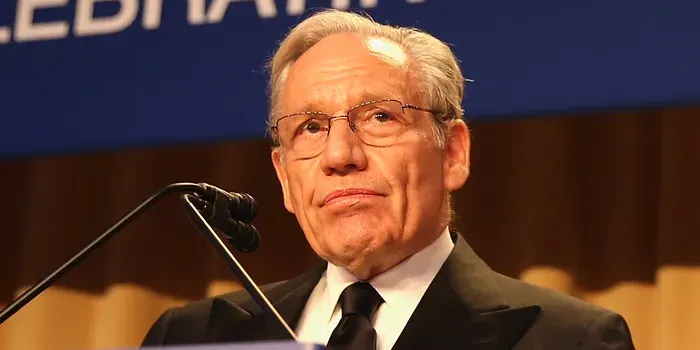
In the modern era of American governance, where the formal lines of the Constitution meet the messy reality of human ambition, no single figure has chronicled the internal mechanics of power with the steady, institutional authority of Bob Woodward. For more than half a century, while administrations have risen and fallen like the tides of the Potomac, Woodward has remained a permanent fixture of the capital’s landscape—a reporter whose office is not merely a desk at The Washington Post, but the collective consciousness of the federal city itself.

With the upcoming publication of his long-awaited memoir, Secrets, scheduled for release by Simon & Schuster on September 29, 2026, we are treated to something altogether rare in contemporary political literature. Woodward is pulling back the curtain on the inside story of his own historic career. It is a book that arrives at a moment of profound national reflection, offering a vital reminder of what rigorous, independent journalism means to the health of our representative democracy.
To understand the unique place Woodward occupies in our national life, one must understand the tradition from which he emerged. He is, at his core, a product of an era that believed in accountability of public institutions. Long before he and Carl Bernstein became the central protagonists of the Watergate drama that transfixed the world and reshaped the modern presidency, Woodward was a young man from Illinois, shaped by the midwestern values of discipline and order, which he later applied as an officer in the United States Navy during the height of the Vietnam War.
It was that distinct combination of military discipline and an insatiable, methodical curiosity that he brought to the metro desk of The Washington Post. When the definitive history of twentieth-century journalism is written, the breakthrough reporting on the Watergate break-in will remain the gold standard of the craft. But as Secrets makes clear, that foundational chapter was merely the prologue to an unparalleled career. As The New York Times so aptly observed, the sheer scope and depth of Woodward’s subsequent work have earned him a singular status as "perhaps the most enduring chronicler of American presidents."
From Richard Nixon to Donald Trump, Woodward has penetrated the protective shells of ten successive administrations. His method has never been one of partisan theatricality or ideological warfare. Instead, he has practiced a form of deep, forensic reporting that relies on the accretion of undeniable detail—the memo left on a desk, the late-night conversation in a suburban kitchen, the verified timeline of a hidden bureaucratic battle.
In this new memoir, Woodward takes readers inside the most sensitive corridors of the American state. We are invited not just into the White House, but into the private chambers of the Supreme Court, the clandestine briefing rooms of CIA operations, and the fortified offices of the Pentagon. It is an expansive tour of the permanent government, conducted by the one reporter who managed to map its most hidden contours.
Perhaps the most compelling dimension of Secrets is its exploration of the reporter-source dynamic. In Washington, information is the ultimate currency, and trust is the rarest commodity. Woodward’s ability to secure that trust across five decades remains one of the great feats of modern journalism. Robert Gates, who served with distinction as both CIA Director and Secretary of Defense, once remarked with characteristic candor that Woodward possesses "an extraordinary ability to get otherwise responsible adults to spill [their] guts."
How he achieved this—and more importantly, how he maintained those relationships while preserving his journalistic independence—forms the moral core of this book. For the first time, Woodward lifts the lid on these historic reporting relationships, explaining the complex ethics of the anonymous source and revealing why, after the passage of time, he is finally at liberty to unmask individuals who chose to speak truth to power from the shadows.
For those of us who have spent our lives watching the choreography of Washington politics, Woodward’s books have always been more than mere balance sheets of current events; they have been essential guidebooks for understanding how decisions are actually made when the cameras are turned off. They show us presidents not as icons on a coin, but as flawed, burdened human beings wrestling with the terrifying loneliness of command.
At a time when the public square is increasingly fractured, and the very concept of objective truth is under daily assault, Secrets arrives as an indispensable text. It is a powerful validation of the reporter’s trade and a timely reminder that our system of government functions best when it is subjected to the uncompromising light of scrutiny. Bob Woodward has spent fifty-five years keeping that light burning. In telling his own story, he is giving us a masterclass in the enduring necessity of a free and fearless press.