
The Ego Trip

In 2012, a charismatic Mexican doctor sent shock waves through the global wellness community by announcing he had revived a long-forgotten indigenous ritual. The practice involved a staggeringly potent psychedelic compound derived from the Sonoran Desert toad, known colloquially as the God molecule. Unlike other substances, this specific chemical was described as inducing an instantaneous state of ego death, leaving those who used it with a profound sensation of being connected to the divine.
In its earliest days, this underground phenomenon was spoken of in hushed, reverent tones as a potential cure for the fractures of the modern psyche. Seekers whispered stories of its effects, claiming it could heal deep-seated psychological wounds where standard medicine had failed. People struggling with post-traumatic stress disorder, treatment-resistant depression, or severe addiction sought out the substance in hopes of life-altering relief. It seemed, for a brief moment, as though a natural solution had emerged from the desert, and the doctor who championed it was elevated to the status of a modern-day messiah.
Yet, as the doctor’s fame ballooned, the Utopian dream began to curdle. Disturbing accounts emerged of extreme dosages, manipulative psychological control, and abusive behavior during ceremonies where participants were at their most vulnerable. Most horrifying of all were the reports of preventable deaths that occurred under the doctor's watch, events that were often obscured to protect the movement. The supposed savior had transformed into a cult-like figure, and the pursuit of healing was being overshadowed by ego and authority.
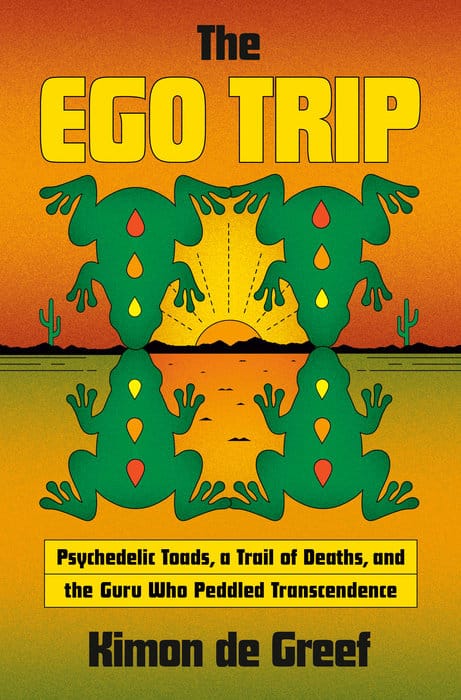
In the gripping and deeply reported book The Ego Trip, journalist Kimon de Greef steps into this moral minefield to explore the promise and the peril of this new frontier. What he uncovers goes far beyond a single corrupt leader; it is an investigation into the defining tensions of the modern psychedelic renaissance. As the notoriety of the compound exploded across social media, a frenzied gold rush was ignited, drawing psychonauts and spiritual seekers to the Mexican state of Sonora and birthing a booming, unregulated economy of psychedelic tourism.
But de Greef’s reporting reveals that the foundation of this spiritual empire was largely an illusion. The central narrative—that it was a sacred ancestral tradition—was heavily manufactured. Many of the Seri people, the indigenous group used to legitimize these practices to Westerners, did not historically use the substance. Evidence suggests the ancient ritual was largely a modern invention tailored to satisfy the hunger for authentic spiritual experiences.
Beneath the veneer of enlightenment lay a harsh, exploitative reality. To supply the global demand, local collectors were often forced to hunt these unique amphibians in territory controlled by violent cartels, risking their lives to secure a substance destined for high-end retreats. While wealthy seekers paid thousands for a fleeting moment of cosmic oneness, those at the bottom of the supply chain faced extreme physical danger.
At the same time, the corporate world launched a parallel crusade. Seeing the power of the chemical makeup, pharmaceutical companies entered a race to synthesize and patent the molecule. Their goal was to create a clean, predictable prescription drug, envisioning a standardized psychiatric medication that could fundamentally reshape the multi-billion-dollar field of psychopharmacology.
Part true-crime thriller and part rigorous cultural history, The Ego Trip uses this narrative to investigate a larger truth about the modern age. De Greef suggests that the frantic rush toward the desert is a symptom of a profound spiritual desolation. In a world increasingly disconnected from community, people are willing to go to hazardous lengths to find a sense of sacred connection, sometimes turning a blind eye to the exploitation required to get it.
Ultimately, this book serves as a cautionary tale. It demonstrates that no matter how far the boundaries of consciousness are pushed, human obligations remain. When the experience ends, we find ourselves rooted back in the real world, bound by physical limitations, moral responsibilities, and a duty to the vulnerable people and ecosystems impacted by these pursuits.