
Who's That Girl


Television history is littered with the corpses of dead hangout comedies that tried to bottle the lightning of a tight-knit group sharing a living space, but few managed the strange, erratic alchemy of New Girl. When the series premiered on Fox in 2011, it arrived wrapped in a marketing campaign that nearly suffocated it under the weight of a single, reductive buzzword. Yet beneath the initial framing, creator Liz Meriwether and her writing room engineered something far more durable: a show that took the traditional multi-cam and single-cam sitcom blueprints and bent them until they snapped, trading polished predictability for kinetic, deeply human chaos. It was a series that understood comfort television did not require intellectual numbness; rather, it required characters so thoroughly lived-in and specific that watching them stumble through their thirties felt less like watching fiction and more like catching up with old, complicated friends.
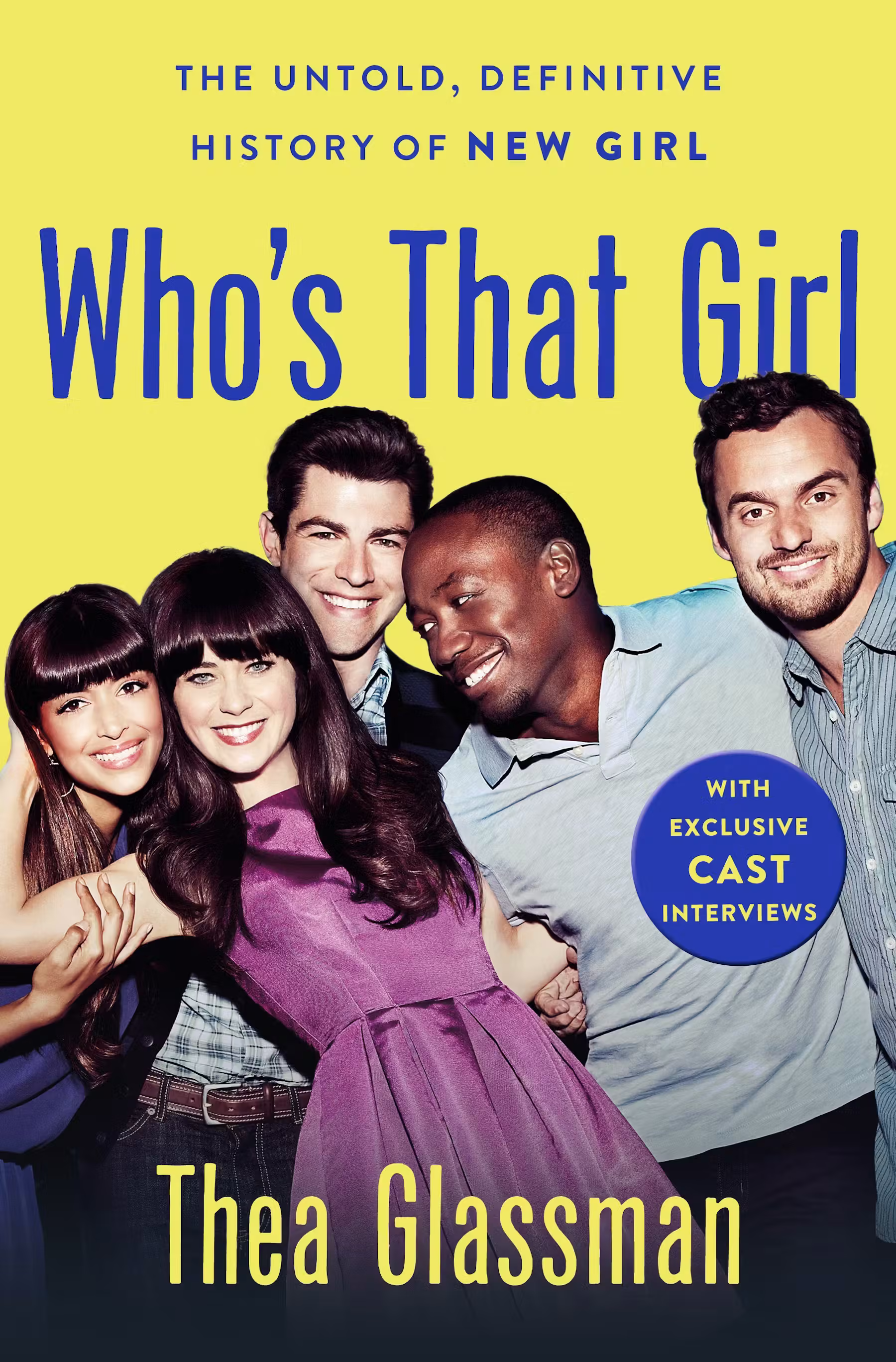
The engine of that longevity was an ensemble whose chemistry felt earned rather than cast by committee. Jake Johnson anchored the loft as Nick Miller, a man perpetually auditioning for a life he lacked the structural discipline to build, whose physical comedy and weary deadpan delivery turned exhaustion into high art. Max Greenfield weaponized Schmidt's fastidious neuroses, transforming what could have been a disposable antagonist into a masterclass in fragile masculinity and unwarranted confidence. Lamorne Morris, stepping into the ensemble after the pilot, weaponized Winston Bishop's bizarre evolution—from reluctant roommate to cat-obsessed prankster—into some of the sharpest, most surreal comedic timing on modern television. Alongside Zooey Deschanel and Hannah Simone, the cast treated the loft not as a set, but as a pressure cooker where awkward silences, escalating arguments, and sudden bursts of emotional vulnerability could explode at any second.
That loose, improvisational spirit was born from a writers' room that constantly risked cancellation by refusing to play it safe. The show survived on the bubble for years, dodging network interference by leaning harder into its weirdness. It was a space where running gags like True American, the Douchebag Jar, and Nick's legendary turtle-face weren't just background noise, but foundational mythology. It brought in cultural heavyweights like Prince and Taylor Swift not as cheap ratings grabs, but as extensions of a universe where heightened reality was the baseline. Over one hundred and forty-six episodes, the series mapped out the slow-burn agony and triumph of romance, most notably the multi-season tectonic shift of Nick and Jess's relationship, proving that a network comedy could sustain genuine emotional stakes without losing its comic velocity.
As broadcast television yielded to the algorithmic demands of the streaming era, New Girl underwent a quiet resurrection. It shed the weekly ratings anxiety of its original run to become one of the most heavily rewatched properties in digital history, a certified comfort watch for an audience navigating its own economic and existential dislocation. Fans quote its dialogue like scripture, yelling phrases across rooms, debating the impenetrable rules of fictional drinking games, and recognizing in its messy ensemble a reflection of their own flawed navigation of adulthood. It proved that longevity in modern media is rarely about immediate blockbuster dominance; it is about building a world rich enough that viewers want to inhabit it over and over again, finding new textures in jokes they have heard a dozen times.
In Who's That Girl, entertainment journalist Thea Glassman steps behind that cultural facade to examine the actual structural mechanics that built the series. Eschewing superficial fluff, Glassman conducts extensive, granular interviews with Meriwether and the broader creative apparatus, tracing the agonizing trajectory from an offbeat pilot script to a streaming juggernaut. The book details the friction of network development, the tactical decisions behind casting adjustments, the late-night writer's room battles, and the financial and creative pressures of keeping a mid-tier broadcast comedy alive during a period of industry-wide transformation. It captures the unglamorous reality of television production—the compromises, the lucky breaks, and the relentless labor required to forge a classic out of standard network raw materials.
Glassman’s work functions as both a definitive historical record and an analytical study of how modern television gets made when creators refuse to smooth down the rough edges. By examining the precise intersection of network notes, actor improvisation, and writerly stubbornness, the book illuminates why certain pieces of pop culture endure while others fade into syndication obscurity. For anyone interested in the anatomy of a modern television classic, the text provides a clear-eyed look at how a scrappy, vulnerable pilot evolved into a permanent fixture of contemporary pop culture, offering a blueprint for how comedy survives when it dares to be weird.