
Your Fellow Americans

We are told, with a wearisome regularity that borders on the administrative, that the map is rent. We are handed a lexicon of rupture—red states, blue counties, the yawning chasm of the cultural divide—and expected to navigate by it. It is a neat, efficient way to understand a nation of three hundred and thirty million souls: reduce the noise to two opposing frequencies and let the static do the rest.
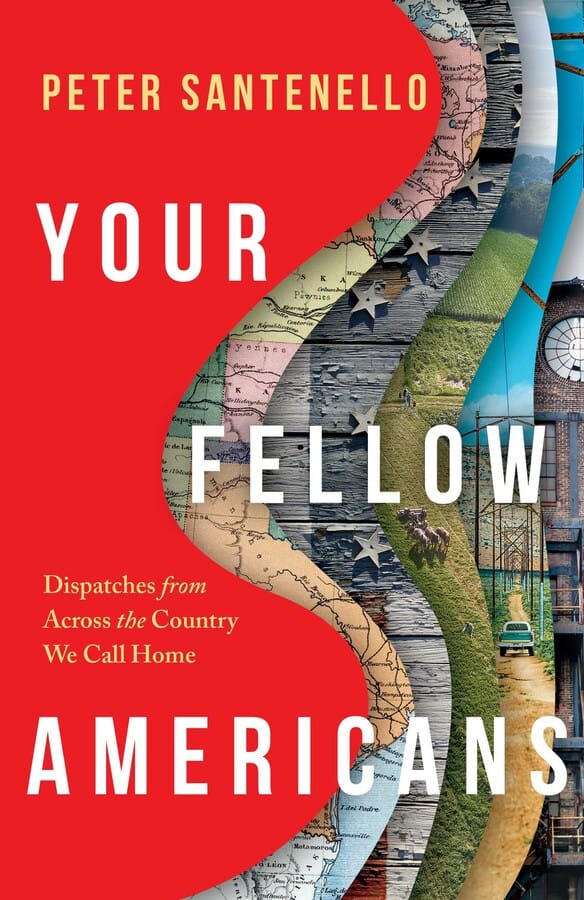
Peter Santenello bypassed the broadcast tower. After logging eighty-five countries and the standard inventory of foreign terrain, Santenello realized the blind spot was local. The unfamiliar country was the one directly beneath his boots. He did not pack for an expedition to the exotic abroad; he pointed a camera at the domestic blind spots—the places filtered through cable news lenses or rendered invisible by geography. Your Fellow Americans is the ledger of that correction.
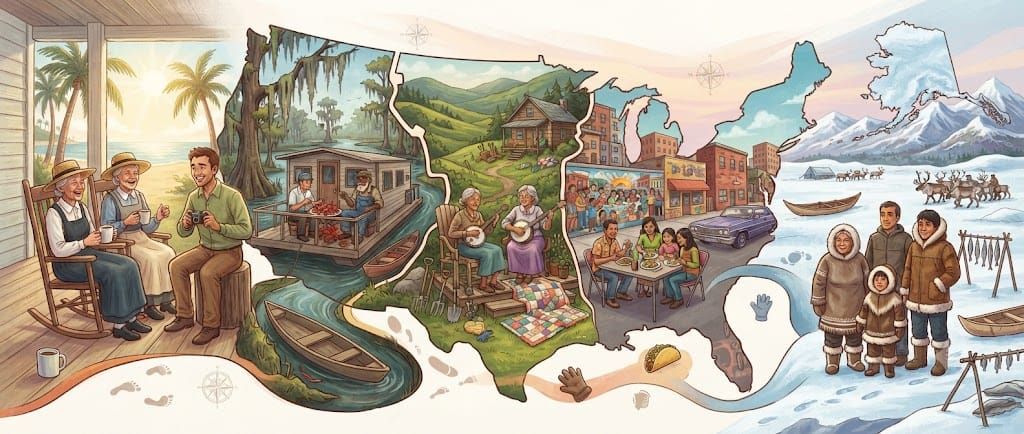
The journey avoids the consensus corridors. It detours into the geographies of the overlooked, moving from porches shared with Amish snowbirds in the humidity of Florida to the search for reindeer alongside the Siberian Yupik in the vastness of Alaska. It visits evenings spent as a guest on a houseboat tucked deep within the labyrinth of the Louisiana bayou, the streets of East Los Angeles, and the forgotten hollows of Appalachia. These are not set-piece destinations designed for tourists or political posturing. They are communities operating outside the national monologue. Santenello’s methodology is simple, which makes it radical: he shows up, he turns the camera on, and then he stops talking.
The contemporary documentary impulse is often prosecutorial or anthropological—a safari through the unusual conducted from a safe intellectual distance. Santenello’s approach lacks that armor. The encounters compiled in Your Fellow Americans rely on the slow burn of presence. Dinners shared in kitchens with linoleum floors. Conversations that begin with suspicion and dissolve into candor. The book captures the texture of these interactions without the tidy resolutions favored by modern narrative architecture. What emerges from these unscripted hours is an America that refuses to conform to the talking points. The polarization is present, certainly, but it is complicated by the mundane texture of daily survival. People are busy trying to pay mortgages, fix engines, raise children, and preserve traditions against the erosion of time and economic gravity.
The central discovery of the book is quiet, almost stubbornly old-fashioned: the fractures are loud, but the ligaments are durable. Santenello didn't find a nation cleanly severed in two. He found something more difficult to package for the evening news: a populace that wants to be seen on its own terms, that retains an appetite for listening, and that persists in the stubborn belief that proximity breeds understanding. Your Fellow Americans is an antidote to the distance we keep from one another. It is a dispatch from the interior of a massive, messy experiment in coexistence—an invitation to step off the highway of assumptions and sit down at a table where the conversation has already begun.