
How Books Can Save Democracy

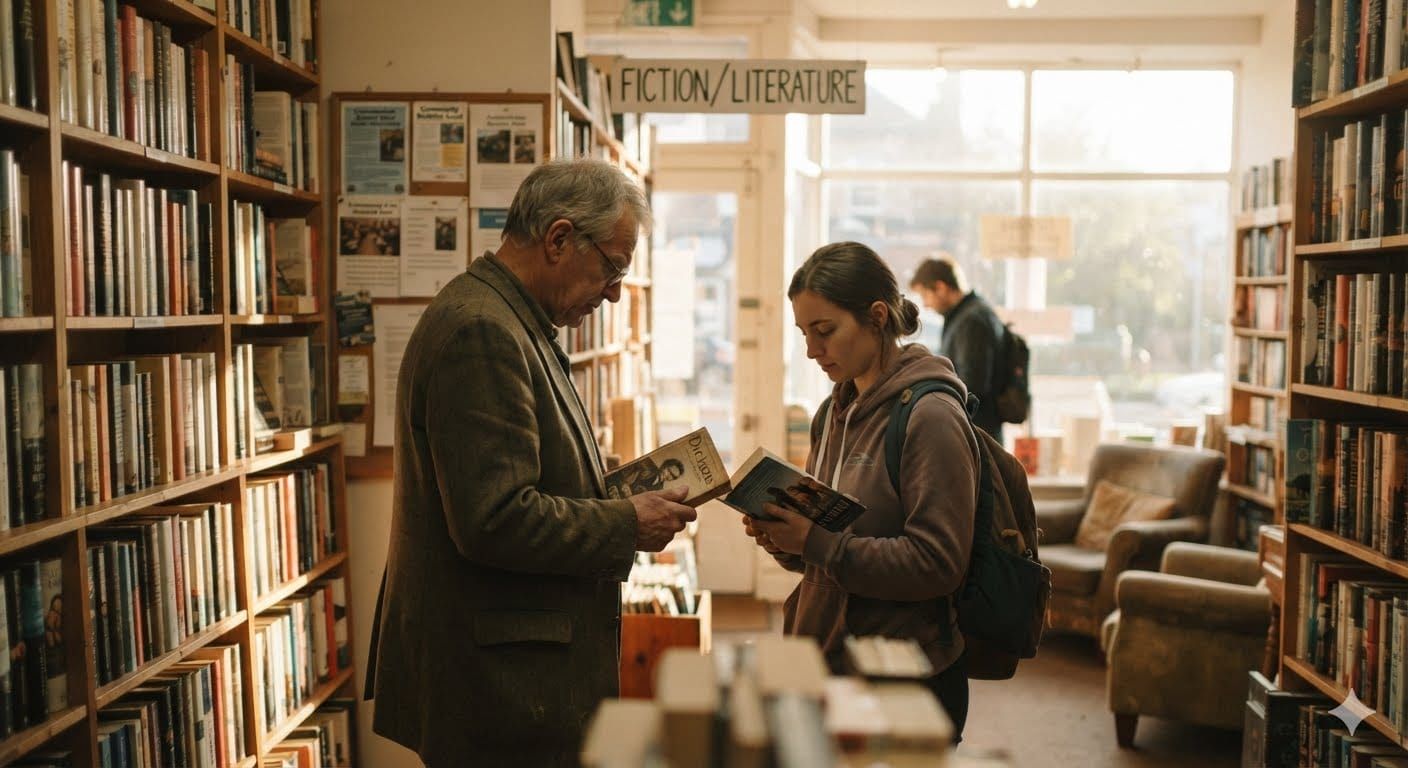
There was a time, maybe you remember it, when the local bookstore wasn’t just a place to pick up a thriller for the weekend. It was the living room of the community. You’d walk in, the dust motes dancing in the afternoon light, and find somebody—a neighbor, a schoolteacher, maybe someone whose politics made your blood boil on Facebook—standing in the same aisle, thumbing through the same paperback. We lived in the same world then. We read the same headlines, sure, but we also shared the same stories.
That’s gone, or damn near close to it. We’ve retreated into our corners, wired for outrage, treating every disagreement like a trench war where the only acceptable outcome is the total annihilation of the other side. Democracy doesn’t survive that kind of temperature. It burns up. It turns into a hollowed-out shell of winners and losers, where the only thing we have in common is a mutual, bone-deep suspicion of the person living next door.
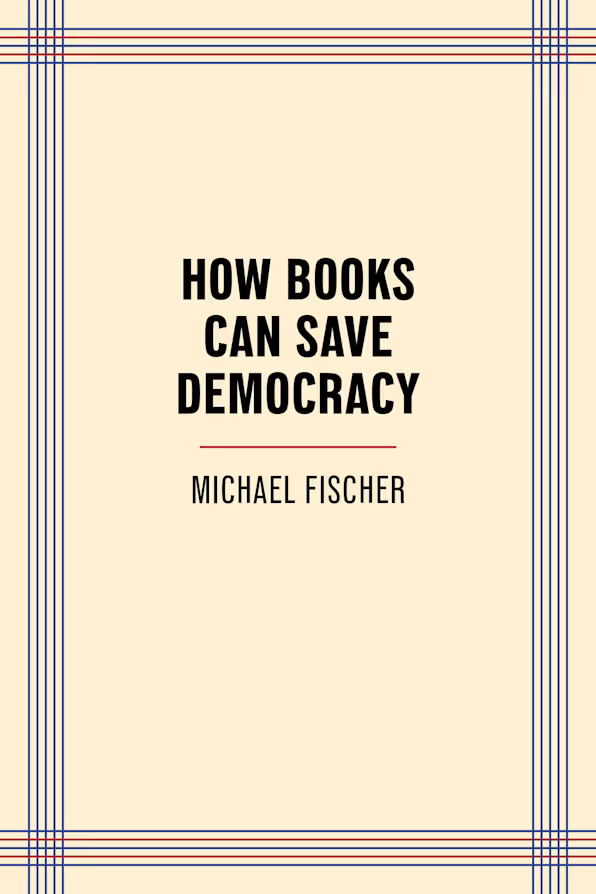
Michael Fischer, in his new book How Books Can Save Democracy, doesn’t just wring his hands about this. He doesn’t offer us another empty platitude about "bridging the divide." He gets to the root of the problem. He argues that we’ve lost the habit of nuance, the muscle memory required to sit with a complicated thought or a difficult person without deciding they’re an enemy of the state. And he’s convinced that the way out isn’t through more shouting on cable news or more scrolling on screens. The way out is tucked away on a shelf.
Fischer understands something that a lot of the experts seem to have forgotten: literature is a machine for empathy. It’s not just a collection of pretty sentences or plot twists. When you open a book—a real one, one that demands something of you—you’re performing an act of surrender. You’re letting someone else’s consciousness into your own. You’re seeing the world through someone that didn’t grow up in your neighborhood, didn't hold your fears, and didn't inherit your prejudices.
That’s the kind of work we’ve stopped doing. We want our stories to reinforce what we already think, not challenge it. We want them to act as a mirror, not a window. But Fischer pulls in the heavy hitters to show us what we’re missing—Dickens and Arendt, Zadie Smith and Philip Roth, Tocqueville and Bishop Tutu. He connects these voices across centuries, not as academic curiosities, but as doctors diagnosing a sick society. He shows how Dickens, for all his caricature, understood the grinding weight of social indifference. He shows how Arendt wrestled with the exact kind of loneliness and alienation that’s fueling our current madness.
When you read these people, you’re not just consuming information. You’re practicing. You’re practicing the art of listening to someone who sees the world differently than you do. You’re practicing the humility of admitting that your perspective isn’t the only one that matters.
This is the hard, quiet work of democracy. It doesn’t happen in a voting booth every four years; that’s just the final tally. The actual work happens in the book club meeting where you have to look a friend in the eye and say, "I see it differently," and they don’t walk out the door. It happens in the classroom where a kid from the city has to grapple with the fears of a kid from the holler, mediated through the characters on the page. It happens at public festivals and in kitchens and anywhere people decide that understanding is more valuable than being right.
Fischer isn’t naive. He knows the sheer force of the polarization we’re dealing with. He knows that a shelf full of classics won’t stop a bulldozer, but he also knows that you can’t build a free society out of people who have lost the ability to imagine themselves in another man’s shoes. If we can’t see the humanity in the protagonist of a novel, how are we ever going to see it in the person holding the opposing sign at a protest?
How Books Can Save Democracy is a call to return to the table. It’s a challenge to pick up the books that make us uncomfortable, the ones that force us to slow down, to think, to question our own certainties. It’s for the teachers who are trying to keep the lights on in their students' minds. It’s for the community leaders who are tired of watching their towns fracture into warring camps. And it’s for anybody who feels that persistent, low-level ache in their chest, the one that tells you we’re better than this, even if we’ve forgotten how to prove it.
We need to stop treating reading like a leisure activity and start treating it like a civic duty. We’re losing the capacity for common ground, and with it, we’re losing the ability to sustain a country that holds together. But the tools to rebuild are sitting right there. They’ve always been there.
We’ve been looking for the solution in the wrong places. We’ve been looking at the polls, the talking heads, the algorithmic feeds. We should have been looking at our bookshelves all along. If we can learn to read each other again—with patience, with curiosity, and with the willingness to be changed—maybe we can stop this slide. Maybe we can find our way back to the table. It’s a start, anyway. And in a world this loud, in a time this divided, that might be the most revolutionary act left to us.
Tim
Tim Lowe is a writer, book expert, retired sailor, retail worker, and renaissance man.
He is currently traveling the country and working on his forthcoming book.