
(One of) My Favorite Writer(s): Rick Bragg

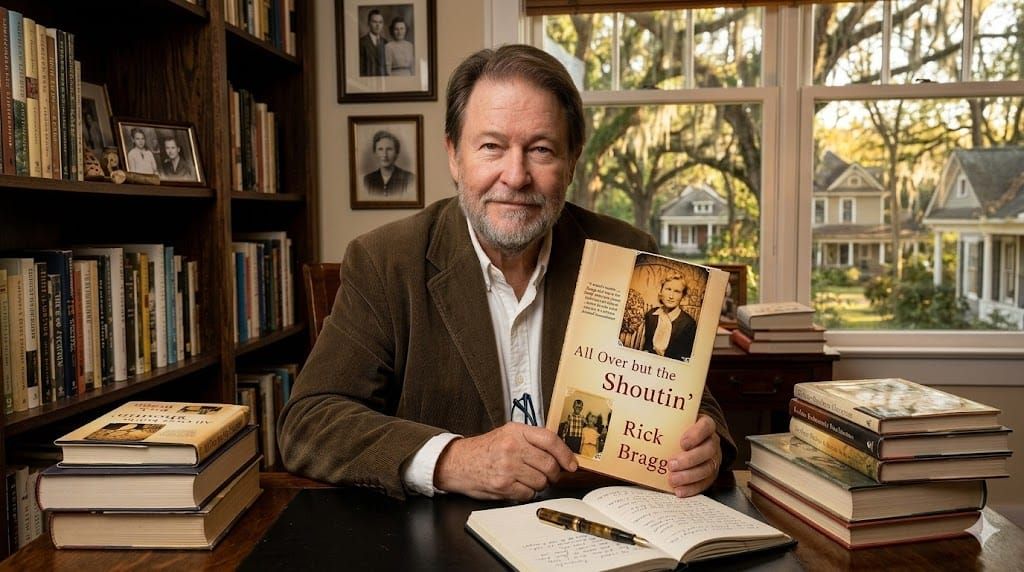
Rick Bragg is a product of the red clay in Piedmont, Alabama, a place where the dirt dictates the terms of your existence. In the Calhoun County hollows, life is governed by a specific set of physical constraints: the weight of a pine log, the heat of a mill floor, and the silence of a house where the money ran out three days ago. Bragg didn’t just grow up there; he was raised by it.
His mother, Margaret, subsidized his survival. In All Over but the Shoutin’, he documents the brutal mathematics of her life: she spent fifteen years without a new pair of shoes and eighteen years without a new dress, picking cotton and scrubbing other people’s floors to ensure her sons wouldn't have to follow their father into the trauma that Charles Bragg brought back from the Korean War and proceeded to drown in a bottle. This wasn't a choice for her; it was a necessity. Bragg saw the mechanics of that sacrifice and realized early on that the only way out of the mills was to master the language of the people who worked them. He watched her hands change shape from the lye and the labor, a physical transformation that served as his first lesson in the cost of a story.
He took that language to The New York Times in 1994, appearing like a strange, rough-hewn artifact in a newsroom that valued journalistic detachment. The Pulitzer he won in 1996 for Feature Writing was a recognition of his ability to document the "small" lives the paper usually ignored—the sheriffs, the widows, the people whose stories often ended up on the cutting room floor. He wrote with a hard and rhythmic cadence that made the Manhattan elite feel like they were standing on a sagging porch in the humidity. He was the "poverty beat" reporter who didn't need a map to find the trailer parks or the fishing camps because he still had the red mud under his own fingernails.
The collision was inevitable. In 2003, the friction between Bragg’s Southern methods and the "Grey Lady’s" rigid protocols resulted in a public break. The controversy over uncredited stringers in an oyster-harvesting story was the catalyst, but the root cause was a fundamental cultural misalignment. New York had a manual for how to gather facts; Bragg had a lifelong reliance on the oral tradition of people who actually lived on the water. When the institution tried to strip the bark off his prose, he walked away and went back to Alabama. He didn't slink away; he retreated to the only terrain where he held the tactical advantage.
The transition back to the South required a total recalibration of his intent. In the aftermath of the Times, he stopped playing the role of the Southern translator for a Northern audience. He turned his attention back to stories of his family, performing a forensic restoration in Ava's Man. He reconstructed his grandfather, Charlie Bundrum, "from the mud up." Charlie was a man who existed entirely outside the official record—no deeds, no taxes, no paper trail. This wasn't a nostalgic exercise. It was a reconstruction based on the collective memory of the hollows, treating oral history as a primary source with more structural integrity than a census report. He tracked Charlie through the tall timber and the moonshine stills, mapping a life that was lived entirely in the "white spaces" of Southern history.
He followed it with The Prince of Frogtown, a brutal autopsy of his father’s ghost. He was writing to see if the Charles Bragg DNA was a biological trap he was destined to trigger. He dug into the wreckage of his father’s life with the same cold-eyed curiosity a mechanic uses on a blown engine, looking for the exact moment the timing chain snapped. He looked at the violence and the alcohol as the inevitable output of a specific machine under too much pressure. He stood in the ruins of the Jack Cole mill and realized that his father wasn't just a drunk; he was a man who had been crushed by the very machinery his son had managed to outrun.
In the years that followed, Bragg became a regular presence in Southern Living and Garden & Gun, writing for an audience that didn't require a glossary to understand his world. He stopped being a correspondent and became a chronicler of the sensory details that define Southern class. His work in The Best Cook in the World is a study in the anthropology of the poor. He describes a world where a measuring cup is an alien object; you use the "weight" of the flour in your palm. He tracks the migration of a single cast-iron skillet through three generations of women, treating it with the same reverence a historian might give to a Viking sword. He understands that for people with no bank account, a seasoned skillet is a tangible inheritance. It holds the carbonized memory of every meal that kept the family alive.
Consider the physical reality of his later years. Bragg has spent the last decade documenting his own physical breakdown with the same lack of sentimentality he once applied to a crime scene. He writes about the non-Hodgkin’s lymphoma, the heart failure, and the failing lungs as a technician observing a machine that’s finally running out of original parts. He remains in Alabama, teaching in Tuscaloosa, and reminding anyone who will listen that a regional accent isn't a cognitive deficit. He lives in a house he bought for his mother, a physical manifestation of the debt he’s been trying to repay since he was a teenager.
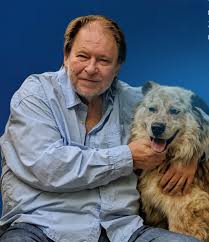
This brings us to Speck, the 75-pound Australian Shepherd mix that anchors The Speckled Beauty. The dog was mangy, violent, and half-wild when it arrived on the farm, much like the broken men Bragg has spent his life writing about. He didn't write about the dog to create a "pet book." He wrote about Speck because the dog was a mirror for his own recovery—a stubborn, inconvenient reason to keep moving through the red dirt when his body wanted to quit. It’s a narrative about the utility of a dog in a world that only values things that are house-broken and polite. He describes the dog’s one good eye and its penchant for picking fights with livestock as a form of integrity that mirrors his own refusal to be "civilized" by the literary establishment.
The mechanical heart of Bragg's work is the preservation of a disappearing frequency of American life. He is navigating a version of the South that is rapidly being paved over by strip malls and "luxury" developments that mimic the aesthetic of the poverty he escaped. He watches this with a weary, analytical eye. He knows the people moving into those houses don't know the names of the trees they cut down. He knows they don't understand the history of the clay they’re parking their SUVs on. They see "rustic decor"; he sees a landscape that broke people's backs. He sees the "New South" as a gloss applied over a history of sweat and blood that hasn't quite dried yet.
His legacy in journalism schools is complicated. He is taught as a master of the feature story and a cautionary tale of institutional friction. Bragg likely doesn't care about the syllabus. He’s sitting on a porch in Alabama, listening to the cicadas and waiting for the next story to come out of the woods. He knows the Pulitzer is a piece of metal, but the story of a woman picking cotton for fifteen years to buy her son a future is something that will outlast the paper it was printed on.
To understand the volume of his work, you have to understand the sheer density of his descriptions. He doesn't just say a man is old; he says the man has "skin like a roadmap of every bad decision he ever made." He doesn't say it’s hot; he says the "air is like a wet wool blanket that’s been left in the sun." This isn't just "writing"; it’s the linguistic equivalent of a heavy-duty winch, pulling stories out of the muck of the past so they can be examined in the light. He uses adjectives like a carpenter uses nails—to hold the structure of a memory in place so the wind of the modern world doesn't blow it away.
He remains a man of the red clay. He is the last of the "dirt-road intellectuals," a reminder that if you don't tell your own story, someone with a laptop and a degree from Columbia will come down and do it for you, and they’ll get the dirt entirely wrong. He didn't give the South a soul; he just stopped the rest of the world from pretending it didn't have one. He’s still out there, leaning against a pine tree, looking at the sky and waiting for the next hard truth to reveal itself in the red Alabama mud.
Look at the way he handles the concept of "home." For Bragg, home isn't a destination; it’s a gravity. It’s the place that pulls at you until you stop running. His work is a long, circular journey back to the porch where he started. In his collections like Where I Come From and My Southern Journey, he explores the small, everyday moments that make up a Southern life—the way a man talks to his truck, the specific etiquette of a funeral in a small town, the way a certain kind of light hits a field of sage grass. He treats these moments with the same forensic intensity he once gave to the devastation of a hurricane.
He knows that for his mother’s generation, life was a series of closed doors. His career has been an attempt to kick those doors open, one sentence at a time. He isn't writing for the critics in New York anymore; he’s writing for the people who are still out there in the heat, the ones who recognize their own hands in his descriptions of Margaret’s labor. He is a man who settled his debts with the world of elite journalism and went back to the only place where the currency is still the hard-won truth.
The story of Rick Bragg is the story of a man who refused to be translated. He took the "grammar of the overlooked" and forced the world to learn it. He proved that you can come from the red dirt of Alabama and reach the top of the literary world without ever wiping the mud off your boots. He didn't just write about the South; he became its most enduring and forensic witness, documenting the slow, heavy rhythm of its survival. He is still there, in the hollows, reminding us that the most important stories are usually the ones that start with a person who has absolutely nothing to lose but their voice. He knows that in the end, all that remains is the work and the land, and he has made sure that neither will be forgotten.