
The A&R Alchemist: Fifty Years of Soul, Grit, and the Philly Groove

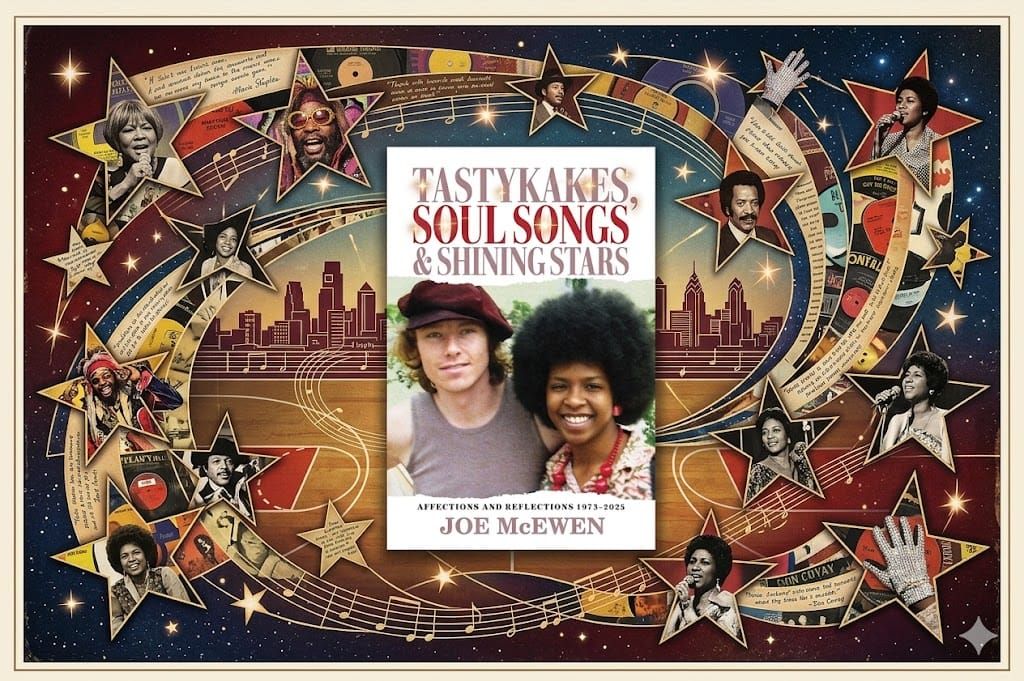
Joe McEwen’s Tastykakes, Soul Songs and Shining Stars is the culmination of fifty years spent inside the machinery of American music. A Philadelphia native who rose to become a powerhouse A&R executive at Columbia, Sire, and Verve, McEwen has assembled a lifetime of liner notes, personal essays, and backstage reveries into a singular collection—a definitive love letter to the soul and R&B that served as his North Star.
The volume delivers intimate, firsthand accounts of the genre’s architects, including Mavis Staples, George Clinton, Allen Toussaint, and Aretha Franklin. Beyond the studio walls, McEwen explores the intersection of music, basketball, and memory, finding the common thread of improvisation and rhythm that binds them. The collection concludes with a definitive 2024 dialogue between McEwen and his longtime peer, Peter Guralnick, cementing the book as an essential document of musical history.
Praise for Tastykakes, Soul Songs and Shining Stars
“Joe McEwen has long been one of our most incisive connoisseurs of Black music... Read the book, play some music, and rediscover the gospel truth of American soul music.” — James Miller, author of Flowers in the Dustbin
“An essential text that captures the textures of pre-hip hop Black pop culture with a sensuous eye. The writing here is as soulful as the music it celebrates.” — Nelson George, author of The Death of Rhythm & Blues
“Joe McEwen’s essays... are so heartfelt and deep that this collection has the emotional wallop of a searing memoir.” — Steven Levy, author of Hackers and Facebook: The Inside Story
“It’s as electrifying as hearing ‘Dancing in the Street’ for the first time. Each chapter sends you straight back to the music.” — Geoff Travis, Founder of Rough Trade Records
About the Author
Joe McEwen’s career began in the vibrant Boston press scene of the 1970s, writing for the Boston Phoenix and Real Paper before becoming a regular contributor to Rolling Stone, The Village Voice, and Stranded. He authored the 1977 biography Sam Cooke: The Man Who Invented Soul and helped shape the foundational Rolling Stone Illustrated History of Rock & Roll. After decades spent discovering and signing legendary talent across the industry's most influential labels, McEwen now lives in Laguna Niguel, California.
The A&R of the Soul:
Inside the Rhythms of Philadelphia and Beyond
by Radical Grammar
The Architecture of the Groove: Soul’s Golden Thread
To understand the evolution of American music is to recognize that "Soul" is not merely a genre, but a sonic alchemy. It is the result of what happens when the precision of the studio meets the raw, unvarnished testimony of the street. For half a century, this intersection has served as the heartbeat of the industry, fueled by a specific lineage of R&B that prioritized the "feel" over the artifice.
The Philadelphia Blueprint
At the center of this sonic map lies Philadelphia. While Detroit had the assembly-line efficiency of Motown, Philadelphia offered something more atmospheric: the "Philly Sound." This was soul music with an orchestral backbone. It was the work of innovators who understood that a heavy, driving bass line could coexist with lush strings and sophisticated arrangements. This specific regional alchemy created a standard of high-fidelity soul that demanded excellence from everyone in the room, from the A&R executives to the session players at Sigma Sound Studios.
The Machinery of Discovery
The role of the A&R powerhouse in this era was that of a translator. They were the bridge between the raw talent in local clubs and the global reach of labels like Columbia, Sire, and Verve. To thrive in that world required more than just an ear for a hit; it required a reverence for the history of R&B. The executives who truly shaped the landscape were those who viewed a 45RPM record not just as a commodity, but as a singular moment of captured energy that could redefine a listener's life.
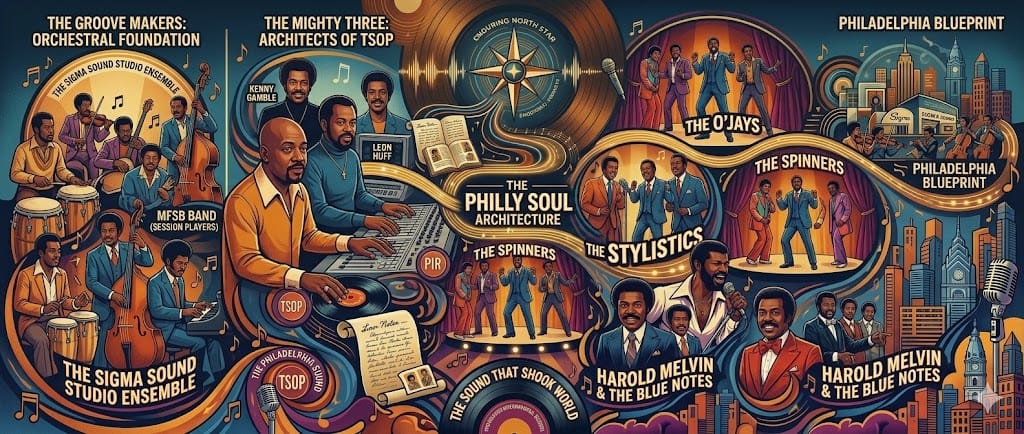
Liner Notes as Gospel
In a pre-digital world, the liner note was the primary text of music appreciation. These were the dispatches from the front lines of the recording studio. They documented the lineage of the artists, connecting the gospel-drenched vocals of the 1950s to the polished R&B of the 1980s. This tradition of deep, analytical listening turned fans into scholars and executives into curators of a living, breathing history.
The Enduring North Star
Soul and R&B have endured because they are built on a foundation of emotional honesty. Whether it was the gritty soul of the late 60s or the sophisticated jazz-inflections of the Verve era, the goal remained the same: a search for the groove that felt both timeless and immediate. It is a love letter written in backbeats and vocal ad-libs, a definitive account of the artists who refused to let the machinery of the industry dim their shine.