
The Man Nobody Killed: A Haunting Book That Reclaims the Life of Michael Stewart

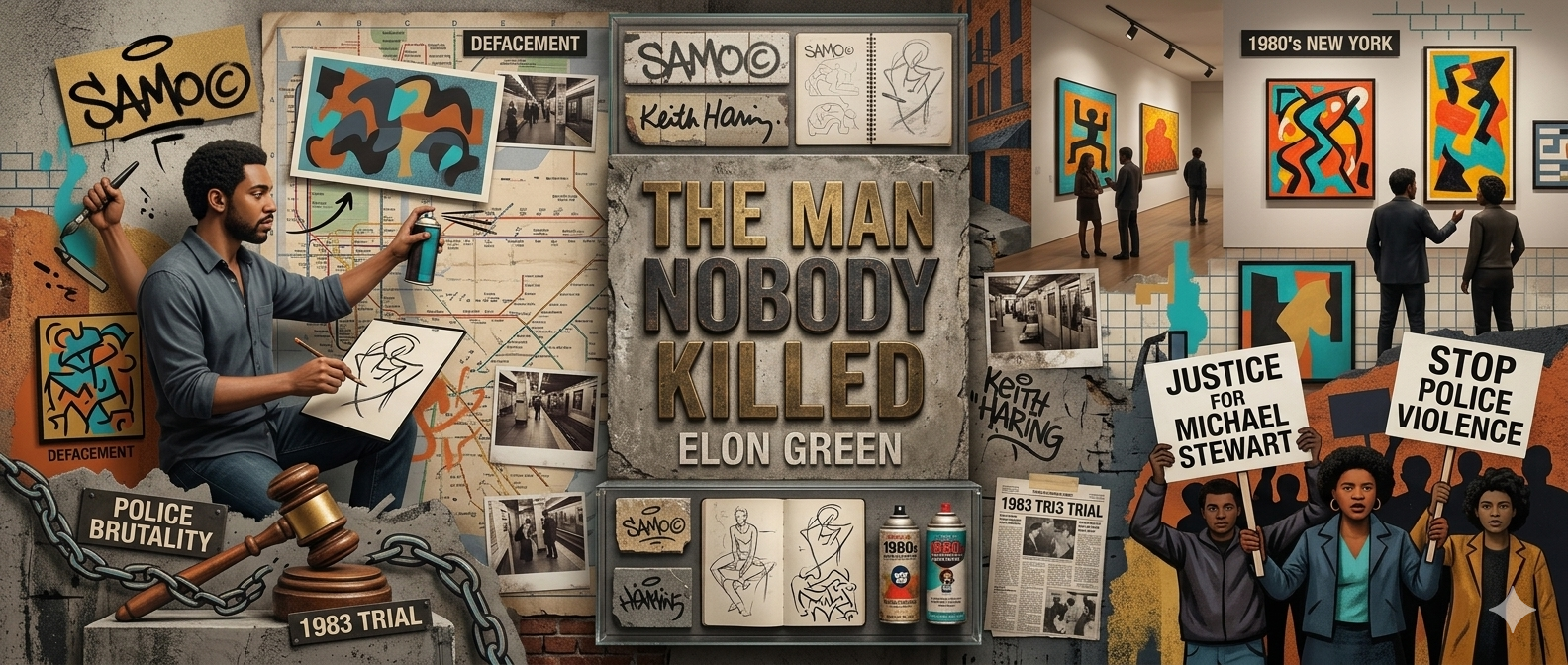
It’s rare to find a writer who can take a forty-year-old court transcript and turn it into something that feels like it’s happening right in front of you, but Elon Green has a real gift for that. With this book, he’s trying to reclaim the life of Michael Stewart, a young guy who was essentially erased by the very city he was trying to paint. Before Michael was a symbol of police brutality or a name on a protest poster, he was just a kid in the eighties who loved the New York club scene and wanted to be an artist. Green spends a lot of time reconstructing that world, making you feel the heat of a New York summer and the specific, electric energy of the East Village before it was polished and priced out.
The heart of the book is really about that collision between the vibrant, messy world of underground art and the cold, unyielding machinery of the law. Green shows us how Michael’s death sent a literal chill through his friends, people like Keith Haring and Jean-Michel Basquiat, who realized that all the fame in the world couldn't protect them from a system that saw them as a threat the moment they stepped into a subway station. It’s a heavy realization to sit with, and Green doesn’t look away from it. He writes about the trial with a quiet, persistent anger, focusing on how a room full of lawyers and officials managed to conclude that Michael was a man nobody killed, as if his death were just some inexplicable accident rather than a failure of humanity.
What really sticks with you is how much care Green puts into the small, personal details. He talks to the people who actually sat at the dinner table with Michael, bringing back the person who existed before the tragedy took over. It makes the eventual outcome of the case feel even more gut wrenching because you’ve spent a few hundred pages getting to know the guy. This isn’t a book that tries to give you a happy ending or a neat resolution, because history doesn’t always work that way. Instead, it’s a deeply moving, honest look at who we choose to remember and how we decide whose life matters. It’s the kind of story that stays in the back of your mind long after you’ve put it back on the shelf.
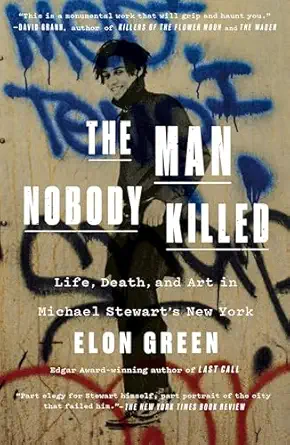
Elon Green is an Edgar Award-winning journalist and author renowned for his deeply empathetic approach to true crime, which prioritizes the lives of victims and the social environments they inhabited over the sensationalism of their killers. Based in Port Washington, New York, he has built an extensive career as a freelance writer and editor, contributing to major publications including The New York Times Magazine, The Atlantic, The New Yorker, and Columbia Journalism Review.Green’s debut book, Last Call: A True Story of Love, Lust, and Murder in Queer New York, meticulously details the hunt for a serial killer targeting gay men in the 1980s and 1990s. The work earned widespread acclaim, winning the Edgar Award for Best Fact Crime and being adapted into a notable HBO documentary series for which he served as an executive producer. His second book, The Man Nobody Killed: Life, Death, and Art in Michael Stewart’s New York, investigates the 1983 death of a young artist in police custody, exploring the intersections of art, race, and systemic injustice in Manhattan.In addition to his books, Green has a long history as an editor at Longform, a platform dedicated to showcasing long-form journalism. His writing also appears in the true crime anthology Unspeakable Acts, and he frequently shares insights into his investigative process through various media platforms, discussing the meticulous research and reporting required to bring these complex historical narratives to life.
Twitter: @ElonGreen
Instagram: @elon.green