
Culture Stores

Redefining the Shopping Space through Connection to Community
There is a cultural blind spot when people talk about the internet, which is that we treat it like a permanent black hole that completely swallowed the physical world. For the last twenty-five years, the dominant narrative has been that everything is going to live on a glowing rectangle in your hand, and that physical stores are essentially just expensive storage units that occasionally sell things to old people. It is the kind of clean, utopian, silicon-valley-adjacent logic that sounds great in a slide deck and completely falls apart the second you walk down a city street on a Saturday afternoon. Physical retail didn't die; it just got weird, and most corporate executives spent the last decade staring at spreadsheets trying to figure out why their websites weren't translating into actual human loyalty.
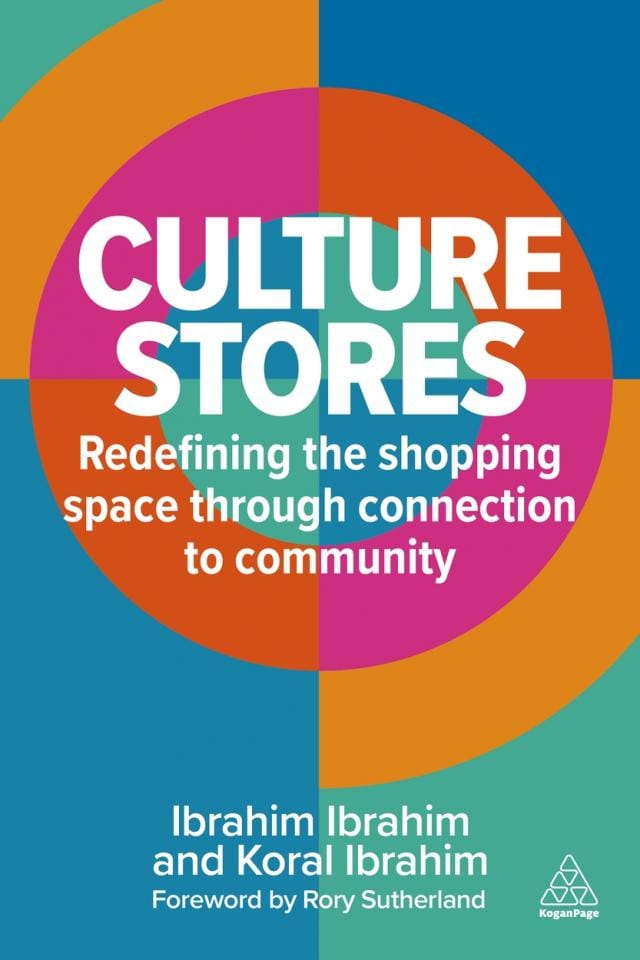
This is essentially the territory Ibrahim Ibrahim and Koral Ibrahim map out in Culture Stores, a book that looks at the financial, cultural, and strategic reality of retail transformation without treating the physical storefront as either a nostalgic relic or a solved problem. The central argument of the book is pretty straightforward, though it requires a slightly different way of thinking than what most legacy executives are used to: a store is no longer just a box where you exchange paper for plastic for inventory. If that is all your store is doing, you are basically operating a very expensive vending machine, and an algorithm is going to put you out of business by next Tuesday.
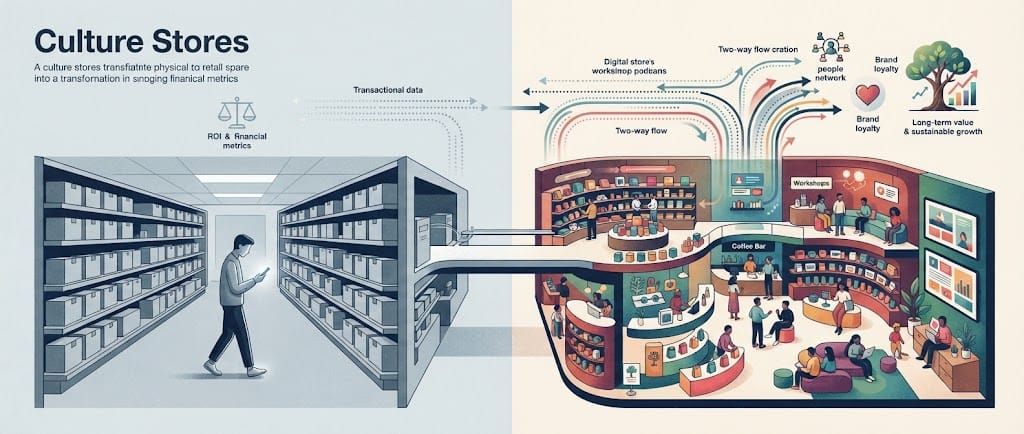
Instead, the authors argue that physical spaces have become culture stores—hubs where brands actually have to manifest their values in three-dimensional space. Think about what Brompton is doing with their urban spaces, or how Lyko and The Dolphin Shopping Centre operate. They aren't just pushing product off a shelf; they are engineering environments that generate community, loyalty, and brand equity in ways that a landing page simply cannot replicate. When a brand builds an immersive ecosystem, they stop selling to consumers and start converting them into fans. And as anyone who understands modern consumer behavior knows, a customer will comparison-shop you down to the penny, but a fan doesn't even look at the price tag.
The value of Culture Stores is that it doesn't just stop at high-minded philosophical discussions about experiential marketing. It actually gives senior executives and decision-makers a practical framework to evaluate governance, investment choices, and ROI on assets that traditionally make bean-counters nervous. Let's be honest: retail transformation is terrifying for a CFO because the return on investment isn't always a direct line from a square-foot calculation to an immediate quarterly bump. It requires data-led insights to bridge the gap between digital and physical experiences, aligning store design with actual cultural currents rather than corporate guesses about what looks cool in a render.
What makes the book compelling—and what separates it from standard business literature that reads like it was generated by an overly caffeinated marketing department—is that it deals with the friction of modern commerce. Consumer expectations have shifted dramatically. People don't go to physical spaces to do chores anymore; they go for connection, for discovery, or because a brand has managed to curate a physical manifestation of an identity they want to participate in. If your store design is stuck in 2012, you are signaling to the consumer that your brand is irrelevant, no matter how clean your app is.
For brand leaders trying to future-proof their strategy, Culture Stores acts as a necessary corrective to the idea that commerce can be entirely frictionless. Friction, it turns out, is often where the actual value is created. It is the tactile, messy, human element of retail that builds long-term resilience. Ibrahim Ibrahim and Koral Ibrahim have put together an essential resource for executives who are tired of guessing and want to lead with actual confidence, proving that the future of retail isn't online or offline—it is about building spaces that people actually care about enough to leave their houses for.