
Dolly Parton (1946-2026)

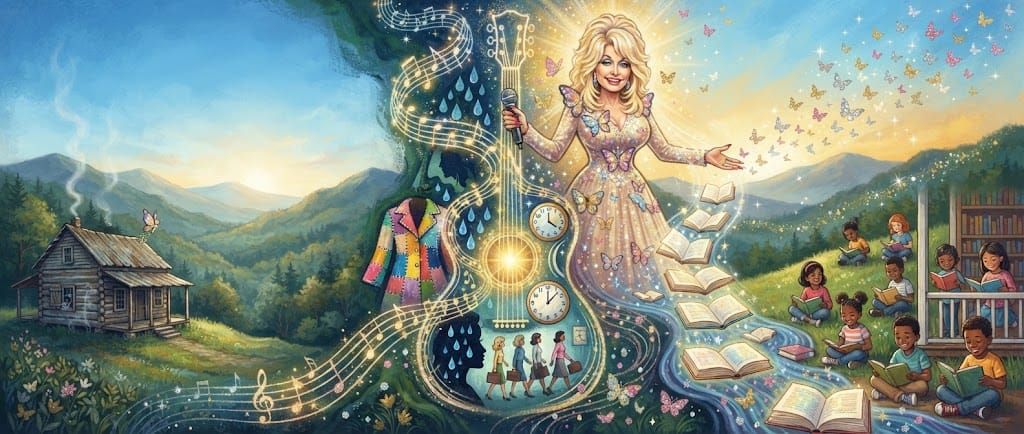
The light of a clear blue morning feels a little dimmer today, stripped of its brightest, most rhinestone-studded sunbeam. Dolly Parton has left this world at the age of eighty, taking with her a voice that could crack open a mountain and mend a broken heart all in the space of a single high note.
For decades, Dolly was the absolute proof that grace and grit could live in the exact same sequined frame. She stepped out of a tiny, crowded cabin on Locust Ridge in Sevier County with very little to her name except for a battered guitar, a head full of traditional mountain melodies, and an imagination as wide and untamed as the Tennessee sky. Her childhood was defined by a profound lack of money, but an absolute abundance of love, music, and hard work. She grew up listening to the rhythm of the rivers and the harmonies of her mother's family, learning early on that songs were the only currency poor people could truly own and pass down without losing their value.
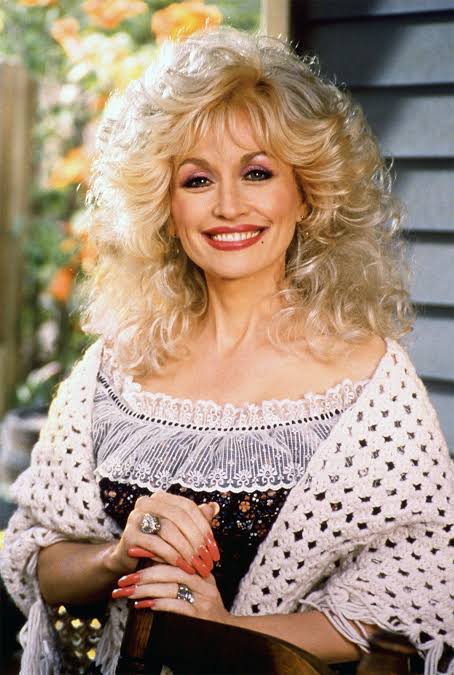
What she built from those humble beginnings wasn't just an empire of chart-topping music, silver-screen performances, and theme parks; she built a permanent home in the collective conscience of anyone who has ever felt overlooked, underfunded, or ordinary. She understood the texture of longing because she had lived it, sleeping twelve deep in a cabin with no electricity, watching her father pay the doctor with a sack of cornmeal. Those roots were never left behind in the dirt; she carried them into every boardroom, onto every television stage, and into every lyric she ever scratched onto the back of a paper napkin.
She wore her theatricality like shining armor, always laughing right along with the people who foolishly underestimated the razor-sharp mind hidden beneath the towering blonde wigs, heavy makeup, and glittering, skin-tight costumes. When critics and late-night hosts made cheap jokes about her appearance, she leaned directly into the punchlines, reminding everyone that it cost a lot of money to look this cheap. They called her a cartoon or a caricature, and she let them, knowing full well she was the shrewdest business mind in the room, a self-made multi-millionaire who owned her own masters, ran her own corporation, and commanded absolute respect through sheer, unstoppable competence.
Underneath the camp and the self-deprecation lived a songwriter of devastating, peerless depth. Long before Whitney Houston carried "I Will Always Love You" to the stratosphere, Dolly had written it as a poignant, clean break from her mentor and partner, Porter Wagoner, choosing her own path with tears in her eyes and total artistic integrity. Songs like "Jolene," "Coat of Many Colors," "9 to 5," and "In the Good Old Days (When Times Were Bad)" weren't just commercial successes; they were emotional maps of human dignity, quiet jealousy, desperate survival, and fierce, unconditional devotion. She wrote about women working themselves to the bone, about the sting of poverty patched over with a mother's loving stitches, and about the raw, terrifying vulnerability of loving someone more than your own pride. Her pen was a scalpel, disguised as a pastel-colored greeting card.
Behind the flash, the flashbulbs, and the eternal, megawatt smile was a quiet, abiding kindness—rooted deeply in the hills she never forgot and the people she never outgrew. Her philanthropy was never about tax write-offs or corporate image rehabilitation; it was personal. Through her Imagination Library, inspired by her own father's inability to read, she handed hundreds of millions of books directly to children across the globe, whispering a simple, life-changing promise to every kid who opened a cover: You matter. Your world is bigger than this hollow, and your story is worth telling. When her home region of East Tennessee was devastated by catastrophic wildfires, she didn't just send thoughts and prayers; she immediately established the My People Fund, distributing thousands of dollars a month directly to displaced families to keep roofs over their heads and food on their tables.
She navigated a notoriously cutthroat and misogynistic industry for over six decades without ever losing her sweetness, her fierce autonomy, or her sense of humor. She was famously married to Carl Dean for nearly sixty years, keeping her private life quietly anchored away from the circus of fame while remaining one of the most visible, accessible global icons in human history. She belonged to everyone, yet she always remained entirely, authentically herself—a daughter of East Tennessee who never forgot the sound of her mother's voice humming over a washboard.
Now, the Tennessee Mountain Home is quiet. The butterfly has flown back to the clear blue morning, leaving behind a silence where that infectious, cackling laugh used to ring out. But the legacy she leaves behind is vast, unshakeable, and entirely radiant—sparkling, enduring, and wrapped in a love that will truly, always remain.