
Son of the Secret Service

There are lives that are the kinds of cinematic, gravity-defying trajectories that make you wonder if the universe simply ran out of normal scripts and decided to hand a real human being a permanent backstage pass to the twentieth century's most chaotic moments.
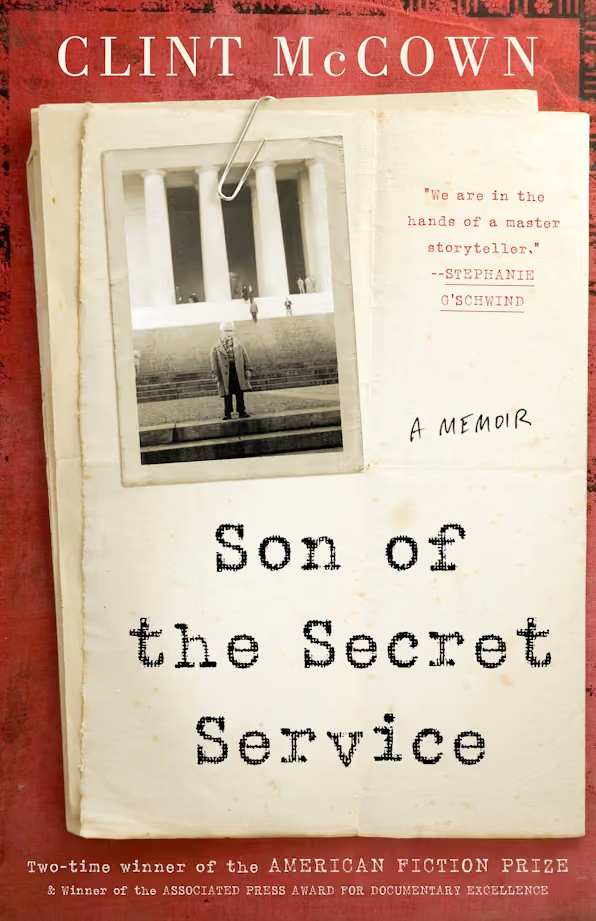
Clint McCown did not stumble into an ordinary existence. When your formative years involve looking up at men who cast literal shadows across the geopolitical map, you either shrink into the background or you spend the rest of your days running full throttle toward the nearest ledge. McCown chose the ledge, every single time, and the result is a staggering collection of personal history that defies easy categorization. Son of the Secret Service: A Memoir isn’t just another polite compilation of nostalgic reflections; it is a breathless, white-knuckle tour through an extraordinary life that reminds us what happens when a writer refuses to live safely inside the lines.
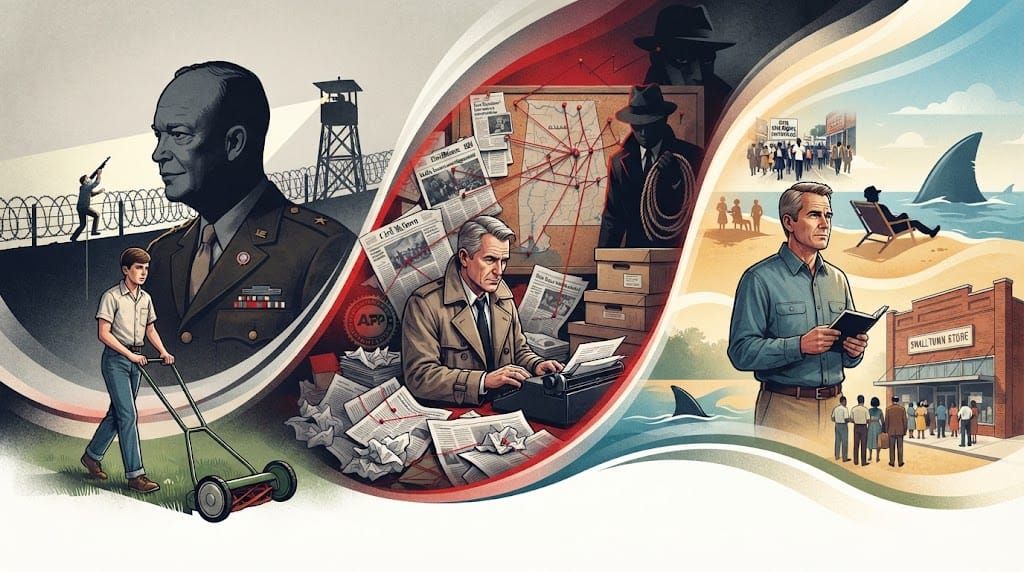
Growing up means navigating the gravitational pull of your parents, but how are you supposed to find your footing when your old man is a war hero who climbs the ranks to become a command-level special agent in the United States Secret Service? That is the heavy, imposing reality that greeted McCown early on, establishing a standard of discipline and danger that most kids only experience through the flickering light of a Saturday matinee. Yet the proximity to power didn't stop there. As an adolescent, McCown found himself working as a yard boy on the Gettysburg farm of former President Dwight D. Eisenhower. Imagine being a teenager pushing a mower while a five-star general and leader of the free world casually drops tactical wisdom about hunting and battle strategies. It is the kind of surreal Americana that sounds entirely invented until you trace the footprints back to reality. Naturally, living in the shadow of giants creates an irresistible, burning urge for a young man to prove his own mettle, and McCown did so with a reckless abandon that would give any modern safety inspector a full cardiac arrest.
How else do you explain a kid who looks at the Cold War-era Iron Curtain and decides that the logical response to geopolitical tension is to literally jump the fence into East Germany, operating with complete disregard for the machine-gun tower tracking his movements? It is an act of staggering teenage foolishness, yet it serves as a profound metaphor for McCown's entire philosophy of engagement. He didn't want to watch history from a safe distance; he needed to touch the wire. Fortunately, that same explosive daring eventually evolved away from international trespassing and found a legitimate, razor-sharp purpose in the world of investigative journalism. This was not the safe, sanitized reporting of modern press releases. McCown rolled up his sleeves and waded deep into the murky, dangerous waters of political corruption, delivering the kind of hard-hitting work that actually shifted the tectonic plates of power. His relentless reporting famously helped thwart a sprawling Mafia plot designed to seize control of the entire Alabama state government. That kind of investigative triumph doesn't come without a price tag, and McCown paid for his courage by surviving a targeted assassination attempt before walking away with a well-earned Associated Press Award for his trouble.
What makes Son of the Secret Service so wildly compelling is the way these essays shift gears from high-stakes geopolitical brinkmanship to the bizarre, poignant theater of everyday American life. This is a collection built on award-winning foundation stones, including multiple pieces that earned coveted Notable Essay citations in the Best American Essays series. McCown guides the reader across a dizzying landscape that refuses to stay put in any single genre box. One moment, you are standing shoulder-to-shoulder on the volatile streets of Birmingham during the civil rights demonstrations, feeling the palpable electricity and moral weight of a nation tearing itself apart and stitching itself back together. The next, the scene pivots with disarming dark comedy to an entirely different kind of exposure at a New Mexico nudist colony, or pauses for quiet, devastating reflection at a small-town department store funeral.
The supporting cast of characters reads like a fever dream dreamed up by a novelist who has consumed too much black coffee. McCown recounts stranger-than-fiction encounters with figures as wildly disparate as a Puerto Rican terrorist, a tragically poisoned dog, a revolving door of well-known actors and politicians, and even a terrifyingly massive giant shark. Through it all, McCown’s prose remains relentlessly vibrant, stripped of pretense, and anchored by a striking clarity and depth. He doesn't write to impress you with his resume; he writes because the raw material of his past demands to be wrestled onto the page.
These poignant snapshots of an extraordinary existence ultimately amount to something much larger than a mere highlight reel of a life lived dangerously. McCown uses his retrospective lens to examine the constantly evolving nature of the world around us, teasing out the profound, hard-earned lessons hidden within our most defining, chaotic moments. He understands that our lives are defined not by the safety we manage to manufacture, but by the walls we scale, the corrupt systems we challenge, and the bizarre, beautiful tapestry of human oddity we manage to survive along the way. Son of the Secret Service stands as a testament to a life lived without a safety net, captured by a master storyteller who knows that the only story worth telling is the one that leaves a mark.