
Where the Music Had to Go

How Bob Dylan and the Beatles Changed Each Other – and the World
Every generation has its defining cultural shifts, but the mid-1960s witnessed an artistic alignment so rare it altered the trajectory of modern history. At the center of this whirlwind were two forces: a cryptic folk singer from Minnesota named Bob Dylan, and four working-class lads from Liverpool known as the Beatles. For decades, music historians have treated them as parallel tracks—the intellectual, political voice of a generation on one side, and the ultimate pop phenoms on the other.
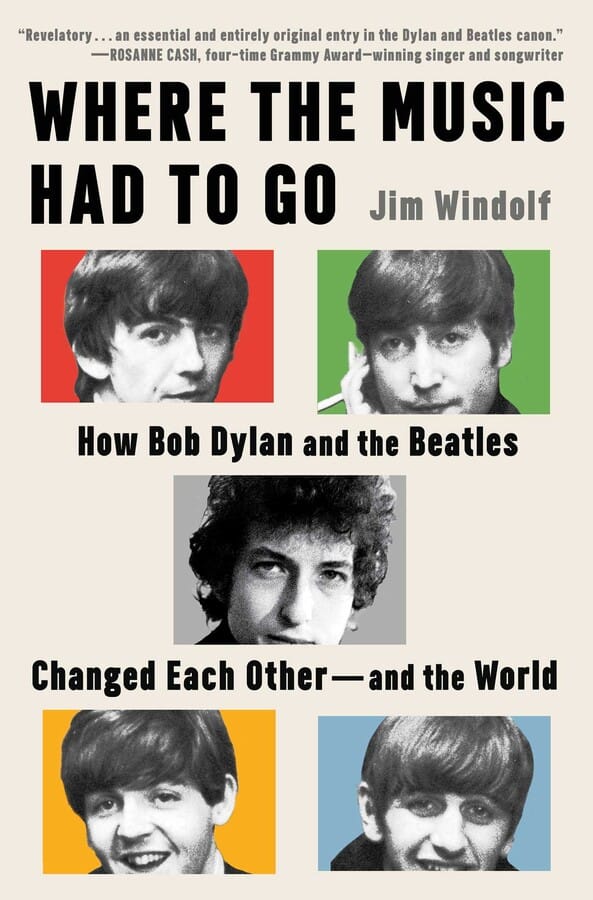
In his groundbreaking book, Where the Music Had to Go: How Bob Dylan and the Beatles Changed Each Other—and the World, acclaimed journalist Jim Windolf proves that these tracks did not just run side-by-side. They collided, intersected, and sparked a creative chain reaction. Published by Simon and Schuster's Scribner imprint, this dual biography offers a front-row seat to a relationship defined by fierce camaraderie, intense artistic competition, and mutual evolution.
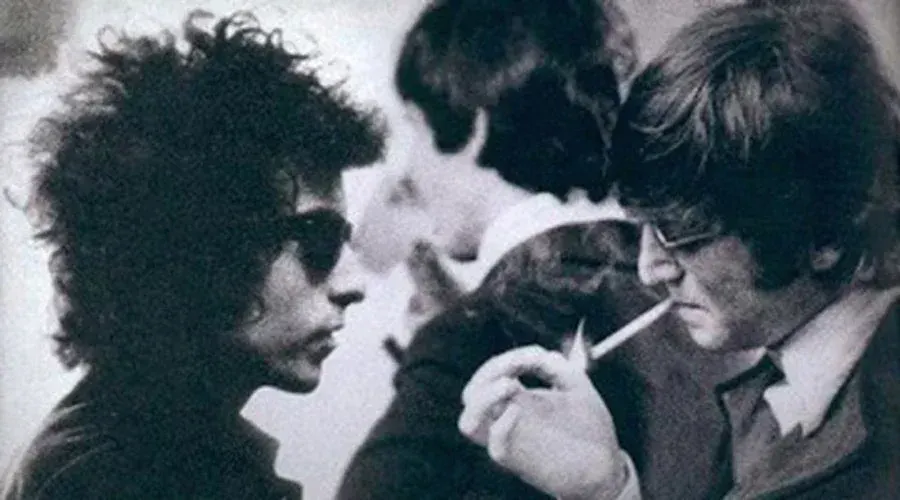
The journey between these legendary acts did not begin with immediate, mutual praise. In the early 1960s, Bob Dylan was the darling of the Greenwich Village folk scene, revered for his acoustic poetry and protest anthems. When Beatlemania crossed the Atlantic in 1944, Dylan initially dismissed John Lennon, Paul McCartney, George Harrison, and Ringo Starr as mere commercial entertainment for "teenyboppers." To the serious folk purist, the matching suits and boyish harmonies seemed miles away from the grit of American roots music.
The Beatles, conversely, were already obsessed. Behind closed doors, they huddled around turntables, spinning early Dylan records like The Freewheelin' Bob Dylan until the grooves wore thin. They recognized a raw, unfiltered literary genius in Dylan’s lyricism that corporate pop music completely lacked.
Then came the turning point. As the Beatles' sonic sophistication grew, Dylan had a massive realization. Listening closely to their chord progressions, their relentless energy, and their undeniable grip on the global consciousness, his skepticism vanished. He recognized that the Fab Four weren't a passing fad; they were "pointing the direction where music had to go.
What followed was a beautiful, high-stakes game of creative leapfrog that reshaped the landscape of rock and roll. Windolf’s narrative beautifully captures the precise moments where this mutual pressure caused both entities to mutate artistically.
For Dylan, the Beatles represented the untamed power of the electric band. They proved that commercial music could be treated as high art, and that a driving rock rhythm could carry a message to millions. This realization pushed Dylan to pick up a Fender Stratocaster, assemble a roaring rock-and-roll band, and "go electric" at the 1965 Newport Folk Festival—a historic move that outraged acoustic traditionalists but permanently shattered the boundaries of popular music.
Meanwhile, the Beatles were drinking deeply from Dylan’s well of introspective poetry. John Lennon, in particular, felt the heavy weight of Dylan's influence. Inspired by Dylan’s willingness to bare his soul and tackle complex, abstract themes, the Beatles began to abandon conventional love songs. They traded simple boy-meets-girl tropes for the surrealism of "Strawberry Fields Forever," the profound melancholy of "In My Life," and the acoustic intimacy of "You've Got to Hide Your Love Away." Dylan dared the Beatles to grow up, and the Beatles dared Dylan to turn up the volume.
Where the Music Had to Go separates itself from generic rock retrospectives by providing extraordinary, fly-on-the-wall access to the private spaces where these legends interacted. Packed with vibrant backstage anecdotes, Windolf uncovers the human dynamics behind the mythos.
Readers are treated to incredible scenes of late-night hotel room summits, smoke-filled dressing rooms, and casual jam sessions where the individual personalities emerged from behind their larger-than-life personas. The book traces this bond all the way to 1969 during the tense, exhausting Get Back sessions. Even as the Beatles were fracturing internally, their shared love for Dylan remained a unifying anchor. Windolf highlights a remarkable moment during these sessions where the band launched into impromptu, loose renditions of fifteen different Dylan songs—a testament to how deeply his catalog was woven into their collective DNA.
This book is far more than a standard music biography. It is a deep-focus portrait of a brotherhood that forged the soundtrack of the 20th century. Legendary singer-songwriter Rosanne Cash calls the book nothing short of “revelatory,” noting how it captures the profound forces that shaped an entire cultural era. Jann Wenner, the iconic co-founder of Rolling Stone, praises Windolf’s narrative as being “meticulously [and] lovingly told.”
Whether you are a die-hard vinyl collector, a casual pop-culture buff, or someone fascinated by the creative sparks that fly when absolute legends collide, Where the Music Had to Go is an unmissable experience. It reminds us that genius does not grow in a vacuum—it is forged in the heat of competition, admiration, and friendship.