
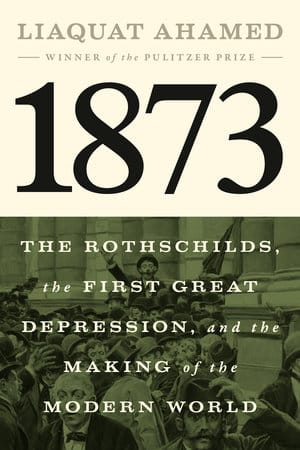
1873

The Rothschilds, the First Great Depression, and the Making of the Modern World
written by Liaquat Ahamed, published by Penguin Press
The new book by financial historian Liaquat Ahamed charts the rise and cataclysmic fall of the world's first true era of globalization, focusing on a forgotten nineteenth-century economic collapse with profound modern parallels. In his latest history, titled 1873, Ahamed explores how an unprecedented mid-century boom gave way to a global financial crisis that reshaped international politics and fueled decades of populism.
The narrative centers on the 1850s and 1860s, a period marked by an explosion in the global bond market. At the heart of this financial expansion was the Rothschild family, widely considered the wealthiest banking dynasty in history. Capital poured into massive infrastructure projects, most notably the construction of transnational railroads. However, this vast influx of money also triggered a wave of speculative euphoria, overinvestment, and irresponsible borrowing by sovereign governments.
By the early 1870s, the speculative bubble fractured under the weight of unrealistic expectations. A synchronized market crash rippled from Vienna to New York, forcing dozens of major railroads and national governments into default. Ahamed details how financial officials around the world compounded the disaster by executing a chaotic and poorly timed overhaul of the global currency system. Rather than stabilizing the markets, these policy blunders prolonged the economic pain, ushering in a prolonged era of severe deflation.
The book illustrates the far-reaching geopolitical consequences of this financial contagion. Ahamed argues that the panic of 1873 ultimately dealt a fatal blow to Reconstruction in the post-Civil War United States and accelerated the protracted decline of the Ottoman Empire. The economic devastation also laid the groundwork for modern anti-globalist sentiment, sparking populist movements across multiple continents.
Ahamed also highlights a darker, human cost of the crisis. While the Rothschilds had deliberately maintained a conservative position during the height of the market frenzy, they became prime targets for public anger once the economy collapsed. The family was widely scapegoated as part of a broader rise in rhetoric targeting Jewish finance, reflecting an undercurrent of antisemitism that would eventually manifest in the atrocities of the following century.
By weaving together macro-economic analysis with the firsthand accounts of witnesses like the Rothschilds, Ahamed provides a comprehensive examination of the panic. 1873 serves as both a detailed reconstruction of a historic turning point and an analysis of the larger economic forces that continue to influence global financial stability today.