
Bering Sea King, Baseball Card Legend

Excerpt from Cramer's Choice: Memoir of a Baseball Card Collector Turned Manufacturer by Mike Cramer.
Like a lot of boys born in 1950s America, my first love wasn't a girl: it was a baseball card. To me, a pack of Topps cards wasn’t just cardboard and a brittle stick of pink bubblegum; it was a passport to another world. I remember sitting on my bed in my small room, surrounded by organized piles, thinking: I must have more cards than any kid in the world!
This wasn't just a casual hobby. It was a compulsion. I mowed every lawn in the neighborhood, sometimes twice, just to scrape together enough change for the five-cent packs at the corner store. By the time I was eleven, I had 10,000 cards. By fifteen, through a mix of trading, buying, and relentless searching, I’d amassed 500,000. My bedroom was a labyrinth. I had wall-to-wall cards stacked as high as they could get. I wasn't just collecting them; I was hoarding them. I loved the smell of the ink and the statistics on the back. I knew every batting average and every ERA of every player in the league.
But as I grew older, the "real world" began to intrude. My father, a hardworking man who didn’t quite understand the value of a million pieces of cardboard, made it clear that I needed a career. I tried college, but the four walls of a classroom couldn't hold my interest. I wanted adventure, and more importantly, I wanted the kind of capital that would allow me to turn my card-collecting passion into a legitimate business.
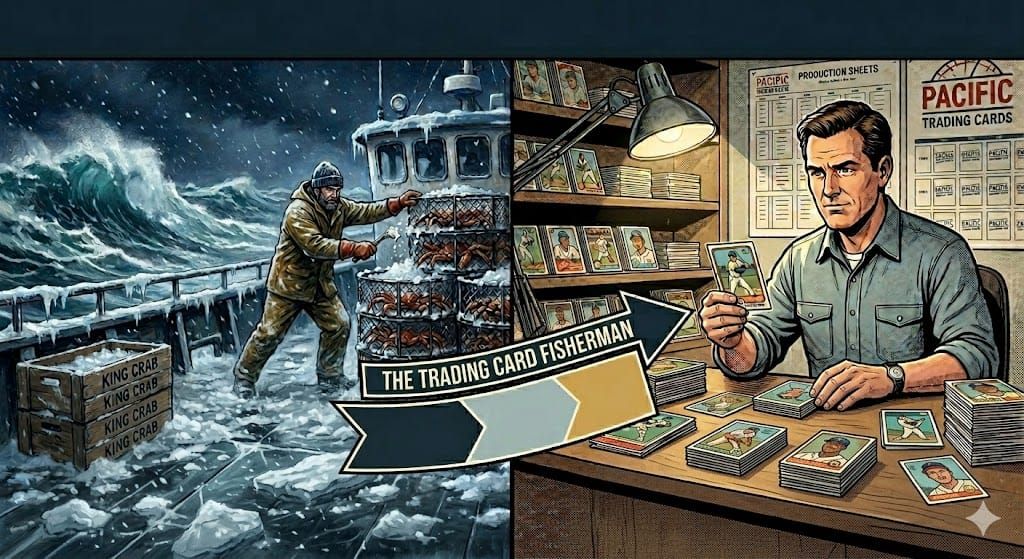
In the early 1970s, that desire led me to the docks of Seattle and eventually to the Aleutian Islands. I had heard stories of the Bering Sea—of the "Gold Rush" on water. Men were making fortunes catching king crab, provided they were tough enough to survive the conditions. I was a skinny kid with a dream of trading cards, but I was willing to gamble my life for a stake.
The transition from the quiet suburbs to the deck of a crab boat was a violent shock to the system. The Bering Sea is a cold, indifferent monster. I remember my first season on the Western Dawn. We were miles from anywhere, facing seventy-knot winds and waves that rose like three-story buildings. Everything was covered in a thick glaze of ice. If you didn't chip the ice off the gear fast enough, the boat would become top-heavy and capsize. There were no "shifts"—you worked until the deck was clear or until you collapsed.
I spent years in that frozen hell. I saw men lose fingers, and I saw boats disappear into the grey mist, never to return. But every time I hauled a heavy steel pot over the rail, filled with snapping, angry king crabs, I didn’t see seafood. I saw dollars. And those dollars were earmarked for one thing: Pacific Trading Cards.
During the off-seasons, I would return home, salt-crusted and exhausted, and dive right back into the card market. I began to realize that the industry was changing. Collectors were becoming more sophisticated. They wanted better photography, higher-quality card stock, and more information. I knew I could do it better than the giants who had dominated the market for decades. I had the vision, and thanks to the Bering Sea, I finally had the money.
In 1980, I made the jump. I officially started Pacific Trading Cards in Edmonds, Washington. At first, it was a small operation, almost a "mom and pop" shop run out of a warehouse. We started with non-sports cards and small regional sets, but I had my sights set on the big leagues. I wanted a license from Major League Baseball.
The industry laughed. Who was this crab fisherman from the Northwest trying to take on Topps, Fleer, and Donruss? They didn't realize that after surviving the Bering Sea, a boardroom full of executives in suits didn't scare me. I had stared down ninety-foot waves; I could handle a contract negotiation.
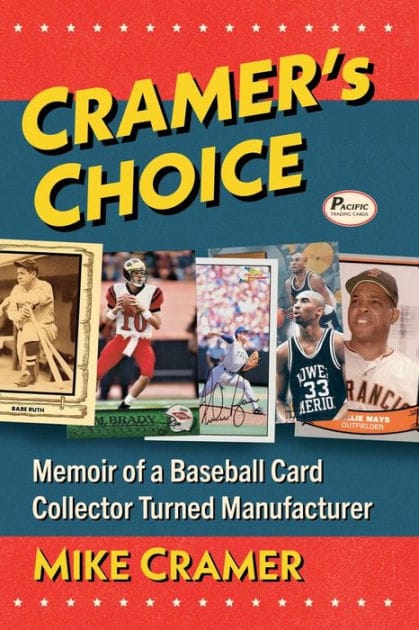
What followed was a decade of unprecedented growth. We pushed the boundaries of what a baseball card could be. We introduced "Prisms," "Cramer’s Choice" inserts, and high-end production values that forced the entire industry to evolve. We went from a small warehouse to a massive production facility, employing hundreds of people.
Looking back, the choices I made seemed crazy to everyone else. Why leave a comfortable life to risk death on a boat? Why take that hard-earned money and bet it all on cardboard? The answer was simple: it was the only way to stay true to that eleven-year-old boy sitting on his bed. I chose the sea to save the cards.
Excerpted from Cramer's Choice: Memoir of a Baseball Card Collector Turned Manufacturer. Copyright © 2023 by Michael J. Cramer. Used by arrangement with McFarland & Company, Inc., Publishers. All rights reserved.
Order at http://www.mcfarlandbooks.com