
Cormac McCarthy

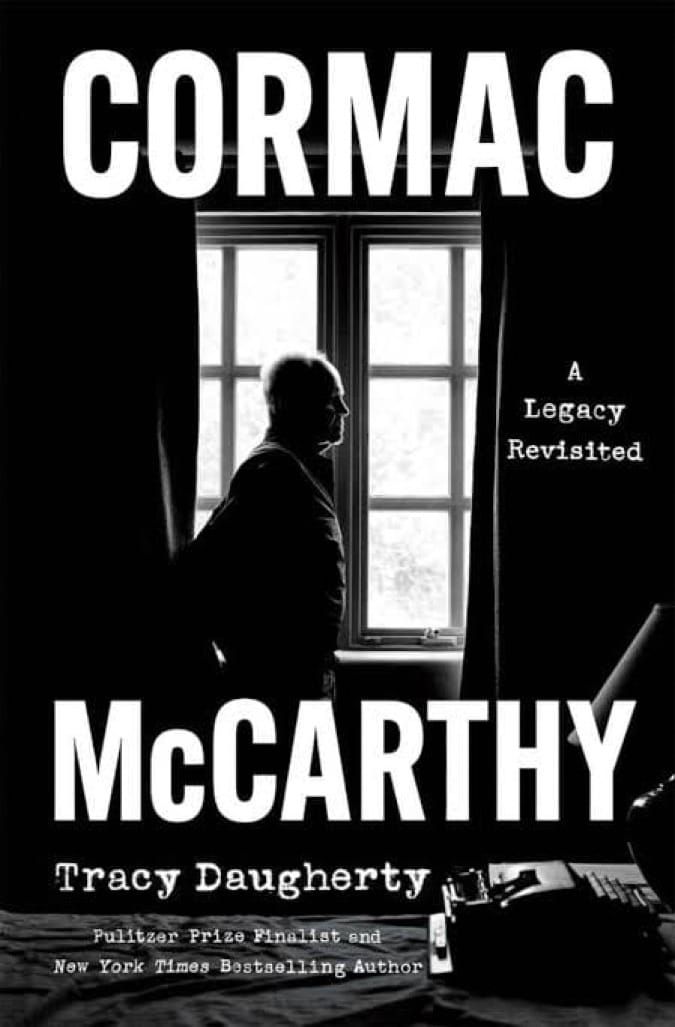
To look upon the landscape of American literature is to confront the towering, unavoidable presence of Cormac McCarthy. He is widely and arguably rightly hailed as one of the nation’s greatest novelists. In the stark, unyielding pages of his body of work, the grand and often terrible story of America is laid bare—told not in romanticized myths, but in incomparably vivid, harrowing shades of violence, greed, and love. Yet, for all the raw exposure found within his fiction, a profound irony has long endured at the center of his legacy: most of McCarthy’s own personal story has remained largely untold. Until now.
Every life is defined by its choices, but McCarthy’s choices possessed a rare, uncompromising severity. Early in his life, he made a conscious, absolute decision to devote himself almost exclusively to his literary pursuits. It was a total capitulation to the page, a refusal to allow the mundane distractions of ordinary life to dilute his artistic focus. But an obsession of this magnitude is never free; it extracts a steep, often devastating price from anyone caught in its orbit. This compelling new biography meticulously details exactly what this choice cost him. It is a sobering chronicle of the collateral damage left in the wake of his singular focus, explicitly charting the heavy toll exacted upon his family relationships, his marriages, and his closest friendships.
The portrait that emerges from this investigation is one of intense internal contradiction. McCarthy was a man driven by a profound mental and physical restlessness. He was often solitary, retreating into deep isolation to wrestle with his prose, yet he was simultaneously described as gregarious and immensely charming when he chose to step back into the world. He refused to live a safe, predictable, middle-class existence. Instead, McCarthy lived as wildly, complexly, and close to the bone as any of the desperate, haunted characters he created on paper.
This restlessness drove him outward, away from the comfortable centers of civilization. He journeyed often to remote, stark locations, seeking out places where the thin veneer of society stripped away to reveal something more elemental. In these far-flung corners of the world, he communed deeply with the natural world, observing its beautiful, indifferent machinery with an almost forensic intensity. He was not merely a tourist of the wilderness; he was a student of it. When McCarthy sat down at his typewriter, he was not spinning idle fantasies. He was reporting wisdom hard-learned through harsh, unvarnished experience and intense, unblinking observation of human nature and the world at large.

The arc of McCarthy's life follows a trajectory that seems almost stranger than fiction, a dramatic evolution captured with precision and grace by this book. It is an epic account that systematically recounts his journey from the depths of poverty to the heights of unimaginable riches, and from total, crushing obscurity to worldwide acclaim. For decades, he labored in the shadows, his work known only to a dedicated few, before eventually being thrust into the blinding glare of global celebrity.
Ultimately, this biography accomplishes what few accounts of legendary figures manage to do: it pulls back the curtain of celebrity to unveil the flesh-and-blood man behind the towering myth. It stands as an essential, must-read chronicle for both lifelong, obsessive fans who have analyzed his work for decades, and new McCarthy readers just beginning to discover the power of his voice. It is a haunting reminder of what it means to commit oneself entirely, and without safety lines, to a singular calling.