
Devil on My Shoulder

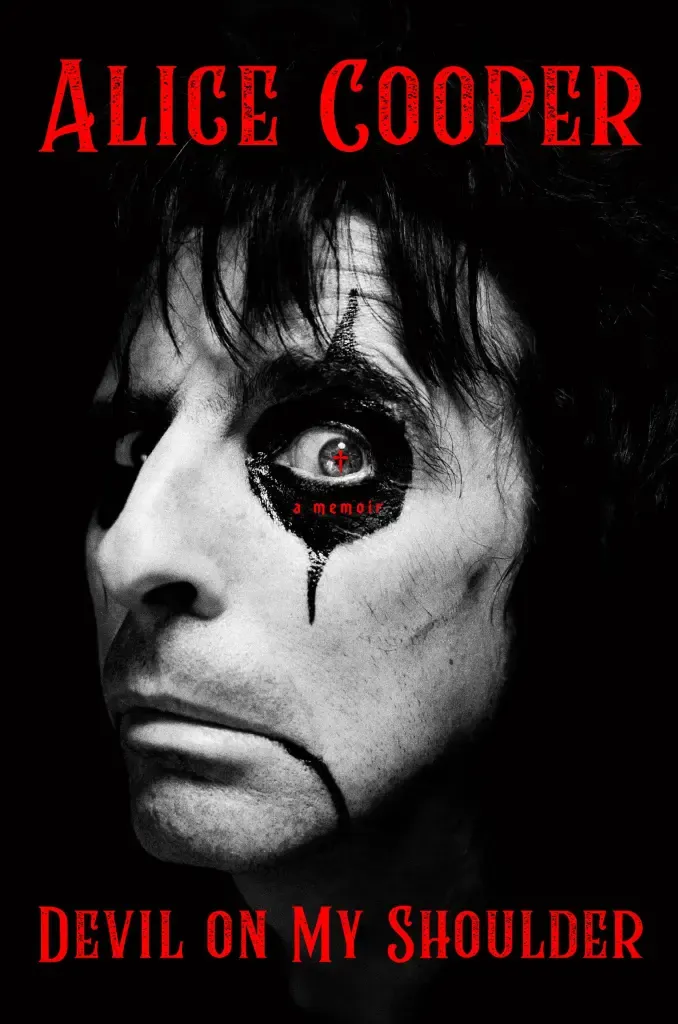
Rock and roll has always been a shell game played with identity, a high-stakes hustle where you invent a monster to protect your soul, only to find the monster has moved into the master bedroom and locked you in the cellar. In the beginning, Alice Cooper wasn’t a person at all. It was the collective handle for a five-piece gang of high school track star misfits from Phoenix who wanted to sound like a British Invasion band but ended up sounding like a car crash in a junkyard. Then, somewhere between the heavy mascara and the feedback, the name migrated. It became a singular stage moniker. And then, inevitably, because the rock machine demands escalation and the audience always wants more blood, it transformed into a full-scale, living, breathing monster.
Now, after more than thirty records and over sixty grueling years of survival on the asphalt ribbon of the American highway, Vincent Furnier has written a book. It is a text that attempts the near-impossible task of tracking Alice’s absolute "evilution"—a grueling, decades-long post-mortem on how a preacher's son and a cinematic ghoul became so fatally intertwined that the line between the puppet and the puppeteer completely dissolved. It is a chronicle of how he finally tamed the beast at last. Because when you stay in the circus this long, the story of Alice Cooper inevitably becomes a deeply tangled thicket of embellishments, theatrical elaborations, and outright fabrications. It is high time to sort the stark, cold reality from the heavily varnished myth.
The mythology of Alice Cooper is the stuff of rock and roll scripture, the kind of gonzo folklore that fueled the moral panics of a decaying twentieth-century America. We are talking about the slaughtered chickens at Toronto, the state-sanctioned bans, the public record burnings, and the deep, sweaty evangelical terrors that chased the band from town to town. We are talking about the casual, late-night traffic with Ouija boards and poltergeists, the stage-managed resurrections, and the campy, Grand Guignol revenge from the grave. The world Alice populated on stage and off was an unvarnished carnivalesque parade of cross-dressers, thieves, heavy drug addicts, and hopeless alcoholics, a waking nightmare punctuated by literal house fires and catastrophic car crashes. Furnier is finally stepping up to the microphone to reveal all of it for what it really was: a mix of desperate showmanship, chaotic lifestyle, and the terrifying momentum of an image that outgrew its creators.
But you can’t write a real rock and roll confessional just by pointing at the stage props. You have to look in the mirror when the makeup starts to run. Furnier is coming clean about the true, devastating extent of his own addictions—the terrifying expanse of his blackout years and a creative process that was systematically fueled by oceans of alcohol, prescription drugs, and the numbing drone of round-the-clock television. This is the story of a frantic, clawing scramble to the absolute top of the rock and roll pile, followed by the sickening, terrible slide back down to earth when the body and the mind finally mutinied.
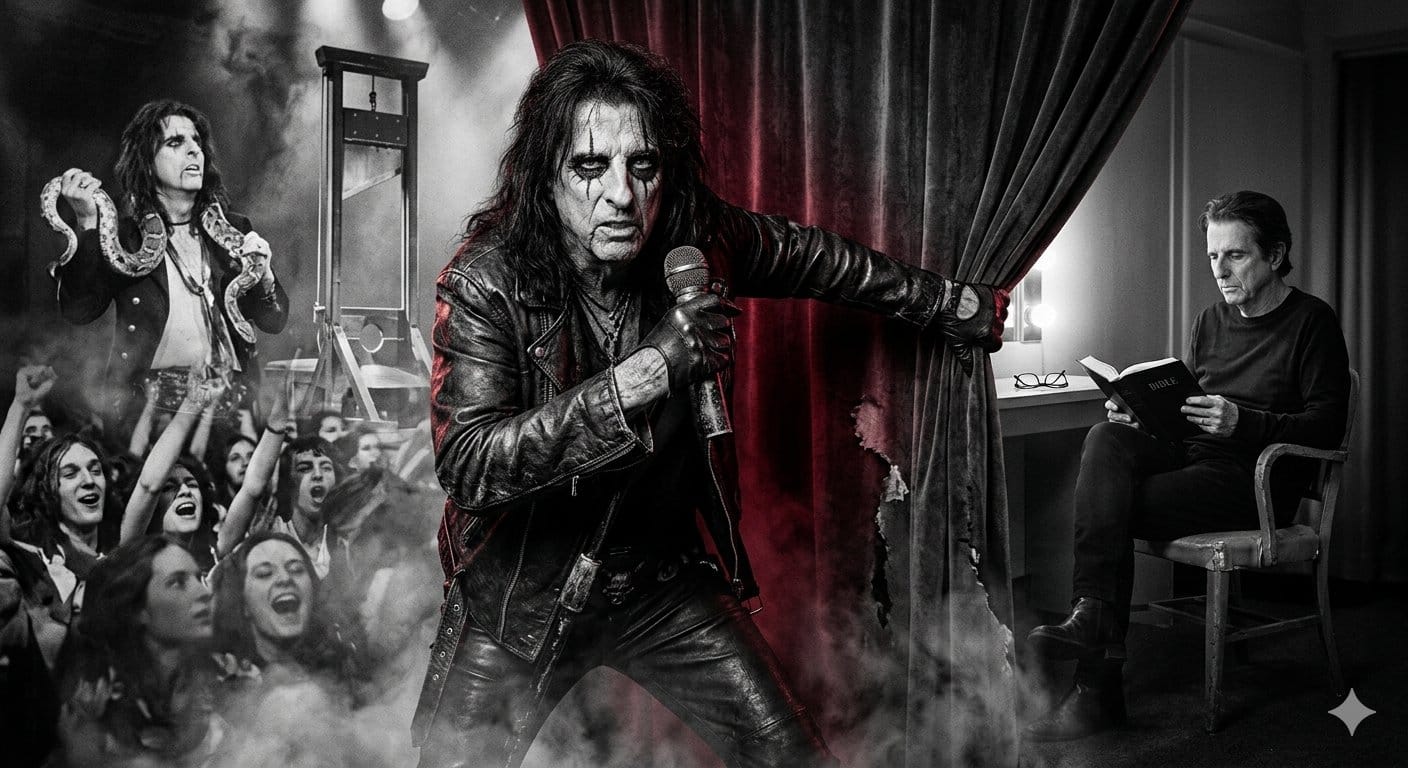
He wants to talk about the dark, twisted origins of "Cold Ethyl," the mechanics of the nightly stage guillotine, and the simulated horrors of the dead babies that drove Middle America into a frenzy of righteous indignation. He’s looking back at the best and the absolute worst of his reviews, confronting the cold, hard print of a rock press that alternately hailed him as a visionary and dismissed him as a cheap carny act. More importantly, he is confronting the heavy, lingering feelings of guilt and regret that haunt him after people genuinely got hurt or died in the orbit of the madness. It is a look at what life was really like on the road until the wheels wobbled and then completely flew off the tour bus.
Yet, underneath the leather, the snakes, and the dried theatrical blood beats the heart of an old-school romantic. This is a man who has somehow managed to stay married for half a century, surviving the tempest of rock stardom even after the domestic reality hit so hard that his wife came at him with a frying pan. It is a testament to survival in a business designed to kill you before you turn thirty.
And then, because rock and roll always demands a third act, he wants to talk about God. But don’t get nervous; this isn’t a tent revival, and he isn’t planning to bang you over the head with a heavy leather Bible. He simply wants to describe, in plain and human terms, how it is that he found the Almighty dwelling inside a shattered, recovering rock star. Alice, that inveterate, silver-tongued liar, was a constant, whispering voice in his ear for far too long. The monster spent decades whispering lies and sweet, toxic nothings, slickly pretending to be his better conscience, his main inspiration, and eventually, pretending to be him. It is only right, after all these miles on the odometer, to present both sides of the ultimate rock and roll story: the angel sitting heavily on one shoulder, and the devil grinning on the other.