
Holden Caulfield Doesn't Live Here Anymore

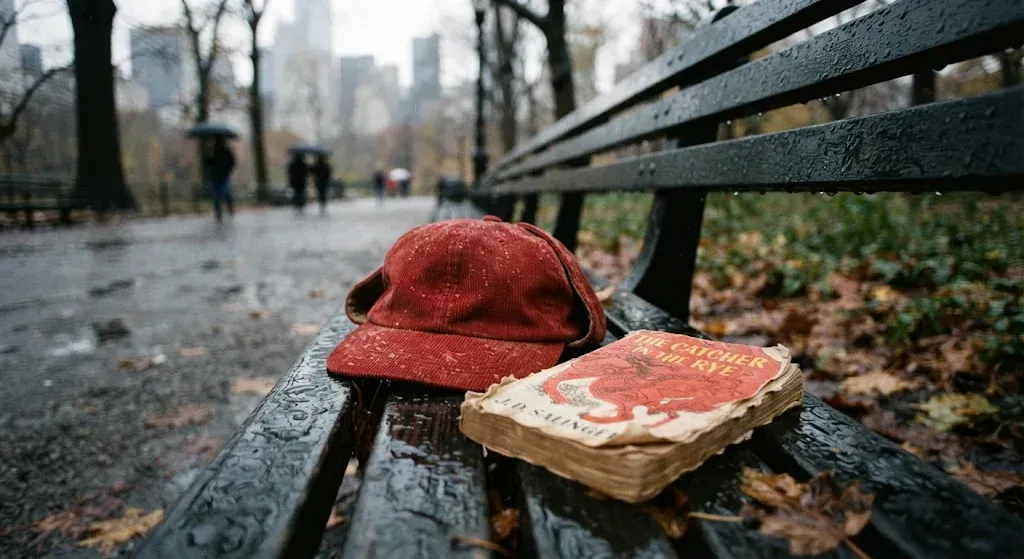
Little, Brown and Company put out The Catcher in the Rye in July 1951, and for forty years after that, grown-ups treated that slim paperback like a lit stick of dynamite. School boards in Washington and Manitoba voted to yank it off classroom shelves. Librarians stashed copies behind the counter. Parents fired off indignant letters to the local paper over the swearing, the underage drinking, the prostitute in the hotel room, and the general bad attitude.
Seventy-five years on, nobody is smuggling it into study hall inside a hollowed-out algebra book. Put a copy in the hands of a sixteen-year-old today, and you won't get moral outrage or forbidden-fruit thrills. Mostly, you'll get blank looks over the mechanics of the thing. It reads like a postcard from a country that disappeared—a place where teenagers smoked unfiltered cigarettes in hotel lounges, paid for yellow cabs with folded bills, and spent three days wandering around Manhattan without anybody checking their location on a screen.
The book itself hasn't budged. What went missing is the notion that a novel can actually scare the neighbors.
To see why Holden Caulfield got under mid-century skin so fast, you have to picture the polite script written for teenagers back then. The postwar boom was rolling, ranch houses were going up over old cornfields, and respectable society liked to believe nice middle-class kids were sunny, grateful, and itching to step onto the track toward college, marriage, and a steady paycheck. Trouble belonged to rough neighborhoods and broken homes. Salinger spoiled that picture by putting a sharp, sour disgust inside a smart kid from the Upper East Side who had every lucky break going and still wanted none of it.
Holden didn't rob a liquor store or join a gang. He just wouldn't play along. He called everybody a phony, flunked out of Pencey Prep, and drifted through Penn Station, the Museum of Natural History, and midtown bars, nursing a raw ache for his dead brother Allie while trying to keep his little sister Phoebe from growing up. For years, picking that book up felt like tuning into a late-night pirate broadcast. Before social media, before youth TV, before rock and roll even had its boots laced, teenagers rarely heard their own ragged, defensive, repetitive cadence reflected back at them in print.
Tracking down a copy used to take some legwork, too. If your high school pulled it in 1968 or 1979, you went hunting at a drugstore spinner rack or begged a beat-up paperback off an older cousin. That little bit of friction gave the book its charge. Reading it felt like a secret pact between Salinger and whoever was squinting at the pages under a bedroom lamp at midnight.
That whole setup is gone now. Book fights stay in the headlines constantly, yet the machinery behind them looks nothing like it used to. Today's challenges rarely start with one parent raising hell over a bad word; they move on pre-printed lists passed from state to state by organized groups targeting school library catalogs. Meanwhile, the teenager at the center of the fuss sees rougher language and nastier behavior before breakfast just by tapping a screen. Beside a nonstop stream of viral pile-ons and internet spite, Holden Caulfield letting loose a few dozen curse words and ordering a Scotch and soda in Greenwich Village looks downright tame.
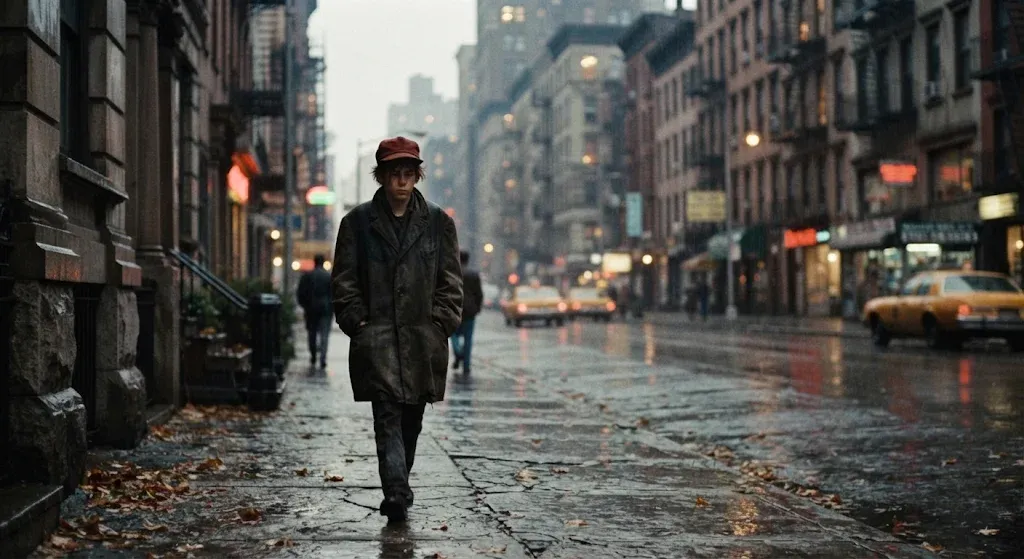
Even teenage loneliness has moved indoors. Holden's whole unraveling plays out on the sidewalk. He walks forty blocks in freezing weather because he can't face going home. He sits on a bench in the rain watching Phoebe ride the carousel. He feeds dimes into hotel payphones, trying and failing to talk somebody into meeting him for a drink. His ache is restless, physical, and out in the open.
A kid carrying that same heavy restlessness in 2026 doesn't vanish into a big city for seventy-two hours. Parents have location pins on, friends are a group-chat ping away at two in the morning, and the quiet happens behind a closed bedroom door, lit by a phone that already knows how to sell ads against a bad mood. Holden couldn't stand phonies, though he still lived in a world where you had to look somebody in the eye to catch them faking. Hard to picture what he'd make of an entire culture built on curated feeds and paid-for sincerity.
Clear away the celebrity stalkers who kept copies in their coats and the miles of tenth-grade essays dissecting the red hunting hat, and Salinger's novel still has teeth. Holden is funny, maddening, contradictory, and badly bruised—a kid trying to talk himself out of caring about a world that has already hurt him once.
Books just don't sit at the center of the American nervous system the way they used to. When a title gets pulled off a shelf now, it's usually another round in a bigger cultural brawl, not a genuine worry that a fictional kid might corrupt the youth. Seventy-five years after publication, Holden Caulfield isn't an outlaw tucked into anybody's back pocket. He's just a boy standing in the rain in 1949, watching his sister go around in circles, wishing time would hold still for five minutes.
-30-
Tim
Tim Lowe is a writer, book expert, retired sailor, retail worker, and renaissance man.
He is currently traveling the country and working on his forthcoming book.