
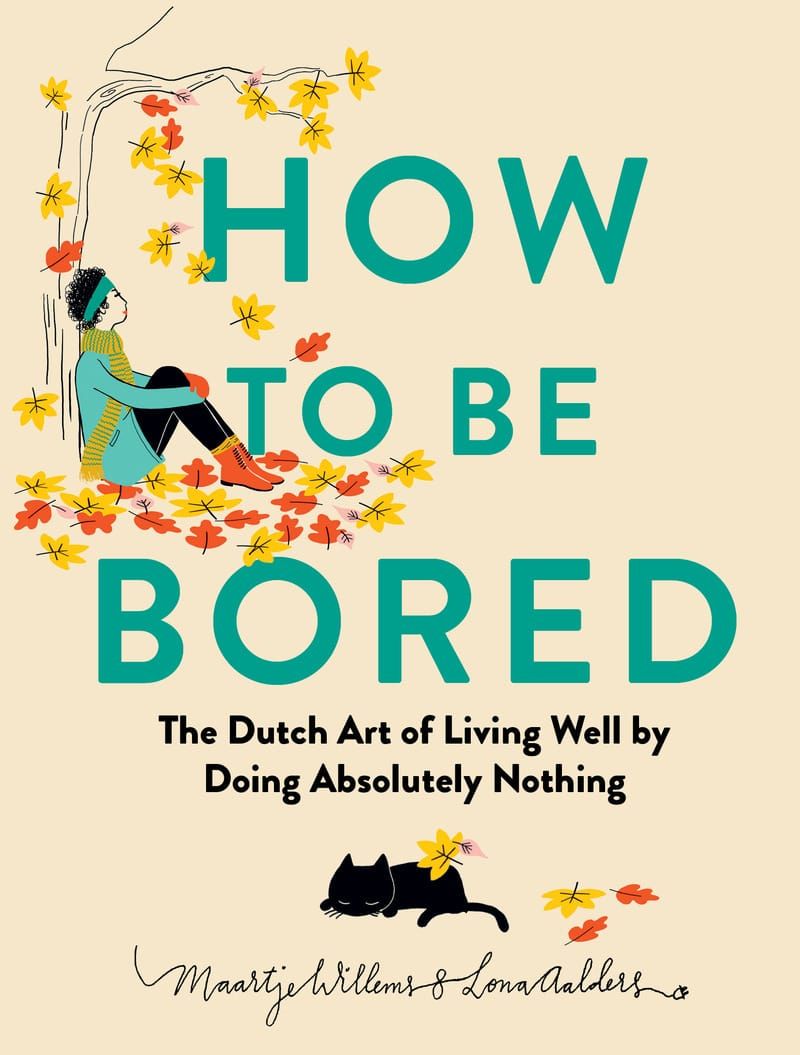
How to be Bored

There is a uniquely modern affliction that has crept into the daily rhythms of human existence, so quietly that most haven't noticed its arrival, yet it dominates almost every waking moment. It is the absolute, terrifying intolerance for a single second of unoccupied time. For millions of years, the human brain evolved to accommodate vast, echoing expanses of nothingness—staring at a horizon, waiting for rain, or simply sitting on a porch watching the grass refuse to do anything dramatic. Today, however, if a person finds themselves waiting forty-five seconds for an elevator, there is a near-universal, involuntary spasm of the hand toward a pocket, followed immediately by the desperate illumination of a small glass rectangle, all to ensure that not a single frame of potential boredom enters the consciousness.
Humanity has, quite efficiently, engineered the concept of zoning out entirely out of existence. It is a staggering achievement of self-inflicted optimization. Where there once lay golden, unstructured childhood afternoons spent gazing blankly at popcorn ceilings or watching ants navigate the terrifying topography of a sidewalk, there now exists an relentless barrage of pings, chirps, haptic vibrations, and urgent red notification badges. Life has become an endless cycle of rotating between complex productivity applications designed to make work faster, and hyper-efficient streaming services designed to make leisure louder, interspersed with the grim pastime known as doomscrolling. The modern citizen does not simply live; they manage an active, high-intensity digital portfolio of their own attention span.
It is into this landscape of hyper-stimulated exhaustion that a remarkably sensible antidote arrives from, rather fittingly, the Netherlands. The Dutch, a people already widely celebrated for their levelheaded approach to infrastructure, bicycling, and dairy products, possess a beautifully simple lifestyle secret that may well be the salvation of the overtaxed nervous system. It is called niksen, and it is, quite wonderfully, the deliberate art of doing absolutely nothing at all.
To understand niksen, one must first dismantle everything that contemporary society holds dear. It is not mindfulness, which, for all its admirable qualities, still requires a rather disciplined sort of focus on one's breathing or the specific resonance of a singing bowl. It is certainly not a productivity hack disguised as wellness. Niksen is the proud, unvarnished opposite of productivity. It is the sunny side of boredom. It is the act of sitting in a chair and letting the mind wander wherever it pleases, entirely without a map, a destination, or a measurable key performance indicator. It is looking out a window not to check the weather, but simply because the window happens to be there and the sky is doing its usual, slow-motion thing.
In How to be Bored, this magnificent philosophy is laid bare as a guide out of the optimization grind and back to the increasingly radical act of just living. The book argues, with a refreshing lack of commercial cynicism, that re-learning how to slack off is not a moral failing, but a physiological necessity. When a person allows themselves the luxury of true boredom, the benefits cascade through the human makeup in ways that no silicon valley application could ever replicate.
Physically, the benefits are immediate. On a particularly hectic day, when the calendar looks like a chaotic game of multicolored tetris blocks, an intentional pocket of niksen acts as a sudden, cooling breeze. It slows the frantic, thumping rhythm of the heart and signals to the body that it is not, in fact, being pursued by a predatory beast, despite what the influx of urgent corporate emails might suggest. The mind, similarly unburdened from the necessity of processing a continuous stream of hot takes and breaking news, settles into a state of profound, glassy calm.
More surprising, perhaps, is what happens to human ingenuity when it is left entirely alone. The brain is an incredibly industrious organ, but it behaves much like an eccentric inventor who refuses to work while being closely watched. By constantly stuffing every spare moment with podcasts, text messages, and videos of strangers baking hyper-realistic cakes, the brain is never given the quiet space it requires to assemble its own thoughts. When the inputs are finally shut off—when a person is genuinely, properly bored—the subconscious mind begins to poke around in the corners. It is precisely in these empty, unmonitored spaces that brilliant ideas, unexpected solutions, and creative breakthroughs quietly introduce themselves.
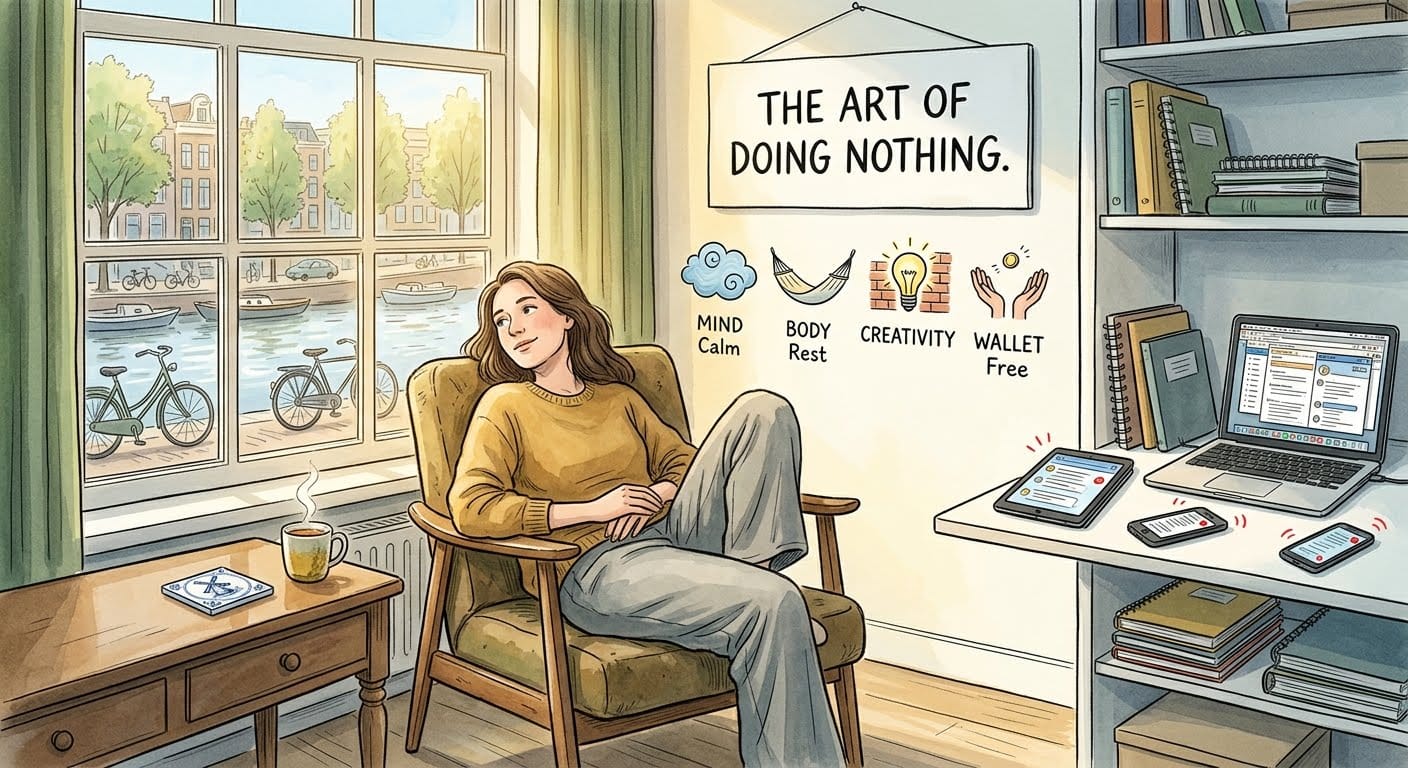
Furthermore, in an era where wellness has been thoroughly commodified into an expensive industry of organic powders, high-tech mattresses, and subscription-based meditation channels, niksen offers a delightfully democratic alternative. It is entirely, beautifully free. It requires no specialized wardrobe, no proprietary equipment, and no financial investment whatsoever. It is a restorative practice available to anyone with a chair, a park bench, or a patch of grass, provided they have the immense courage required to leave their telephone on the other side of the room.
For anyone who has reached the limits of hustle culture—anyone who is thoroughly exhausted by the constant, nagging suspicion that they should be maximizing their downtime, learning a new language in their sleep, or monetizing their hobbies—this book serves as a gentle, necessary permission slip. It suggests that the great, missing piece of the modern wellness puzzle is not doing more, but doing spectacularly, unapologetically less. The world will, without a doubt, continue to ping and flash and demand attention. But by adopting a little bit of the Dutch wisdom of niksen, it becomes entirely possible to look at the roaring engine of modern life, take a deep breath, look away, and rediscover the quiet, forgotten joy of absolutely nothing.