Kill Your Darlings


Peter Swanson knows exactly how to build a trap. If you read The Kind Worth Killing or Eight Perfect Murders, you already know he does not write comfortable stories about nice people doing normal things. He writes about the quiet, terrifying corners of human relationships. His latest psychological thriller takes that talent and flips it completely upside down—literally. It is a story told entirely in reverse, peeling back twenty-five years of a seemingly perfect marriage to uncover a rot that started on day one.
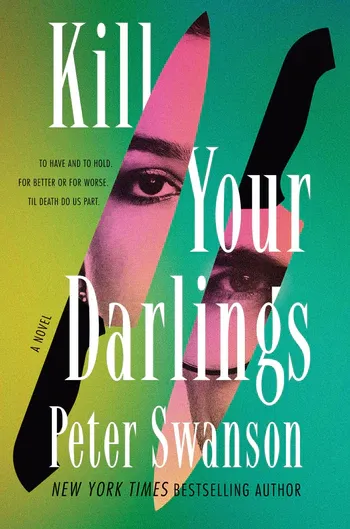
On the surface, Thom and Wendy Graves have the kind of life people envy. They live in a gorgeous Victorian home on the rocky, picturesque north shore of Massachusetts. Wendy is an accomplished, published poet. Thom teaches English literature at a local university. Their son, Jason, is grown up, independent, and out of the house. They have made it past the silver anniversary milestone. Everything looks peaceful, settled, and completely fine.
Except for one small detail: Wendy is actively planning to murder her husband.
This is not a traditional whodunit where a body drops in the first chapter and a detective spends three hundred pages tracking down clues. Instead, Swanson starts at the breaking point and forces us to look backward. To understand why this marriage is ending in a calculated act of violence, we have to travel upstream through their history. Every major milestone of their lives together becomes a crime scene in reverse.
The structure is a brilliant piece of narrative engineering. The book moves backward through the timeline of their lives, stopping at major events. We see their fiftieth birthday celebrations. We watch them buy that beautiful Victorian house. We witness the exhaustion and joy of Jason’s birth. But interspersed with these classic, suburban milestones are darker, uglier events. There is the sudden, unexplained, and deeply suspicious death of one of Thom's university colleagues. There are quiet arguments that carry way too much weight.
As the years roll backward, the picture changes completely. The cozy, intellectual life they built in Massachusetts starts to look less like a dream and more like a beautifully constructed prison. Swanson forces the reader to look at standard marriage milestones through a distorted lens. Buying a house isn't just about real estate; it is about finding a place to hide. Having a child isn't just about growing a family; it is about connecting themselves to a shared reality so they do not drift apart under the weight of what they know.
The deeper you go, the more you realize that Thom and Wendy are not bound by love, compatibility, or mutual respect. They are bound by their past. Decades ago, when they were just two young, ambitious people in their early twenties, they did something terrible. It was not a mistake or an accident. It was a cold, calculated, and coordinated act. A dark secret they plotted together and executed perfectly.
For twenty-five years, that secret was the glue holding them together. It created an unbreakable us-against-the-world mentality. When you share a secret that can ruin your life, your spouse becomes the only person on earth who truly understands you. But a bond built entirely on fear and mutual destruction has a shelf life. Over a quarter of a century, that shared burden stretches, frays, and finally snaps.
What makes the book so incredibly gripping is the psychological tension of the countdown. Because the story moves backward, the reader experiences a strange sense of double-vision. You watch a middle-aged couple stewing in bitter, murderous resentment, and then you immediately see them as optimistic twenty-somethings, completely unaware of the trap they are setting for their future selves. You know exactly where this road ends, which makes watching the beginning of the journey feel deeply tragic and deeply suspenseful all at once.
As the narrative inches closer to that original, defining thing of their youth, the paranoia in the present day skyrockets. The trust is entirely gone. Thom and Wendy both realize a fundamental, terrifying truth about their situation: a secret is only safe if the other person keeps quiet. And when the foundation of your marriage is a mutual pact of silence, the easiest way to guarantee that silence is to ensure your spouse takes that secret to the grave.
It becomes a deadly game of chess where both players already know each other's moves. Wendy wants Thom dead. Thom is starting to look at Wendy with a calculation that suggests he is thinking the exact same thing. Who will strike first? And more importantly, how did two young people who seemed to have everything ahead of them turn into two monsters waiting for the other to slip up?
Swanson avoids all the usual, tired thriller clichés here. There are no cheap jump scares, no long-winded detective monologues, and no neat, tidy endings wrapped up with a bow. Instead, it is a slow-burn study of guilt, intimacy, and the horrifying realization that you can with someone for half your life and still not know what they are capable of doing when their back is against the wall.
If you love psychological suspense that actually challenges the way stories are told, this book needs to be at the top of your reading list. It is sharp, relentless, and fiercely intelligent. By the time you reach the chronological beginning of Thom and Wendy's story, you will want to turn right back to page one and read the whole thing forward again just to see how all the pieces fit. It is a masterclass in tension, proving once again that Peter Swanson is one of the absolute best in the business.