
R.I.P. Sir Patrick Stewart

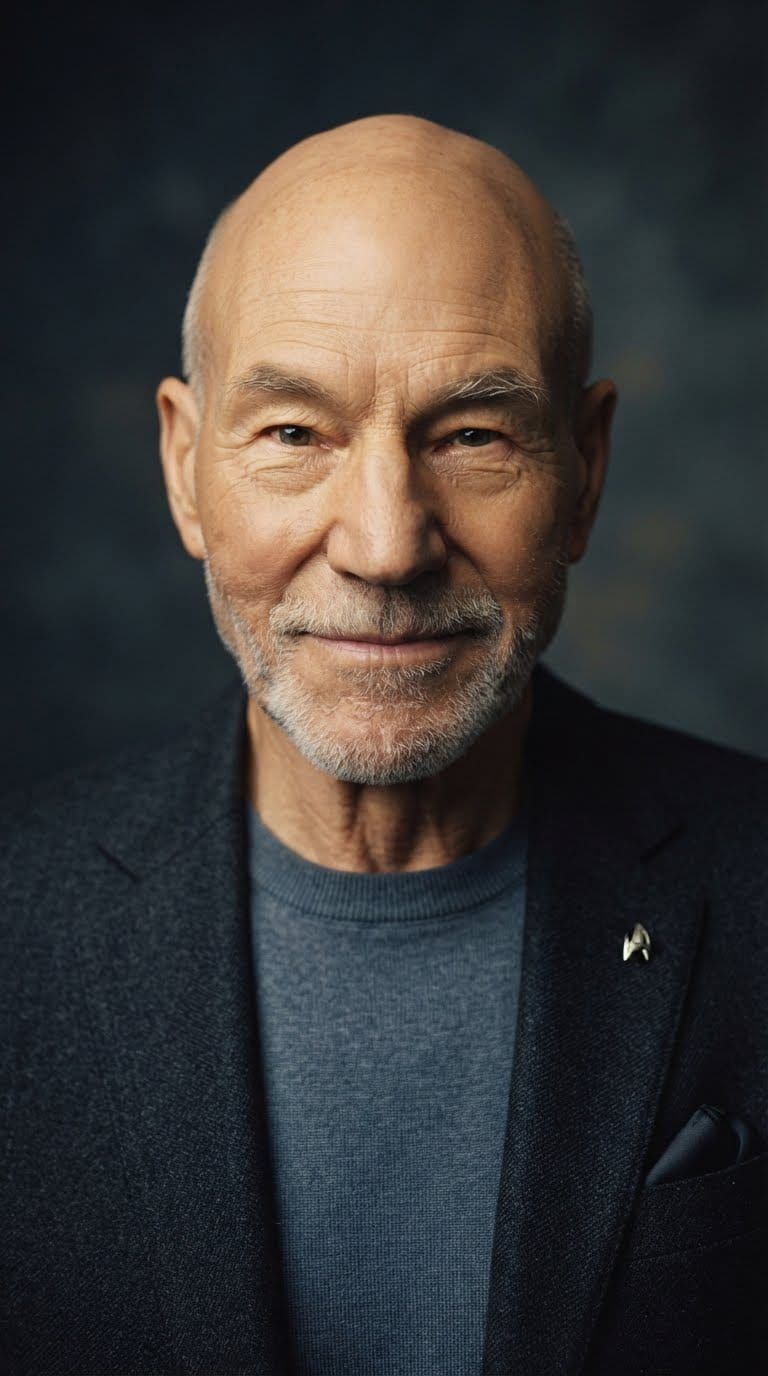
Patrick Stewart was the only guy in the history of television who could make a middle-aged bald man wearing a tight velvet-and-spandex jumpsuit look like the coolest person in the room. If you grew up watching Star Trek: The Next Generation in the late eighties or early nineties, you probably didn't think of him as a British actor playing a role. You thought of him as the guy who held the entire universe together just by standing still and talking in that booming, velvety voice.
His passing at the age of 86 after dealing with Alzheimer’s and Lewy body dementia hits a very specific kind of nerve for millions of people. It is the feeling of losing the closest thing pop culture ever had to a collective father figure.
The weirdest part about his whole life is that he was never supposed to be a massive American celebrity. For the first fifty years of his life, Stewart was a theater purist. He spent his days in drafty British theaters reciting Shakespeare and worrying about things like stage blocking and old poetry. He was an intense, slightly uptight artist who took his craft so seriously that when he first got hired to play Captain Jean-Luc Picard, he didn't even unpack his bags in Los Angeles. He was entirely convinced the show would get canceled within a few months and he could slide right back into the classical theater scene.
Instead, he changed the entire vibe of sci-fi television by utterly refusing to act like he was in a silly show about aliens.
Before Picard came along, the model for a sci-fi hero was William Shatner’s Captain Kirk. Kirk was a space cowboy who solved problems by punching people, seducing green-skinned women, and ripping his shirt open. Picard was the exact opposite. He was a guy who sat in a big chair, drank Earl Grey tea, and solved massive interstellar wars by out-debating the bad guys. If a giant alien monster threatened the ship, Picard would deliver a brilliant, five-minute speech about human rights and the United Nations that was so intense the monster would basically apologize and fly away. Stewart brought the gravity of a royal palace into a television set made of plastic and green screens, and for some reason, a generation of kids who usually only cared about cartoons and wrestling sat down every Saturday night to watch him do it.
He did the exact same trick a decade later when he took a job playing Professor X in the X-Men movies. On paper, comic book movies are pretty goofy. They are about people with claws coming out of their hands fighting guys who can control magnets. But the second Patrick Stewart rolled onto the screen in that motorized wheelchair and started talking, the movie suddenly felt like a heavy, serious drama about the survival of the human race. He gave the whole superhero genre a sense of dignity long before it became the only thing Hollywood cared about making.
But what made him truly great as he got older was that he finally learned how to loosen up and enjoy the joke of his own fame. He stopped being the intense, grumpy theater guy who once scolded his Star Trek castmates for laughing between takes. He realized that the internet absolutely loved him, so he decided to have as much fun with it as humanly possible. He became the voice of a wildly unhinged, cocaine-loving CIA boss on American Dad!. He did goofy videos on Twitter where he dressed up like a lobster or wore silly hats with his best friend Ian McKellen. He even played the actual Poop Emoji in a cartoon movie, which is a sentence that probably would have made his old theater directors faint, but he did it with the exact same professional focus he used when he was performing Hamlet.
There was a strange comfort in how consistent he was. He looked exactly the same for almost forty years. He was already completely bald by the time he became a household name, and he basically skipped the normal process of Hollywood aging. He went straight from looking like a stern, wise 50-year-old to looking like an ancient, wise 86-year-old, right up until his last major appearance in the big 2026 movie Avengers: Doomsday. He felt like a permanent monument that had always been there to keep the culture grounded.
People always say that when someone this famous dies, it is the end of an era. But the truth is that Patrick Stewart didn't belong to any specific era. He was just a totally unique guy who took a bunch of incredibly ridiculous pop culture jobs and turned them into art just by showing up and treating them with respect. He made the world feel a little bit smarter and a little bit classier, not because he changed who he was for America, but because he convinced all of us to meet him on his own terms.
-30-