
The Beasts of the East

The Fall and Rise of America’s Eastern Wilderness
by Andrew Moore, published by Mariner Books
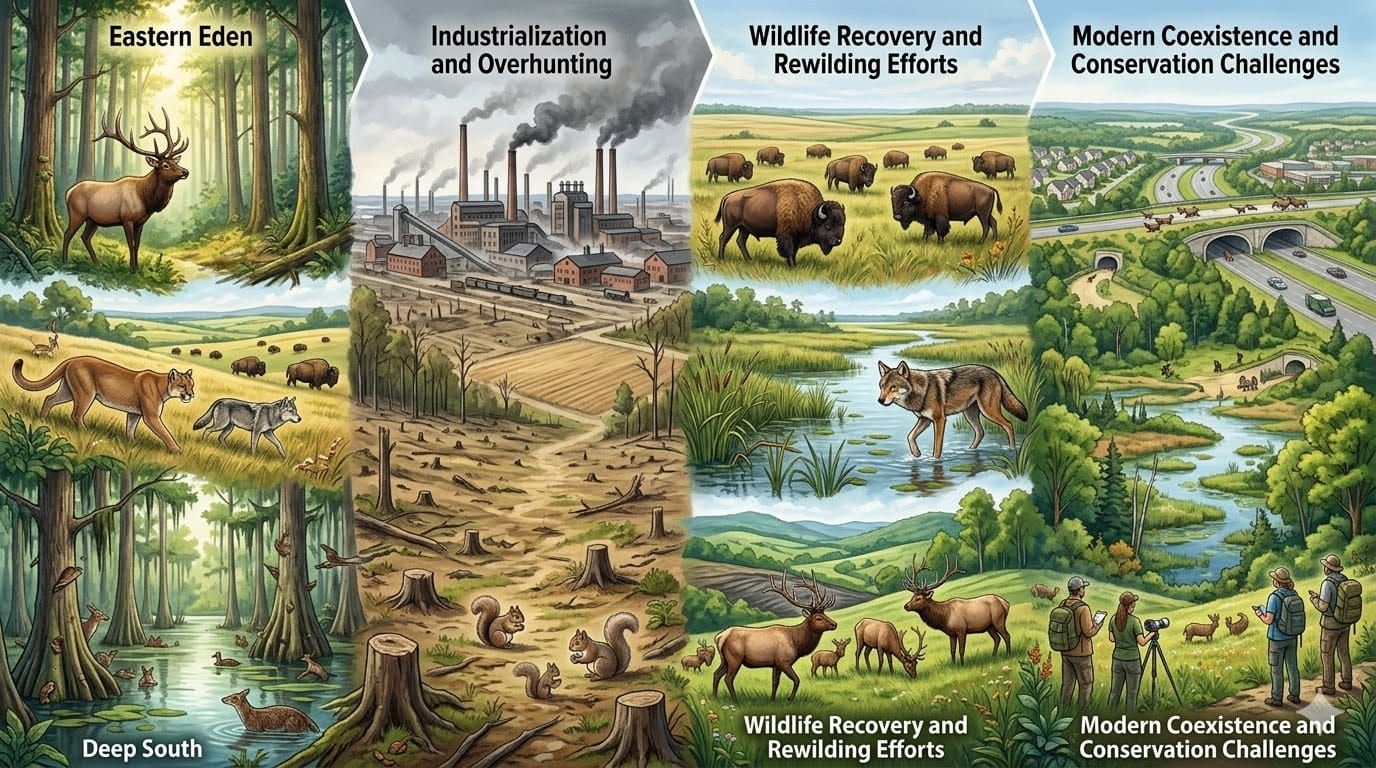
Massive elk crashed through the old-growth canopy of New York and Pennsylvania. Apex cougars stalked prey through the misty Appalachian Mountains. Wild bison herds thundered across rolling Midwestern prairies, and wolves prowled the dense cypress swamps of the Deep South. The East wasn't a paved-over concrete jungle; it was a vibrant, living ecosystem that rivaled any African safari.
Then came the industrial age—and with it, a massive, unscripted horror movie for local wildlife. In a matter of mere decades, the rapid expansion of cities, slash-and-burn logging, and completely unregulated hunting triggered a devastating ecological eviction notice.By the time the 1950s rolled around, the vibrant cast of characters that once ruled the eastern half of the continent had been completely wiped off the map. The mighty predators and majestic herbivores were gone, reduced to historical footnotes or dusty museum exhibits. If you were an easterner stepping outside into a mid-century suburban neighborhood, the most thrilling, adrenaline-pumping wildlife encounter you could hope for was a lone squirrel scavenging for acorns in a manicured park. The wild heart of the East had flatlined.
Fast forward to the present day. While our news feeds are constantly flooded with doom-scrolling headlines about the climate crisis and collapsing global biodiversity, a shocking plot twist is quietly unfolding right under our noses. The ultimate throwback tour is officially underway. The OG beasts of the East are staging an unlikely, high-stakes comeback.This isn’t science fiction or an eco-utopian fantasy; it is happening right now in real time:
- Bison in the Heartland: Massive herds of American bison are once again grazing on the restored prairies of Illinois, looking like a living postcard from a bygone era.
- Wolves on the Coast: Ultra-rare red wolves are stealthily lurking through the coastal marshes of North Carolina, reclaiming their throne as master hunters.
- Elk in Coal Country: In a poetic twist of environmental irony, thousands of majestic elk are now thriving on the sites of abandoned strip mines in Kentucky, turning former industrial scars into lush wildlife sanctuaries.
This movement is known as rewilding, and it represents a radical shift in how we view conservation. Instead of just trying to preserve the status quo, scientists and activists are actively attempting to restore the ecological balance by reintroducing the heavy hitters of the animal kingdom. The goal? To return one of the most biodiverse regions on Earth to its former blockbuster glory.
Of course, every great comeback tour comes with plenty of backstage drama. Rewilding sounds incredible on paper, but when these massive animals actually collide with modern civilization, it triggers a massive cultural and political controversy. We no longer live in an empty wilderness; we live in an era of relentless suburban sprawl, strip malls, and multi-lane interstate highways.This collision course forces us to confront some incredibly messy, real-world challenges that read like a prestige television drama:
- The Urban Obstacle Course: Navigating the logistics of safely migrating a herd of five-hundred-pound elk when their ancient pathway is now bisected by a booming suburban housing development and a six-lane highway.
- The Sustainability Paradox: Questioning whether these isolated, highly managed conservation success stories are actually viable in the long-term, or if we are just creating living museums destined to collapse under the pressure of climate change.
- Redefining the Wild: Figuring out how exactly we define "wilderness" when a suburban homeowner opens their back door to find a black bear or coyote staring at them from across their patio furniture.
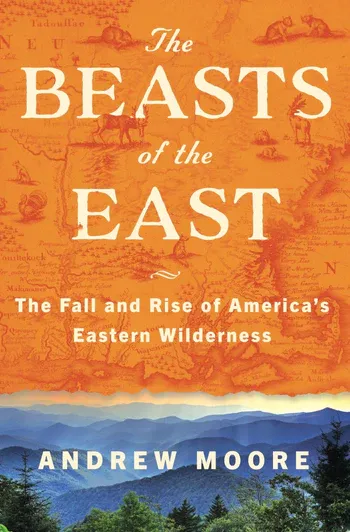
These are the burning questions at the heart of The Beasts of the East: The Fall and Rise of America's Eastern Wilderness, an immersive new book published by Mariner Books.
Think of author Andrew Moore as your cultural tour guide through this strange, brave new world. Part investigative journalist and part boots-on-the-ground storyteller, the James Beard Award finalist hits the road to embed himself with the eclectic cast of characters driving this movement. He sits down with visionary conservationists fighting to build wildlife overpasses, traditional hunters navigating changing landscapes, brilliant field biologists tracking invisible predators, and everyday nature lovers caught in the crossfire.
The Beasts of the East is more than just a nature chronicle; it’s a high-stakes exploration of a changing American identity. It challenges our deep-seated assumptions about what is natural, what is wild, and whether humans and ancient megafauna can successfully co-exist in the modern world. Grab your gear and get ready—the East Coast is getting wild again.