
The Last Best Place on the Internet

There is an unspoken rule of the modern internet that functions much like the rule of oxygen: you only notice it when it suddenly disappears, or when someone tries to make you pay for it.
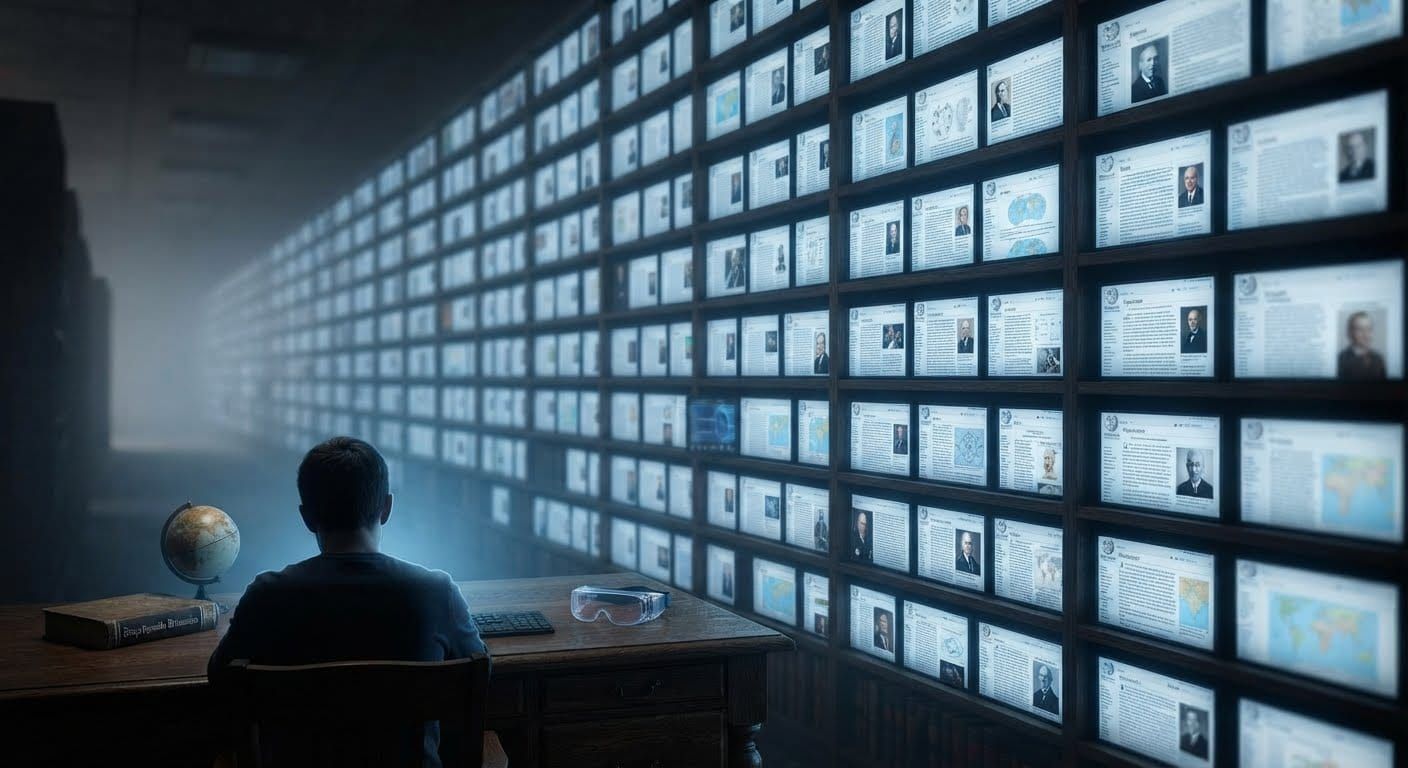
Consider the casual majesty of the Wikipedia rabbit hole. You begin looking up the exact release date of Weezer’s Pinkerton, and ninety minutes later you are deeply, inexplicably invested in the geopolitical ramifications of the 1904 Anglo-Tibetan Convention. This is not a user error; it is the fundamental manner of twenty-first-century consciousness. Wikipedia is the single largest collaborative intellectual project in human history, an achievement that theoretically should have devolved into a digital landscape resembling a flaming dumpster fire within twenty minutes of its 2001 launch. Instead, it became the psychological baseline for how we verify reality.
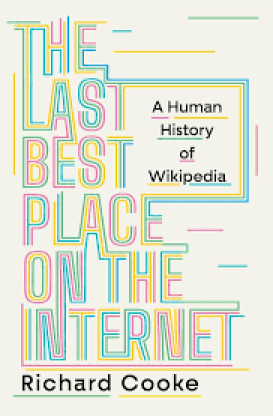
In his book The Last Best Place on the Internet, Richard Cooke performs an autopsy on a living patient, interrogating the strange, utopian miracle of a world where humanity accidentally built something that works, only to realize we have no idea how to protect it from ourselves.
To learn why Wikipedia thrived, one must first understand the sheer, unadulterated madness of its premise. It is an encyclopedia that anyone—including your deeply unhinged uncle or a bored thirteen-year-old in Ohio—can edit. In the early 2000s, this was viewed by the gatekeepers of high culture as a literal sign of the apocalypse. The conventional wisdom of the late-print era dictated that truth required a pedigree. It required leather-bound volumes, a board of pipe-smoking academics, and the authority of the Encyclopædia Britannica. The idea that truth could be crowdsourced felt like an open invitation to intellectual anarchy.
Yet, as Cooke details, the project didn't collapse. It thrived precisely because it leaned into the obsessive, pedantic, and strangely noble corners of human nature. The early history of Wikipedia is a narrative defined not by corporate algorithms, but by intense, almost theological factional warfare. The most compelling of these civil wars was the legendary schism between the "Inclusionists" and the "Deletionists."
This wasn’t just a minor disagreement over formatting; it was an existential debate about the nature of human value. The Inclusionists operated on a philosophy of radical grace: if a middle-school Pokémon variant or a defunct regional supermarket chain mattered to someone, it deserved a digital monument. The Deletionists, acting as a self-appointed digital aristocracy, argued that without strict boundaries of "notability," the site would dissolve into a swamp of irrelevance. They were the bouncers at the club of human history. This tension—hilarious in its ferocity, yet profound in its implications—created a self-correcting ecosystem. The obsessives policed the maniacs, and in doing so, they built a fortress of consensus.
But the tragedy of Wikipedia, and the core anxiety of Cooke’s exploration, is that this fragile ecosystem was built for a web that no longer exists. Wikipedia is a Web 1.0 artifact surviving in a Web 2.0 (and increasingly Web3/AI) world. It was forged in an era of earnest digital optimism, a time when the internet was viewed as a global town square rather than a series of highly monetized behavioral modification loops owned by four billionaires.
What we are witnessing now is the slow, agonizing disintegration of those foundational ideals. The vulnerabilities are no longer just lonely teenagers inserting fake celebrity deaths for a brief dopamine hit. The threats have become systemic, automated, and deeply political.
When a platform becomes the default arbiter of objective truth for Google search results, Apple's Siri, and algorithmic fact-checkers, it ceases to be a quirky community project; it becomes prime real estate for informational warfare. State-sponsored actors, corporate public relations firms, and ideological zealots now deploy sophisticated networks to manipulate articles, turning the talk pages—once a chaotic laboratory of consensus—into trenches of geopolitical attrition.
Worse still is the looming specter of artificial intelligence. If Wikipedia was built by humans curating knowledge for other humans, what happens when it is primarily used as a free, strip-mined training dataset for Large Language Models? The bots are no longer just vandalizing pages; they are learning from them, synthesizing them, and feeding a flattened, hallucinatory version of reality back to the public. If the internet becomes an echo chamber of AI models reading Wikipedia pages written by other AI models, the human element—the very thing that made the site a "digital wonder"—is effectively erased.
When we lose the integrity of Wikipedia, we aren't just losing a convenient place to settle bar bets about the filmography of Nicolas Cage. We are losing the last shared canvas of objective reality. We live in an era of hyper-fragmented media where individuals can construct their own bespoke truths based entirely on their political anxieties and aesthetic preferences. Wikipedia was the lone holdout—a place where, through sheer, grueling, bureaucratic persistence, people of diametrically opposed worldviews had to sit down and agree on what actually happened.
Cooke’s The Last Best Place on the Internet serves as a crucial reminder that utopian ideas are terrifyingly fragile. Wikipedia thrived because it assumed the best about human curiosity and responsibility. Its current endangerment is a grim reflection of a culture that has largely abandoned those assumptions in favor of engagement metrics and algorithmic tribalism. If the digital wonder falls, we won't just be dumber; we will be entirely untethered from the concept of a shared world. And there is nothing online left to catch us.