
The Midnight Train

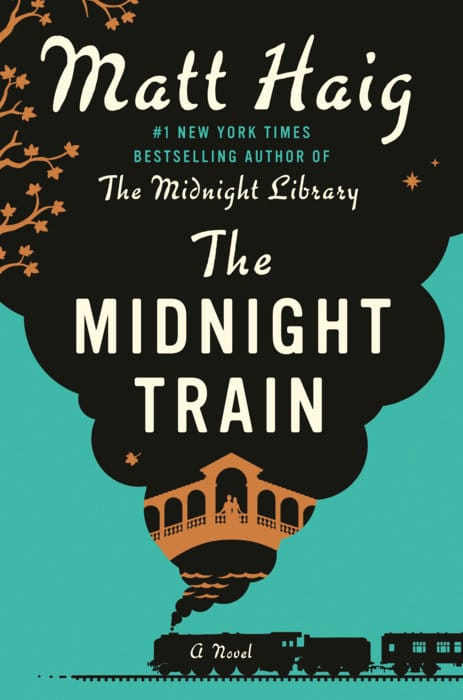
by Matt Haig
published by Viking Books
The Midnight Train, the latest novel by internationally bestselling author Matt Haig, was released on May 26, 2026. Marketed as a companion piece to Haig’s 2020 phenomenon The Midnight Library, the story explores themes of life, death, and the weight of human memory within what has been termed "The Midnight World."
The narrative centers on Wilbur Budd, an 81-year-old bookshop owner who, upon his death, finds himself on a station platform. At one minute past midnight, he boards the titular "Midnight Train," a magical vessel that serves as a conduit through his own life. Guided by Agnes Bagdale, a character who was a former bookshop owner herself, Wilbur is permitted to revisit pivotal moments from his past—including his impoverished childhood, early romantic encounters, and his honeymoon in Venice with his late wife, Maggie.
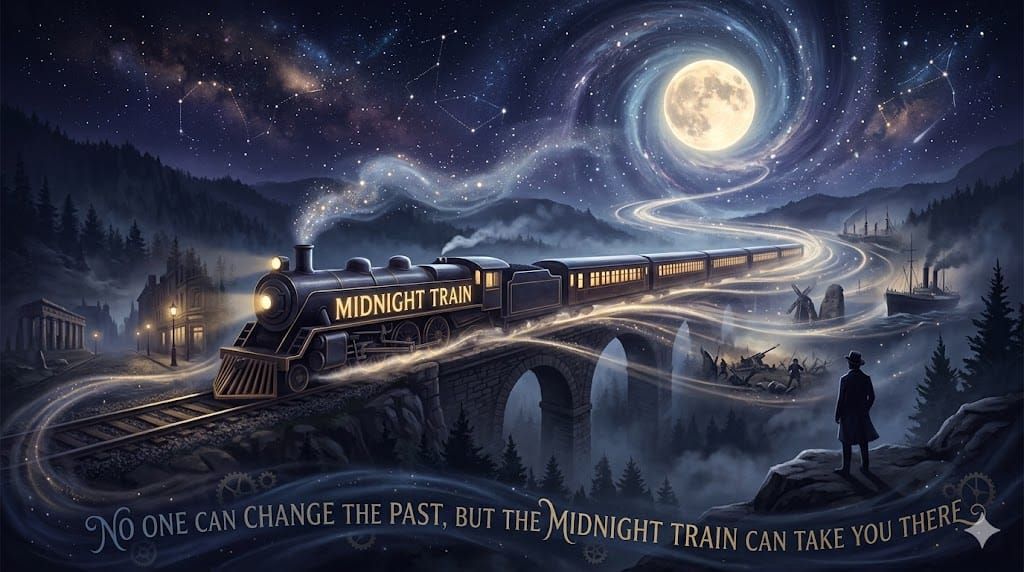
Central to the novel’s premise is the idea that "no one can change the past, but the Midnight Train can take you there." While Wilbur initially wishes to alter the choices he made—specifically those that led him to prioritize professional ambition over his relationship with Maggie—he is forbidden from interfering in the events he witnesses. The journey becomes a poignant exploration of regret and self-acceptance, forcing Wilbur to confront the person he truly was and the consequences of his sacrifices.
The Midnight Train has been met with significant commercial success, debuting at the top of the Independent Bookshop Top 20 shortly after its release. Critics have described the novel as atmospheric and poignant, noting that it maintains the emotional depth and magical realism that characterized Haig’s previous work while offering a distinct, standalone perspective on the nature of human existence.
For a man like Wilbur, the bookshop was never just a place of commerce; it was a sanctuary of paper and ink, a fortress against the encroaching chaos of a world that refused to slow down. When the end finally comes, it arrives with a sudden, quiet stillness, followed immediately by the appearance of the train. The atmosphere inside the vessel is described with a deliberate, haunting precision. It is a space existing between beats of time, where the ticking of clocks is replaced by the rhythmic, hypnotic clatter of wheels against a track that doesn't exist on any conventional map.
Agnes Bagdale, acting as both conductor and confessor, provides the steady hand Wilbur needs as he moves through the compartments of his own life. She is a figure of quiet authority, possessing an intimate knowledge of the train’s geography and the emotional hazards that accompany a revisit of such magnitude. Their interactions serve as the moral compass of the story, as Wilbur struggles to reconcile the man he remembers being with the man who lived through the actual events.
The depiction of Venice in the narrative—specifically the memories of his honeymoon—is rendered with sharp, tactile clarity. The reader is invited to experience the humidity, the sound of water against the city’s foundations, and the fragile, ephemeral hope of a young couple at the dawn of their shared history. Yet, this beauty is underscored by the tragic awareness that these moments have already hardened into history. Wilbur’s desire to reach out, to warn his younger self or to linger just a moment longer in the embrace of his late wife, provides the narrative’s most heart-wrenching tension.
The author’s choice to forbid any physical alteration of the past is the book’s most vital constraint. It effectively shifts the focus from a traditional "what if" fantasy to a more grounded, psychological examination of closure. In The Midnight Train, the impossibility of change is not a limitation; it is the catalyst for the protagonist’s ultimate evolution. Wilbur learns that the past, however painful or incomplete, is not a prison. It is a foundation. The ability to witness these moments one last time allows him to see them not as failures to be corrected, but as essential components of the human experience.
This novel is a stark, empathetic reminder of the brevity of our time and the importance of the internal narratives we construct to survive it. It is an exploration of the quiet, often invisible weight of the life we have already lived. By the time the train reaches its final destination, the narrative has effectively bridged the gap between the agony of regret and the peace of understanding. For the reader, the experience is akin to a slow-burning realization that while we cannot return to the station, we are empowered by the lessons we bring with us from the journey.
Ultimately, The Midnight Train stands as a testament to Haig’s ability to weave profound existential questions into a narrative that remains accessible and deeply human. It is a story for anyone who has ever stood on the platform of their own regrets, looking back at the tracks they left behind, and wondering if the view from the window is all that matters. It is a profound, quiet meditation on the necessity of moving forward, even when the heart remains anchored to the past.