
The Great Fair of 1876 and the Invention of America's Future

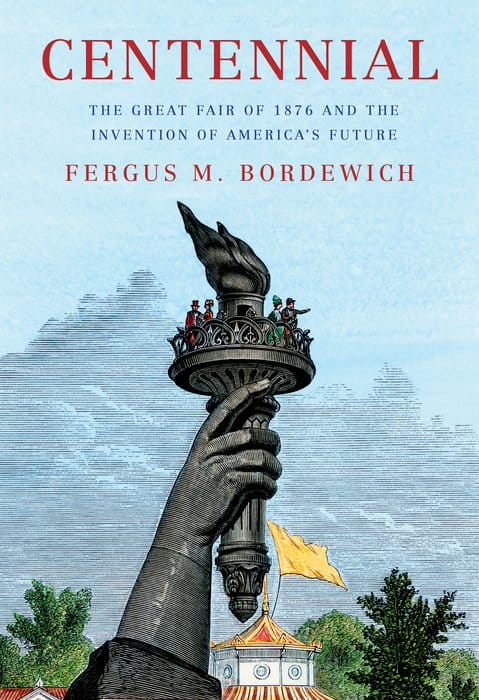
Centennial
by Fergus M. Bordewich, published by Knopf
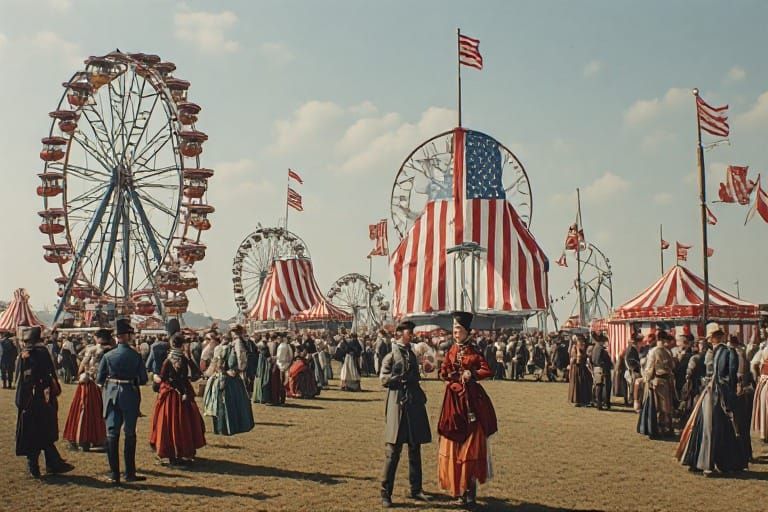
The summer of 1876 in Philadelphia was suffocatingly hot, yet millions of people streamed through the gates of Fairmount Park, drawn by a spectacle the likes of which the New World had never seen. The Great Centennial Exhibition was designed as a massive birthday party for a nation turning one hundred years old, a grand showcase of American ingenuity and industrial might. Inside the colossal glass and iron pavilions, the air buzzed with the mechanical energy of a transforming society.
Visitors marveled at the towering Corliss steam engine, sampled a novel condiment called Heinz Tomato Ketchup, watched typists click away on brand-new shorthand machines, and listened to a strange device called the telephone that could transmit the human voice across a wire. For the ten million Americans who made the pilgrimage, representing nearly a fifth of the entire population, the event was intoxicating. They rubbed shoulders with celebrities like Mark Twain, P.T. Barnum, and Frederick Douglass, alongside foreign dignitaries like the emperor of Brazil, Dom Pedro, who wandered the halls in perpetual fascination. Those who were there felt that the wheel of history itself had turned before their eyes.
Yet, just beyond the festive borders of Fairmount Park, the United States was locked in a profound and dangerous existential crisis. The gilded surface of the Centennial could barely conceal the deep fractures of a country tearing itself apart at the seams. The promise of the American experiment seemed more fragile than at any point since the Civil War. In the West, Native tribes were fighting desperately to repel the relentless advance of white settlement, culminating that very summer in the bloody clash at the Little Bighorn.
In the industrial cities of the East, underpaid and exploited workers were organizing what would soon explode into the nation’s first massive, violent national labor strike. Wealthy railroad barons and corporate monopolies wielded enough big money to buy politicians and overwhelm the mechanism of government. At the same time, early feminists were aggressively demanding the right to vote, while millions of newly emancipated Black Americans fought a losing battle to exercise their hard-won constitutional freedoms against a rising tide of white supremacist violence.
Looming largest of all over the fairgrounds was the shadow of the upcoming 1876 presidential election. It would become the most bitter, contested, and corrupt political race in American history, an electoral deadlock that ultimately broke the back of Reconstruction in the South and permanently reshaped the Republican party into the pro-business entity we recognize today. The grand celebration of a century of liberty was taking place at the exact moment the country was deciding whether to abandon its commitment to racial justice in exchange for political stability and economic growth.
In his captivating new book, Fergus Bordewich masterfully animates this pivotal, volatile year through the intersecting lives of four remarkably different protagonists. By focusing on individuals who occupied vastly different spheres of American life, Bordewich transforms a complex historical convergence into an intimate, high-stakes human drama. Through their eyes, we see a nation desperately striving to live up to the lofty promises of its founders while simultaneously bracing for the terrifying, unpredictable tidal wave of the fast-approaching twentieth century.
The first of these figures is Rutherford B. Hayes, the straight-laced Ohio governor who found himself thrust into the eye of the electoral storm as the Republican presidential nominee. Hayes represents the political establishment of the era, caught between the idealistic, abolitionist roots of his party and the pragmatic, often dirty compromises required to win power in a deeply divided country. His trajectory through 1876 mirrors the moral retreat of the nation, as the federal government prepared to pull troops out of the South, effectively ending the dream of multi-racial democracy for generations to come.
In stark contrast to the grueling world of politics is Alexander Graham Bell, the young, cash-strapped inventor whose breakthrough technology stole the show at the Centennial. Bell represents the boundless optimism of American innovation, the belief that science and communication could unite a fractured world. His presence at the fair, and his frantic efforts to secure financial backing, capture the frantic birth of modern American capitalism, where a single brilliant idea could spark a global empire.
Representing the darker side of that capitalist explosion is Tom Scott, the ruthless railroad magnate and president of the Pennsylvania Railroad. Scott was the archetype of the nineteenth-century robber baron, a man who viewed the American landscape as a personal chessboard to be conquered by steel rails and corporate monopolies. His struggles with labor unrest and political lobbying reveal the immense friction between the concentrated power of big money and the desperate demands of the working class, a struggle that defined the economic landscape for decades to follow.
Finally, Bordewich introduces us to Edmonia Lewis, a fiercely independent sculptor of African American and Native American descent. Lewis’s inclusion provides a vital, poignant perspective on an era that actively sought to marginalize people of her background. Having achieved international acclaim in Europe, her presence in the American art world during the Centennial was a quiet but radical act of defiance. Her art and her struggle embodied the unfinished business of the American Revolution, serving as a powerful reminder that the fight for true freedom and representation was being waged on cultural battlefields as well as political ones.
By weaving these four narratives together, Bordewich creates a rich, cinematic portrait of a society at a historic crossroads. The book moves seamlessly from the glittering displays of the Philadelphia exhibition to the smoke-filled backrooms of political corruption, from the boardrooms of corporate titans to the quiet studios of visionary artists. It shows that the crises we face today, from political polarization and corporate greed to racial injustice and labor inequality, are not new phenomena, but the unresolved inheritance of 1876. This book is a vital, thrilling journey into the heart of an American turning point, revealing that the choices made during that tumultuous summer set the trajectory for the modern world we live in today.