
Why You Should Read More Fiction

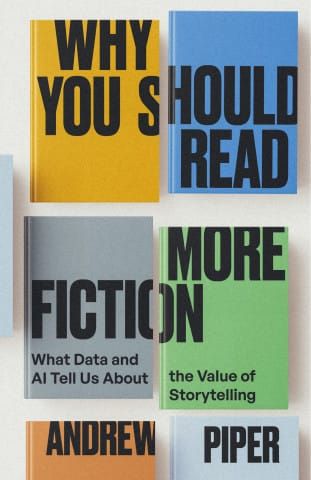
What Data and AI Tell Us About the Value of Storytelling
Consider, for a moment, the sheer, staggering magnitude of the human vocabulary. A reasonably literate adult carries around some fifty thousand words in their head, a mental warehouse of sounds and symbols capable of expressing everything from the profound ache of unrequited love to the exact texture of a damp Wednesday afternoon in April. For most of our history, we have consumed these words in a rather linear, leisurely fashion—one sentence after another, punctuated by the occasional sip of tea or a glance out the window. It is an intimate, deeply subjective arrangement. We open a novel, and by some magnificent trick of neurology, the black marks on a white page transform into a bustling Victorian street, a crowded railway platform, or the interior of a dying man’s mind.
Yet, to a machine, a novel looks like something else entirely. It looks like data. It is a vast, swarming landscape of frequencies, syntactic structures, and statistical probabilities. When viewed through the unblinking eye of a computer, a book is not merely a story; it is a complex architecture of human behavior captured in code.
This brings us to the remarkably industrious endeavors of Andrew Piper, a professor of languages, literatures, and cultures at McGill University. In a corner of Montreal, Piper directs a delightfully named enterprise called the .txtlab. It is a digital humanities laboratory where scholars do not simply analyze texts with high-minded adjectives, but instead throw thousands of novels, folk tales, contemporary global narratives, and even sprawling archives of internet fan-fiction into the ravenous maw of computational modeling and artificial intelligence.
The goal of this digital sorcery is not to coax computers into writing the next great American novel—an exercise that usually results in prose of excruciating, robotic blandness—but rather to discover how human beings have been constructing meaning all along. The fruits of these computational labors arrive on October 20, 2026, with the publication of Piper’s remarkably illuminating new book, Why You Should Read More Fiction: What Data and AI Tell Us About the Value of Storytelling. It achieves something genuinely extraordinary: it uses the cold, calculating instruments of the digital age to mount a passionately scientific defense of the human imagination.
For centuries, literary critics have argued about what makes a story work, often using terms so vague and lofty they threaten to float away entirely. Piper’s lab decided to take a rather more tactile approach. By translating the slippery elements of narrative—the subtle shifts in character emotion, the frequency of specific objects, the physical movements of protagonists, and the intricate web of social relationships—into measurable, quantifiable features, the .txtlab succeeded in mapping the DNA of literature across cultures and centuries. They looked at patterns across tens of thousands of books simultaneously, executing a feat of macro-reading that would leave any human librarian hopelessly cross-eyed.
What the data revealed is both comforting and deeply profound. Across almost every storytelling tradition ever devised by the human mind, fiction does something remarkably consistent: it relentlessly foregrounds what cognitive scientists call embodied cognition.
To understand embodied cognition, it helps to realize that the human mind does not sit in the skull like a lonely passenger in a sports car, steering the body around while remaining entirely separate from it. Our thoughts, our memories, and our very understanding of reality are deeply rooted in our physical, sensory engagement with the world. We think with our skin, our muscles, and our guts just as much as we do with our neurons.
When the supercomputers at the .txtlab finished crunching the numbers on thousands of stories, they found that fiction is absolutely saturated with this physical reality. It is a world where characters are constantly moving through richly textured environments, where everyday objects are heavily weighted with emotional and cognitive significance, and where reality is painstakingly rendered through an accumulation of sensory details.
When an author describes a character buttoning a heavy wool coat against a bitter wind, or feeling the smooth, cold weight of a brass key in their pocket, they are not just filling space until the next plot point arrives. They are building a cognitive simulator. Fiction, the data shows, is a highly sophisticated technology specifically engineered to mirror exactly how human minds and bodies engage with their surroundings.
This leads to the book’s central, urgent argument: reading fiction is not a passive luxury or a frivolous escape from the rigors of real life. It is an essential form of cognitive maintenance. It is a gymnasium for the brain.
In an age dominated by short-form videos, algorithmic feeds, and the relentless, fragmenting chatter of the digital ecosystem, our capacity for sustained attention is under siege. We have become a species of hopscotchers, leaping from one shiny piece of digital flotsam to the next. Fiction demands something entirely different. It requires us to coordinate our attention over long arcs of time, following the intricate, unfolding lives of others across pages, chapters, and volumes.
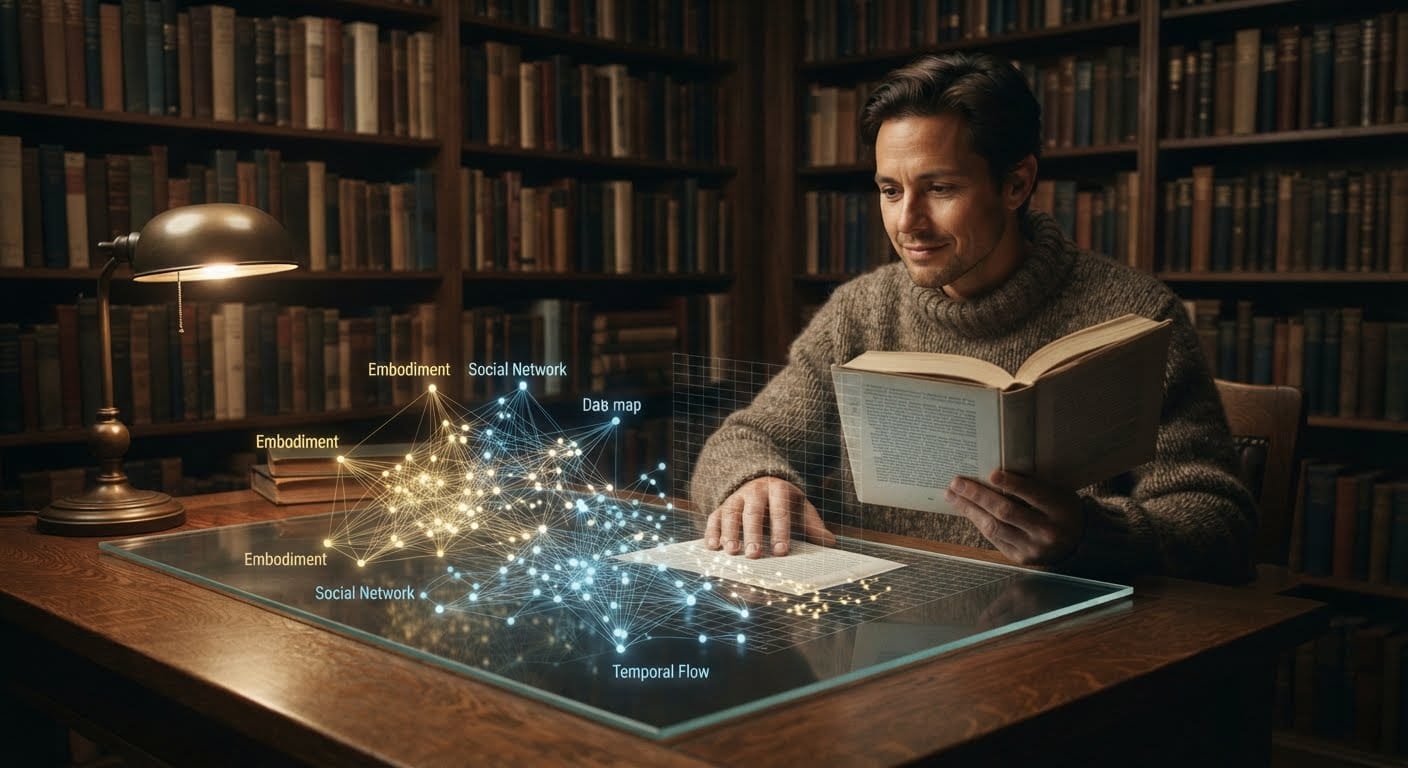
But it goes much deeper than merely exercising our attention spans. By immersing ourselves in the richly detailed interior of a novel, we are trained to examine human experience with a degree of flexibility and interpretive distance that no other medium can quite replicate. We are forced to inhabit perspectives that would otherwise remain utterly closed to us—perspectives separated by vast gulfs of geography, culture, and centuries of time. When we read about a nineteenth-century weaver in a silk mill or a modern teenager navigating the streets of Tokyo, our brains are actively practicing empathy at a microscopic scale.
There is a delicious irony in the fact that at the precise historical moment when artificial intelligence is threatening to automate language, generate endless reams of synthetic content, and alter the very nature of human creativity, a scientist has used AI to prove that human storytelling is utterly irreplaceable.
Large language models can mimic the structure of a story, and they can certainly churn out paragraphs at a terrifying speed, but they lack the lived, fleshy, vulnerable experience that forms the bedrock of true fiction. They do not know what it is like to have a stubbed toe, a broken heart, or a sudden, inexplicable wave of nostalgia triggered by the smell of woodsmoke on an autumn morning.
Why You Should Read More Fiction serves as a powerful, data-driven reminder of what makes us human. It suggests that our ancient urge to gather around a fire—or a printed page—and listen to a tale about people who never existed, doing things that never happened, is not a quaint relic of a simpler time. It is the very mechanism by which we stay connected, remember who we are, and make sense of the wild, chaotic, and beautiful world we inhabit.
-30-