
A Gathering of Leaves

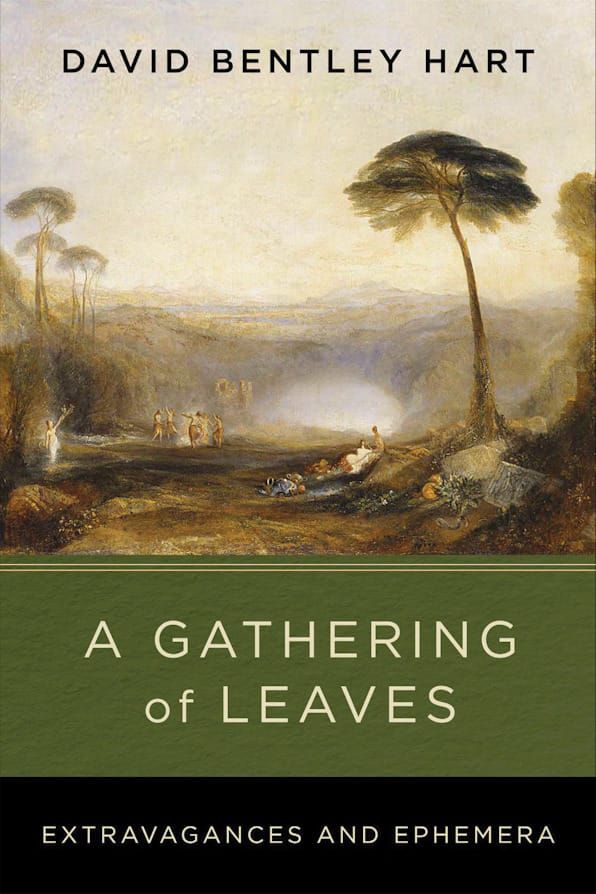
In an era when most nonfiction arrives wrapped in a three-step productivity plan or an urgent warning about the impending collapse of Western civilization, there is something wildly subversive about a writer who simply wants to show off a really good sentence.
Enter David Bentley Hart. Best known in academic circles as a formidable philosopher of religion and the daring translator of a remarkably unvarnished New Testament, Hart has quietly built a second career as one of the most entertainingly belligerent stylists in American letters. In "A Gathering of Leaves: Extravagances and Ephemera," a 338-page collection from the University of Notre Dame Press, he steps down from the theological pulpit, loosens his collar and invites us along for a sprawling, 38-piece ramble through whatever happens to catch his magpie eye.
The title nods to Hart’s popular Substack newsletter, "Leaves in the Wind," where many of these essays first saw daylight. Even so, readers shouldn't expect a lazy copy-and-paste job. As Hart cheerfully warns us, every piece has been thoroughly "revised, reordered, rearranged, polished, burnished, buffed, primped, painted, purfled, and curled" until they gleam like brand-new works. And what a wonderfully unruly cabinet of curiosities they form. Rather than marching readers toward a single, tidy thesis, Hart lets each piece wander down its own winding garden path. Short, razor-sharp notes sit shoulder to shoulder with sprawling meditations, while close literary readings melt seamlessly into cultural commentary and sudden, delightfully stubborn enthusiasms.
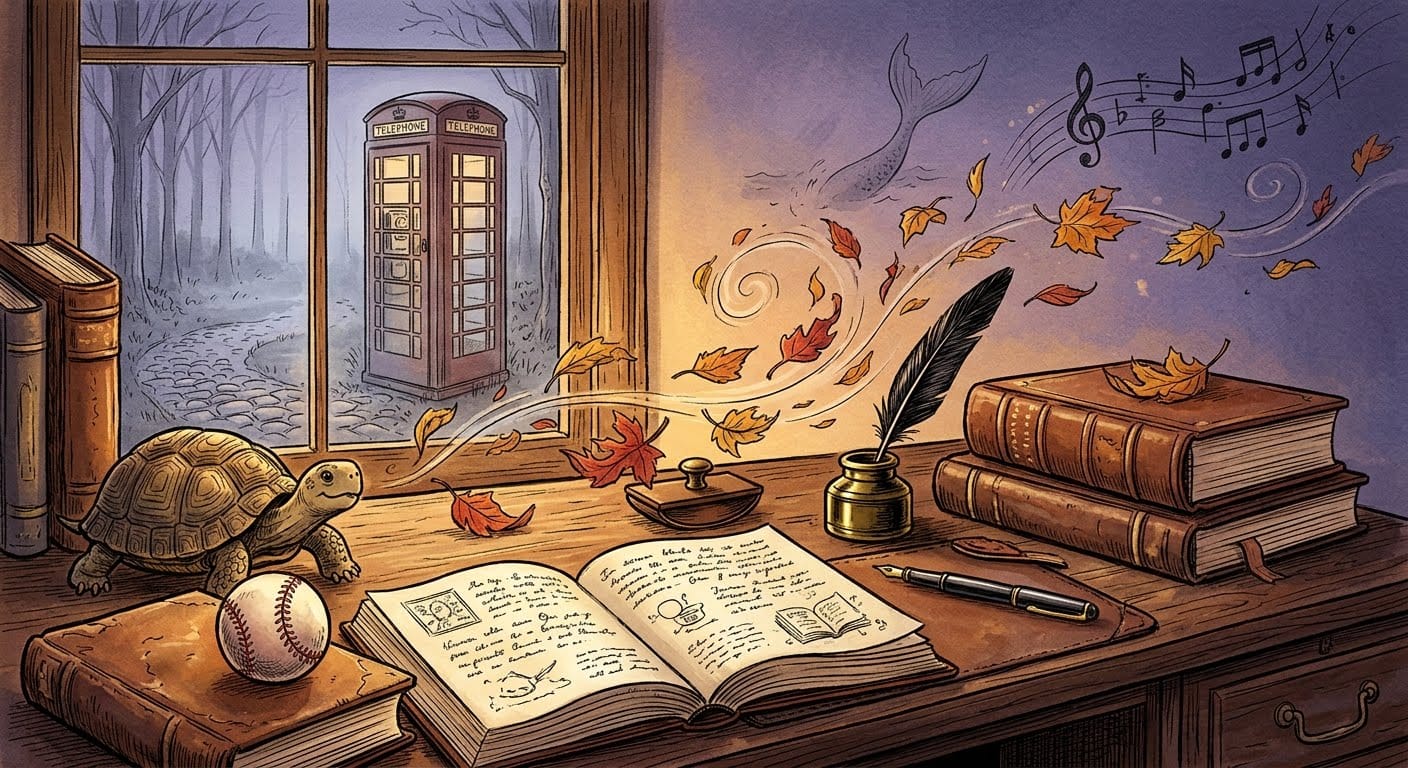
Look at the sheer range on display here. Within the span of a few dozen pages, Hart holds forth on the Beatles, artificial intelligence, Japanese ghosts, Nabokov’s favorite dictionary, vintage phone booths, the reality of mermaids and—in one particularly endearing stretch—tortoises. Critics have marveled at the sheer intellectual wattage required to pull off such a high-wire act without breaking a sweat. Author Norman Finkelstein dubbed Hart a "polymathic marvel" whose commitment to the "mercurial and occasional" never fails to delight. Meanwhile, Commonweal senior editor Matthew Boudway observed that it seems "almost unfair that one man should be able to write so well, and so variously, about so many subjects."
Hart’s wide-eyed curiosity is matched by a sharp comic fury, targeting everything from Cormac McCarthy’s prose to the steady decline of everyday metaphors. Beneath the jokes runs what Slavic scholar Caryl Emerson identifies as a "constant background hum of fury at the world’s political folly," fighting the closed mind with pure, unapologetic wit. You get the distinct sense that Hart views sloppy thinking and ugly prose not merely as aesthetic sins, but as personal insults that demand an immediate, devastating response.
That combative streak reaches a quasi-religious pitch whenever Hart turns his attention to baseball, a sport he loves almost as fiercely as he despises the New York Yankees. In an excerpt shared by his publisher, Hart argues with a completely straight face that hating the Yankees offers a rare, guilt-free form of "emotional hygiene" for the modern soul. As a reviewer in the Tillamook County Pioneer noted, Hart’s baseball meditations manage to capture modern cultural decay more sharply than a week’s worth of cable news shouting matches. Whether he is mourning the lost poetry of the ballpark or dissecting the absurdities of modern sports media, he treats the pastime with the kind of glorious, mock-heroic seriousness usually reserved for Homeric epics.
To be fair, Hart is not a writer for people who skim. His baroque, clause-heavy sentences demand a slower, more deliberate pace, complete with occasional trips to the dictionary to look up a deliciously obscure adjective. Yet for anyone willing to match his stride, the rewards are immense. Poet Henry Weinfield praises him as a "belle-lettrist in the old-fashioned sense" who wastes no time getting to the root of a matter, and New York Times columnist Matthew Walther has gone so far as to call him "our greatest living essayist."
The real magic of "A Gathering of Leaves" is that it refuses to treat reading like a chore or a self-improvement seminar. Hart isn't trying to fix your morning routine, optimize your brain or win an argument on social media. He is simply reminding us what happens when a brilliant, restless mind is allowed to roam free on the page, chasing whatever oddities cross its path and turning them into pure verbal music.
-30-