
Notes on Postcards

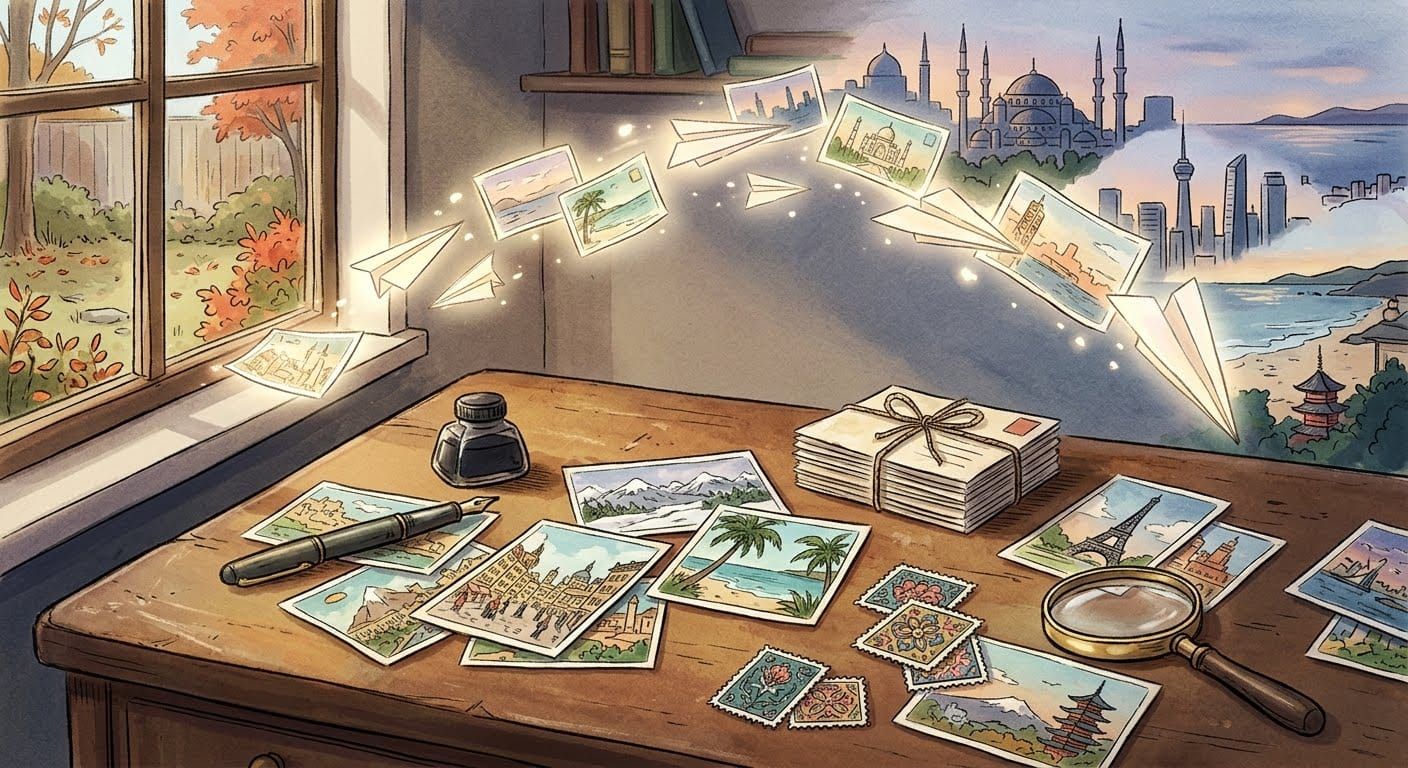
Before Instagram turned every airport layover into an algorithmic performance and every brunch plate into a miniature studio shoot, there was a simpler, far more democratic way to brag about your vacation: a four-by-six-inch piece of cardstock slapped with a stamp.
For International Booker Prize-winning translator and novelist Jennifer Croft, however, those glossy rectangles of beaches and novelty kittens were never mere souvenirs. They were lifelines. In "Notes on Postcards: A Memoir," Catapult's 448-page illustrated volume, Croft opens up her personal archive to chart a life spent crossing borders and searching for a permanent address for her heart.
The premise sounds deceptively breezy, like flipping through a well-curated shoebox at a rainy-day estate sale. Yet Croft, who famously translated Nobel laureate Olga Tokarczuk’s sprawling masterpieces "Flights" and "The Books of Jacob" and earned a Guggenheim Fellowship for her novel "The Extinction of Irena Rey," has never been interested in conventional storytelling. Instead of a tidy, chronological autobiography, she serves up a kaleidoscope of hundreds of full-color vintage and modern postcards, paired with punchy, postcard-sized bursts of prose.
Early critics have been thoroughly charmed by the alchemy. Kirkus Reviews praised the book as "poetic, engaging, and pithy—as befits a celebration of postcards," while Booklist applauded how the cards themselves are "beautifully reproduced and fascinating for both their pictures and their content." In a glowing assessment for Shelf Awareness, reviewer Rebecca Foster noted that by paring her story down to its essentials, Croft has created an artifact that, much like a good postcard, feels simultaneously "telltale and intimate . . . ephemeral and lasting."
It helps that Croft has lived the kind of globe-trotting, linguistically acrobatic life that practically begs for postage. Growing up as the daughter of a geography professor who had surprisingly little desire to actually visit the places he taught about, young Jennifer caught a ferocious case of wanderlust. When she finally left home, postcards became her umbilical cord back to her grandmother. Later, as she bounced from Tulsa to Buenos Aires to Warsaw and beyond, buying and mailing cards became a ritual for anchoring herself to the dizzying succession of countries she called home. Even her romance has a philatelic origin story. She fell in love with her husband while browsing for vintage postcards at a flea market. (Honestly, if that isn't a meet-cute tailor-made for a bookish rom-com, Hollywood is asleep at the switch.)
Along the way, Croft moonlights as an enthusiastic cultural historian, tracing the rise and fall of what she calls the "golden age" of postcards between 1900 and 1915, when the medium was revolutionary and sumptuously produced. She treats every card in her collection like a tiny archaeological dig, transcribing and translating the hurried, often delightfully mundane messages scrawled on the back. She pairs these scraps with witty observations about stamp placement and the silent choreography of moving through other people's minds.
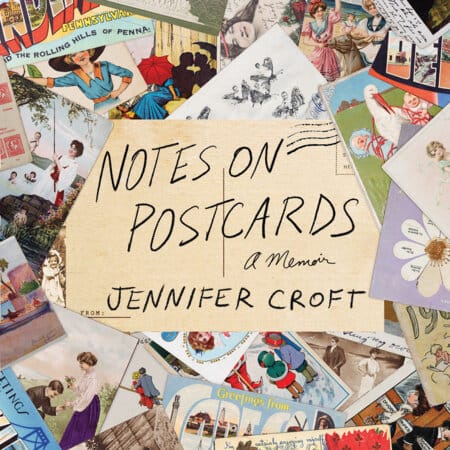
Croft isn’t above playing a few formal parlor tricks with her readers, either. As BookPage’s Alice Cary points out, some pages offer just a single, crystalline sentence, inviting you to linger over the artwork. Elsewhere, text curves into circles, or Croft playfully instructs you to skip ahead a few pages and read backward and upside down. In lesser hands, such typographical gymnastics might feel like an annoying gimmick. Here, they capture the tactile joy of turning a physical card over in your fingers, squinting at faded ink and trying to decipher a stranger’s handwriting across a century of patience.
What elevates "Notes on Postcards" from a handsome coffee-table curiosity into something deeply moving is how seamlessly Croft weaves this paper trail into the messy terrain of adulthood. Parallel to her celebration of travel and translation runs a profoundly intimate account of romantic love, fertility struggles and the fierce desire to start a family.
Just as she is navigating pregnancy, Croft is blindsided by a series of devastating family losses, forcing her to confront grief at the exact moment she is preparing to bring new life into the world. When she finally gives birth to twins, the woman who built an award-winning career out of mastering foreign tongues suddenly finds herself humbled by a pair of tiny human beings who don't speak any language at all. Everything she thought she understood about distance and connection gets scrambled and rebuilt from scratch.
Library Journal rightly hailed the book as arriving at the intersection of "micro-histories, epistolary novels, and memoirs," and that blend explains why it lingers so long after you close the cover. In an era when our daily dispatches vanish into the digital ether, replaced by self-destructing snaps and forgettable texts, Croft reminds us of the quiet magic of sending a physical piece of paper out into the world and hoping it lands safely in someone else’s hands.
Every postcard carries an unspoken subtext: I am here, you are there, and I am thinking of you. Gathering a lifetime of those miniature bridges into one luminous volume, Jennifer Croft offers a generous, clear-eyed tribute to human connection itself—no stamp required.
-30-