
How to Save the Media

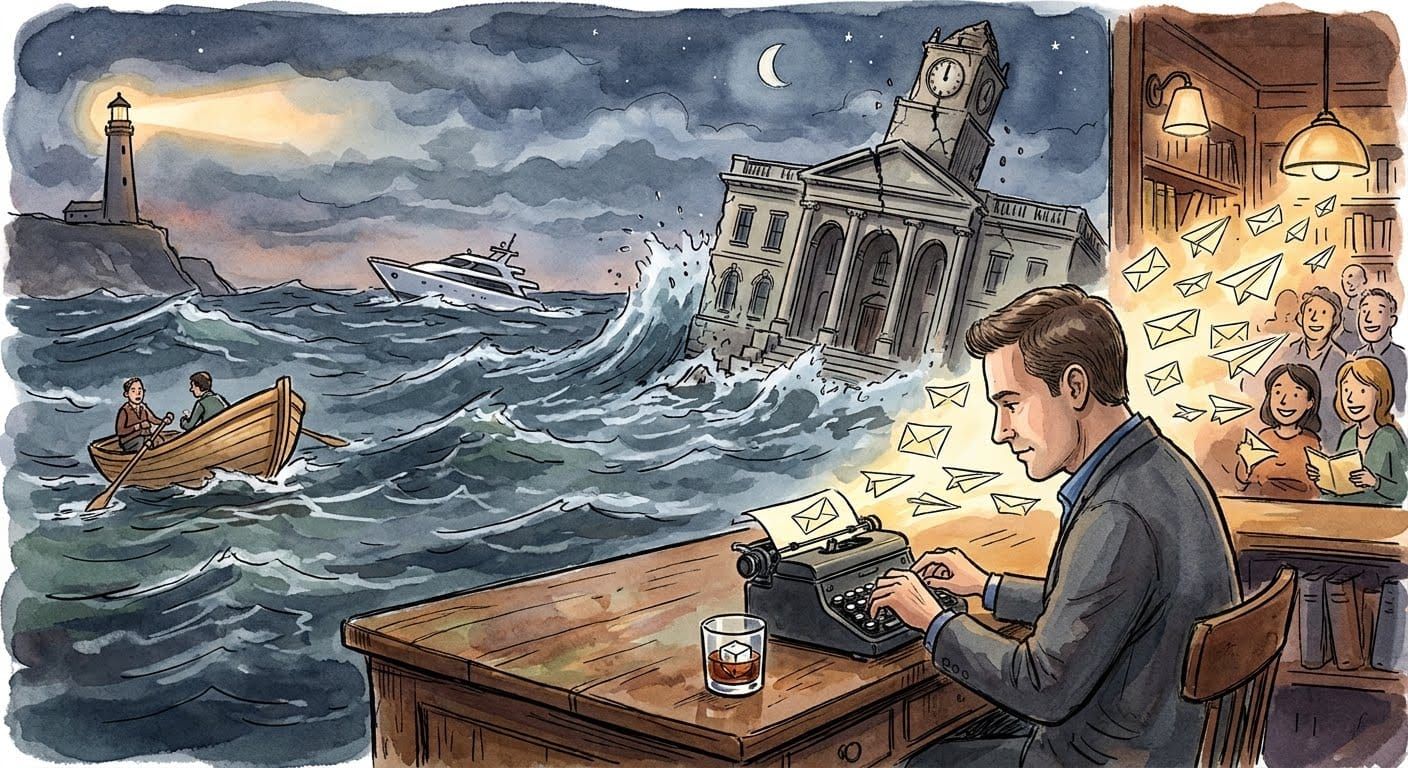
In the hallowed, slightly haunted Bard Room of New York’s Hotel Chelsea, Substack co-founder Hamish McKenzie recently tried to rally the literary troops. Surrounded by writers and media insiders, he earnestly asked documentary filmmaker Laura Poitras if anything in our current cultural landscape was pushing back against the prevailing "grain of doom."
Poitras, never one to waste oxygen on corporate pleasantries, replied flatly, "No, I think ‘doom’ is appropriate"—just before McKenzie jovially cut her off by ordering another round of drinks.
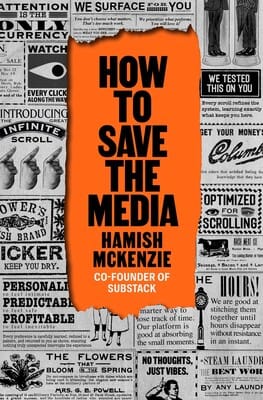
That wonderfully awkward exchange serves as the beating heart of McKenzie’s brisk new manifesto, "How to Save the Media." Clocking in at a mercifully slender 176 pages, the book is part startup memoir, part industry autopsy and part evangelical sales pitch. Its central thesis is refreshingly uncomplicated: Social media giants took a wrecking ball to a journalism ecosystem that required two centuries to build, swapping broadsheets and evening broadcasts for algorithmic outrage machines. Yet, as McKenzie points out, the basic supply and demand of storytelling hasn’t budged. Readers still crave smart reporting, and there are more writers typing away than ever before. The crisis, he insists, is simply a plumbing problem. Rip out the rusted pipes of ad-supported clickbait, install direct reader subscriptions, and voilà—the fourth estate rises from the ashes.
It is an intoxicatingly tidy solution, delivered by a man with the bruised knuckles to back it up. A native New Zealander, McKenzie started out as a young reporter watching the floor give way beneath his feet. Seeking higher ground, he detoured into Silicon Valley, surviving a tour of duty as a lead writer at Tesla—where he tangled with Elon Musk, a saga he chronicled in "Insane Mode"—before working as an editorial adviser for the messaging app Kik. There, he teamed up with Chris Best and Jairaj Sethi to launch Substack in 2017. Their pitch was practically utopian: Give independent writers a clean publishing tool, let them keep their mailing lists and subscription dollars, and watch the toxic incentives of modern media melt away.
Naturally, the tech and business worlds have greeted McKenzie’s gospel with rapturous applause. Porchlight Book Company crowned it a Best New Business Book of November, while Stratechery’s Ben Thompson hailed it as a "case study in realizing the promise of the Internet." Bestselling author Charles Duhigg went even further, calling the slim volume an "essential map" that rewards depth over division.
McKenzie is undeniably charming company when he gets out from behind the spreadsheets and puts human faces on this digital upheaval. He whisks us from smoky, nostalgic barstools at the Hotel Chelsea—where whiskey-soaked legends of newsrooms past hold court—to the sun-drenched, ultra-luxury yachts of the Cannes Lions festival, where sweating ad executives carve up the very marketing budgets that once kept local newspapers solvent. Along the way, he trots out the undisputed juggernauts of the newsletter boom: Boston College historian Heather Cox Richardson, who turned casual Facebook musings into a reader-funded juggernaut, and Bari Weiss, who parlayed her Substack launch of The Free Press all the way to the top of CBS News.
Once "How to Save the Media" landed on the desks of actual media critics, however, McKenzie’s sunny disposition ran into a cold front. While Publishers Weekly politely praised the book as a "glimmer of hope in a bleak media landscape," other reviewers couldn't help noticing that the title was doing some awfully heavy lifting. Despite its grand, civic-minded promise, the book often reads less like a comprehensive rescue plan for journalism and more like an extended, glossy brochure for Substack.
In a sharp takedown for the Columbia Journalism Review, reviewer Carolina Abbott Galvão pointed out the glaring blind spot in McKenzie’s rosy vision. Subscription newsletters are undeniably fantastic for charismatic pundits, cultural critics and partisan firebrands. They are considerably less helpful when it comes to funding the expensive, unglamorous grunt work of democracy—like paying a beat reporter to sit through a four-hour zoning board meeting or bankrolling a six-month investigative deep dive that may never trigger a viral subscriber spike.
Then there is the elephant in the inbox: Substack’s famously hands-off approach to content moderation. McKenzie devotes plenty of real estate to defending the platform’s free-speech absolutism, a stance that prompted high-profile defections from writers like Casey Newton and Marisa Kabas over the presence of extremist newsletters. Recounting the endless hours he spent on Zoom calls trying to soothe anxious creators, McKenzie paints himself as a principled defender of open discourse. To his critics, it looks suspiciously like a tech founder waving away real-world toxicity so the subscription numbers keep ticking upward.
Still, you don’t have to buy every word of McKenzie’s sermon to appreciate the energy of the service. He is dead right that legacy institutions torched their own credibility by chasing programmatic ad dollars and algorithmic rage, and there is something undeniably thrilling about watching writers answer directly to their readers rather than to billionaire owners or opaque tech feeds.
Even so, as Laura Poitras’s dry retort at the Hotel Chelsea reminds us, calling for another round at the bar doesn’t actually stop the storm outside. Saving journalism will require more than a sleek payment processor and a clever email list. Until someone figures out how to pay for the vital, unsexy reporting that happens when nobody is clicking "subscribe," McKenzie’s lively manifesto remains less a blueprint for salvation than a very comfortable lifeboat.
-30-