
A Season on Ice: Velocity, Vows, and the Fragile State of the Billion-Dollar Ballpark

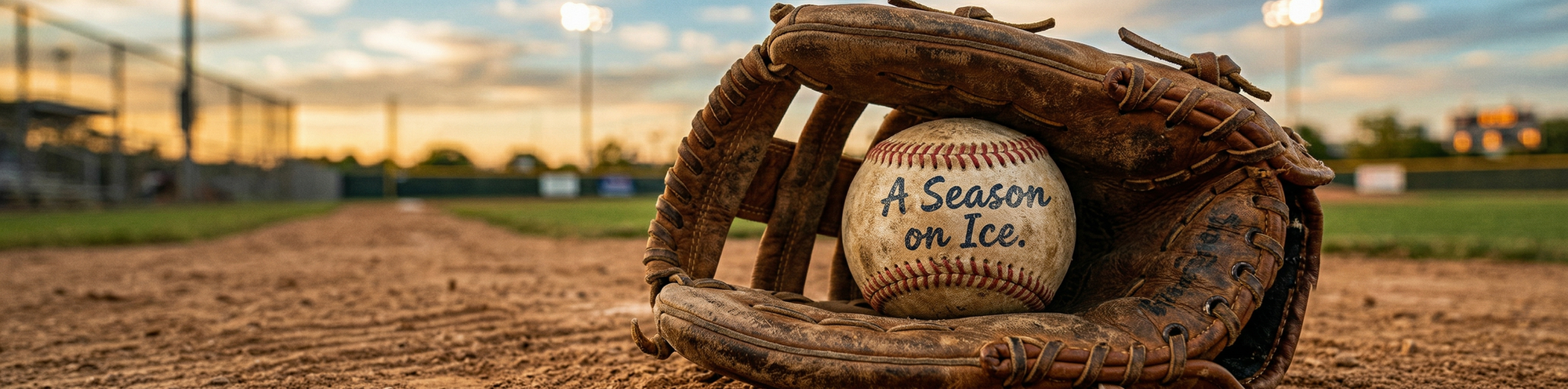
The air around the ballparks this April carries that familiar, deceptive scent of hope, though if you’ve been paying attention to the casualty list, it smells more like a hospital ward. We are barely a few weeks into the 2026 season and the narrative is already less about who’s hitting the ball and more about whose ulnar collateral ligament is currently holding on by a human thread. Welcome to the modern game, where we spend half the winter talking about billion-dollar contracts and the first month of spring watching those same billions sit on a training table being soothed with a bag of ice.
If you want to talk about the Los Angeles Dodgers, you’re basically talking about a blue-and-white corporation that happens to also play baseball. They’re sitting at eleven and four as of today, cruising along with the kind of clinical efficiency that makes you wonder if they even enjoy it. They’ve got Shohei Ohtani back on the mound striking out double digits like he’s bored, and the rest of the league is left scratching their heads, wondering how a team with an eleven-figure payroll can still act like they’re the underdogs of the Pacific. It’s a beautiful machine, I suppose, if you like watching a steamroller flatten a flower bed.
The irony, of course, is that while the Dodgers are playing like they’ve already booked their October hotel rooms, the rest of the National League West is scrambling for the scraps. The Padres are hanging around, as they always do, spending money like a sailor on shore leave and hoping this is the year the chemistry finally stops exploding. Meanwhile, in Arizona, the Diamondbacks are trying to prove that their recent success wasn't a fever dream, though doing it without a healthy pitching staff feels a bit like trying to win a gunfight with a noodle, dry or wet.
Across the country in the NL East, the Atlanta Braves are currently leading the league in two distinct categories: runs scored and orthopedic appointments. They’ve got ten wins and a run differential that suggests they’re playing against a local high school team, but their pitching staff is a rotating door of bad news. When your Opening Day rotation starts the season with three-fifths of its members on the shelf, you start to wonder if there’s a localized curse in Cobb County. It’s a testament to their depth that they’re still winning, but you can only patch a leaking boat with bubble gum for so long.
Then you have the Mets. Ah, the Mets. They’ve managed to lose five in a row just in time for a series against the Dodgers, which is the baseball equivalent of wearing a steak suit in a lion’s den. They’re missing Juan Soto, who’s currently nursing a calf injury, and without him, that lineup looks about as threatening as a butter knife. They’re seven and nine, drifting aimlessly in the wake of the Braves, and the fans at Citi Field are already starting to check the schedule for the Jets' training camp. It’s a tradition as old as time: New York optimism meeting New York reality at sixty miles per hour.
Over in the American League, the parity is so thick you could cut it with a dull pocketknife. The AL East is a three-way tie at the top between Baltimore, Tampa, and the Yankees, all hovering around eight and seven. The Yankees are doing their usual dance, looking like world-beaters on Tuesday and a basement-dwelling tragedy by Friday. They’re still waiting on Gerrit Cole to return from his 2025 surgery, and in the meantime, they’re leaning on a rotation that feels like it’s being held together by a few rolls of athletic tape and optimism.
The real comedy, however, is playing out in the AL West, where the Houston Astros have decided to start the season by forgetting the need to win games on the road. They’ve stumbled out to a six and ten start, looking entirely human for perhaps the first time in a decade. It’s almost touching, really, to see them struggle like the rest of the commoners. On the flip side, the Oakland—or whatever we’re calling them this week—Athletics have somehow clawed their way to eight and seven. It’s the kind of early-season statistical anomaly that makes you love the game, mostly because you know it can’t possibly last.
In the Central divisions, we’re seeing the annual tradition of teams trying to figure out if they’re actually good or if everyone else is just having a bad month. The Pittsburgh Pirates are sitting at nine and six, which is lovely for them, truly. Their fans are getting that familiar glimmer in their eyes, the one that gets extinguished by the Fourth of July. In the AL Central, Cleveland and Minnesota are neck-and-neck, playing the kind of fundamental baseball that makes national broadcasters want to skip their games and talk about the Yankees instead.
But the real story of 2026 isn't the standings; it’s the sheer fragility of the talent. We’ve reached a point where seeing an "ace" pitch six innings without his elbow exploding feels like a miracle. The velocity is up, the spin rates are through the roof, and the human arm is waving a white flag. We’re watching guys like Spencer Strider and Hunter Greene—the future of the game—spending their prime years in a rehab pool. It’s a cynical way to look at it, I know, but it’s hard to get invested in a pennant race when the leading candidates for the Cy Young are all wearing street clothes.
Still, there’s a reason we keep coming back. There’s a man named Brandon Nimmo in Texas hitting nearly .400 as if he’s playing a different game entirely. There’s a twenty-one-year-old in Detroit hitting home runs off Sandy Alcantara and making the game look like a playground. There are the moments of pure, unscripted chaos, like the Cubs losing their top prospect to surgery while the Phillies struggle to find a lineup that doesn't strike out ten times a game.
Baseball in April is a series of lies we tell ourselves. We believe the hot starts are sustainable and the slumps are just bad luck. We ignore the mounting injuries and focus on the box scores. We watch the Dodgers win another game they had no business losing and we tell ourselves that by the time the leaves turn brown, someone will have figured out a way to stop them.
It’s a long road from here to October, and if the first few weeks are any indication, that road is paved with ice packs and Tommy John surgeries. But the lights are on, the grass is green, and for at least a few hours every night, we can pretend that a seven and nine record is just a slow start and not a prophecy. It’s a beautiful, frustrating, predictable mess of a season, and most fans wouldn’t have it any other way. You just have to make sure you enjoy the superstars while they’re actually on the field, because in 2026, the 15-day IL is the most crowded place in the stadium.
So, here’s to the grinders in Cleveland, the wounded warriors in Atlanta, and the corporate juggernaut in Los Angeles. May your fastballs stay straight and your ligaments stay intact, because at this rate, the World Series might just be a contest of which team has the fewest guys on crutches. It’s only April, after all. There’s plenty of time for things to get much, much worse.
Tim
Tim Lowe is a writer, book expert, retired sailor, retail worker, and renaissance man.
He is currently traveling the country and working on his forthcoming book.