
Blockers

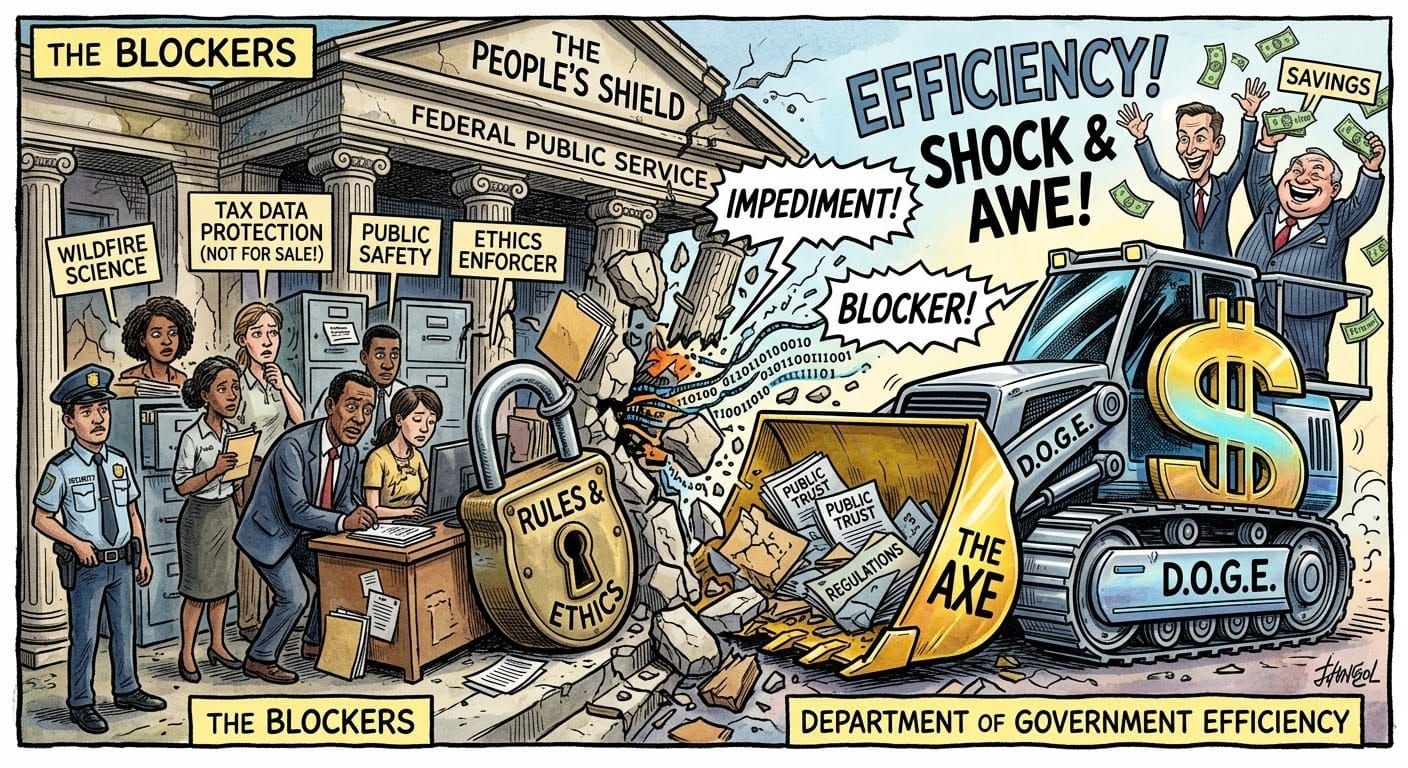
Imagine waking up one morning, driving to the office where you’ve spent fifteen, twenty, or twenty-five years quietly saving lives, and finding out that billionaires in silicon-valley zip codes have labeled you a disease. Imagine discovering that because you showed up every day to do your job—and did it well—you are now considered an impediment to the state.
Welcome to the new Washington. Welcome to the era of the "Blocker."
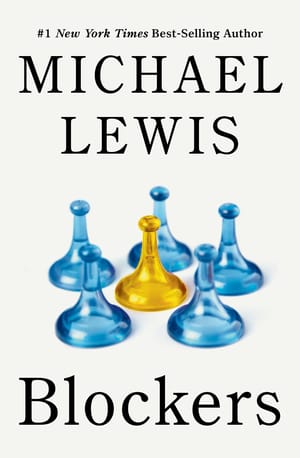
A new book by one of the country's most celebrated non-fiction writers blows the lid off the early, chaotic days of a certain Department of Government Efficiency. The title says it all: Blockers. In the corporate-speak onslaught that hijacked the federal government, "Blocker" wasn’t just dismissive jargon; it was a target on your back. If a civil servant didn't instantly bow to the whims of unelected tech tycoons looking to slash trillions from the public ledger, they were branded as part of the malignant "Deep State" and shown the door.
The narrative zeroes in on six specific human beings who suddenly found themselves standing in the crosshairs of this "shock and awe" corporate restructuring. These aren't the faceless, pencil-pushing caricatures routinely demonized on cable news. These are actual working-class and middle-class Americans who genuinely believed they had a calling. They woke up every single morning convinced that they were doing something this country couldn’t afford to live without, only to realize that the people running the show thought their entire existence was completely worthless.
Look closely at who these corporate axes actually went after.
One of these "dangerous" institutional impediments spent her career making sure that your most sensitive, private tax data didn’t get handed over to the wrong people or weaponized by politicians. Another was an internal watchdog whose sole purpose was to ensure that civil servants and elected officials actually played by the rules. Think about that for a second. In the eyes of an efficiency department, the people enforcing the rules are the first ones who need to go.
Then there is the scientist who figured out how to stop raging wildfires from turning suburban developments into ash, and another researcher who spent a lifetime unlocking the cruel mysteries of cystic fibrosis to save children's lives. And yes, because this is the American bureaucracy, there was even a security guard—someone whose entire job was simply to watch the door, keep the building safe, and protect the human beings inside.
The book plays out like a political thriller, but the terror is entirely real. It tracks how an agency led by billionaires—promising massive savings that, surprise, never actually materialized—instead functioned as a giant wrecking ball to hollow out basic American protections. Tens of thousands of workers were subjected to arbitrary layoffs that were later found to be completely illegal. Skilled specialists were pushed out by sheer, unadulterated austerity. In one particularly harrowing reality check, a wildfire scientist found himself restricted from spending more than a single dollar without explicit, impossible-to-get sign-offs from the billionaire leadership class.
The genius of this investigative chronicle is how it shifts the focus away from the loud, theatrical men at the microphones and places it squarely on the people who keep the lights on. It reminds us that when you dismantle "the bureaucracy," you aren't cutting fat; you are cutting the nervous system of the country. You are firing the person who checks your food for E. coli, the person who tracks toxic air emissions, and the person who ensures your retirement benefits aren't stolen by a fraudulent hedge fund.
This isn't about efficiency; it's about power. It’s about transforming a 2-million-person, nonpartisan civil workforce into a private customer-service desk for corporate interests. The book forces us into a corner and leaves us with an incredibly uncomfortable question. If the people who protect our health, our privacy, our forests, and our families cannot survive in the current political climate, then what does that say about us? What does it say about a society that allows its public shield to be dismantled by private greed?
-30-