
The New Dark Ages

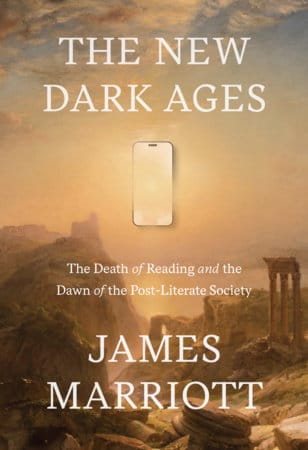
The alarm bells are ringing for the world of books, and they are absolutely deafening. In The New Dark Ages, Times columnist James Marriott delivers a warning so urgent and anxious that you’ll feel like reading it by candlelight—just in case the power grid goes down next. His thesis is simple, terrifying, and incredibly hard to ignore: democracy was built block by block on the printed page, and it is now crumbling under the weight of our shiny, hyperactive screens. We are sliding into a post-literate society, and the view from the edge of this cultural cliff isn't pretty.
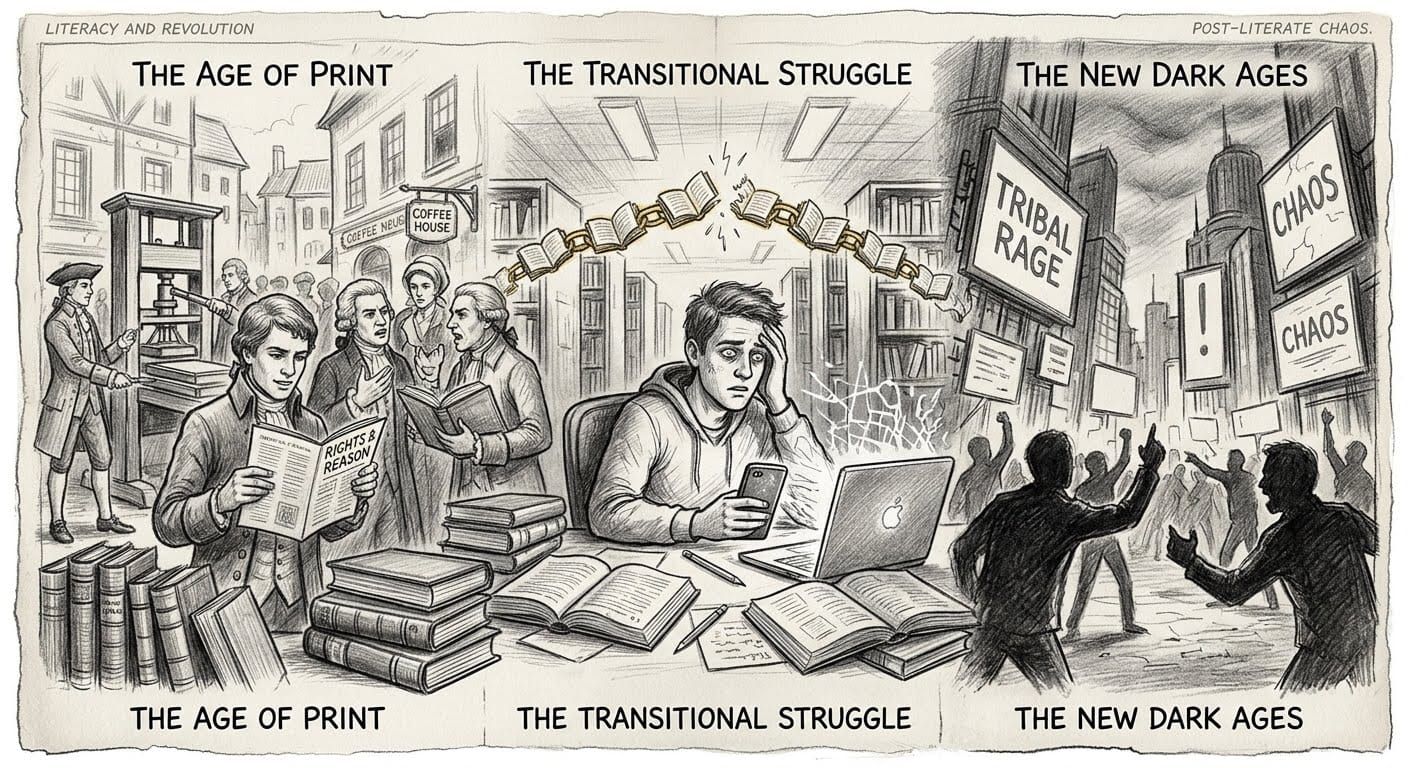
To understand how we got here, Marriott takes us on a quick tour of history. Not long ago, printing books didn't only create readers; it created citizens. For the first time, regular people could debate rights, government, and science without waiting for permission from a king. Literacy was the oxygen of the modern world. It allowed people to grapple with big ideas slowly and deeply, which is exactly what makes democracy work. It linked readers across centuries in one grand conversation about freedom.
But that chain is snapping. Around the world, the stats are grim enough to make any English teacher cry. The number of people reading for fun is in free fall. Literacy rates are stalling or sliding backward. Walk into any college classroom today, and you’ll find professors despairing over students who can barely finish a single assigned chapter. The age of print is dying, and the age of the screen is here to take the crown.
What makes The New Dark Ages so sharp isn't just that it misses old habits, but that it nails what is replacing them. Screens don't want you to think; they want you to react. They trade in whatever is immediate, brief, and flashy. As reading fades, we risk slipping back into something older and much more dangerous: tribalism, chaos, and collective rage. It’s a world where nuance goes to die, replaced by the screaming matches of the digital colosseum. Marriott is unsparing here, pointing out that our hyper-connected, attention-shredded lives are literally making us less intelligent.
Skeptics will call this the timeless grumbling of the intellectual elite. Every generation has gatekeepers who see new technology and predict the end of civilization. The ancient Greeks worried writing would ruin our memories; the Victorians fretted that novels would corrupt young women. It’s easy to accuse Marriott of romanticizing the past, pretending the print era was a perfect golden age of reason. After all, history is full of highly literate societies that descended into spectacular cruelty without the help of a smartphone.
Yet, look around at our current political and cultural landscape. It’s obvious Marriott has hit on a profound truth. The decline of reading is a political crisis. Modern democracies rely on citizens who can tolerate complexity, follow a long argument, and weigh conflicting ideas. Screens do the opposite: they fracture our attention and reward the loudest, most simplistic voices. When we lose the patience to read a book, we lose the ability to govern ourselves wisely. We become easy targets for politicians who promise quick fixes in a single headline.
The New Dark Ages is a passionate, beautifully reasoned defense of the written word as our ultimate shield against cultural decay. Marriott diagnoses the problem and issues a call to arms. Reading and writing aren't dead artifacts for a museum; they are active, essential tools for innovation, creativity, and empathy. Picking up a book today is an act of quiet rebellion against a culture that wants us distracted, divided, and easily manipulated.
Whether this book can turn the tide is hard to say. The digital current is incredibly strong, and our screens are only getting brighter and more addictive. But by spelling out the stakes so clearly, Marriott has done something vital. He has reminded us exactly what we stand to lose if we let the fire of literacy go out. This is a provocative, gripping book that deserves to be read, argued over, and passed from hand to hand—in print, naturally—before the darkness closes in.
-30-