
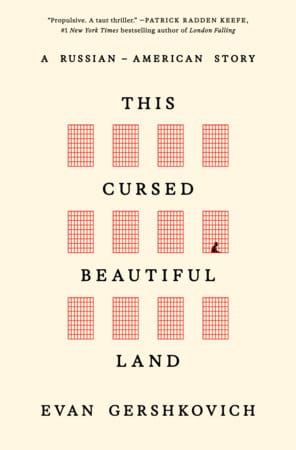
This Cursed Beautiful Land

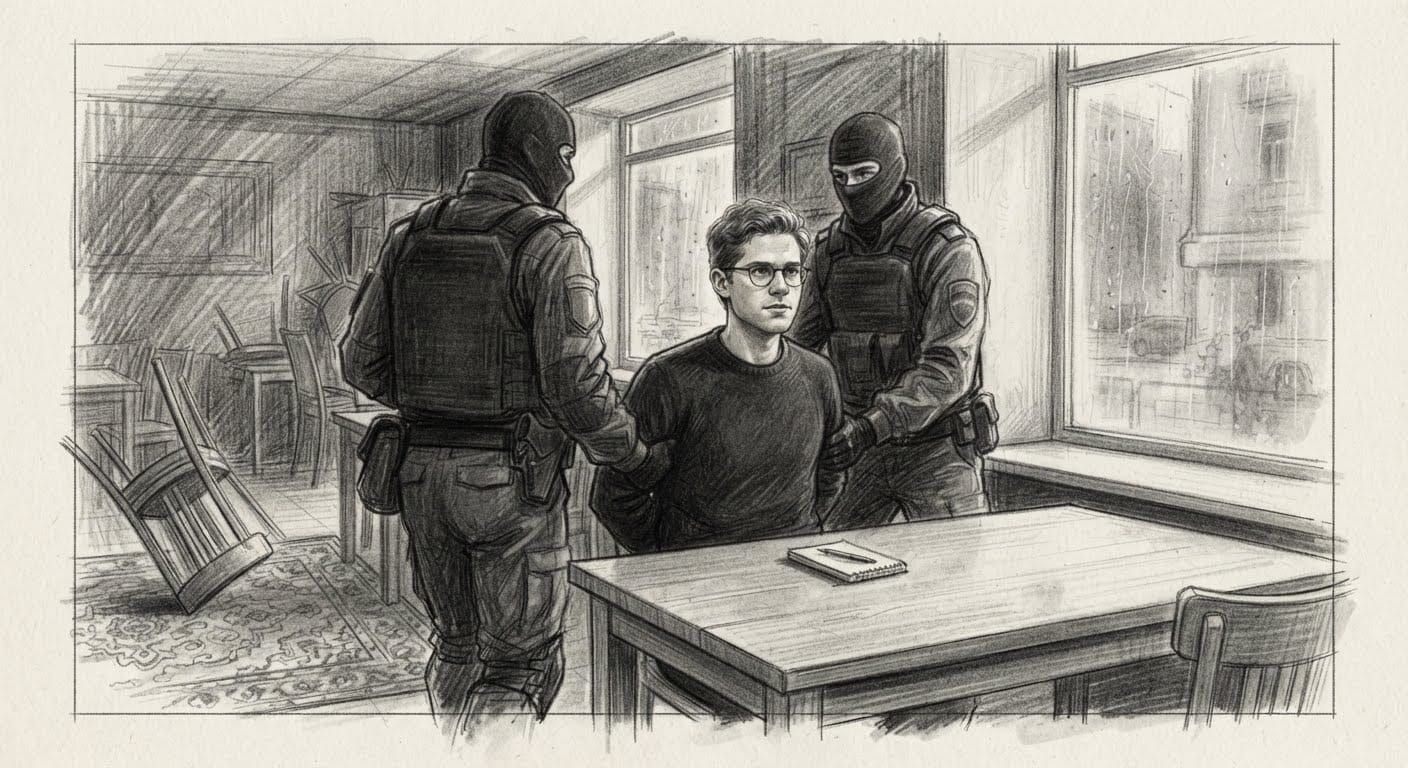
The arrest of Evan Gershkovich in the industrial city of Yekaterinburg, some nine hundred miles east of Moscow, was not an isolated tragedy of a young, talented reporter caught in the gears of a hostile state. It was a signature moment in the long twilight of the post-Cold War era, a stark demonstration of how completely the thin veneer of modern, globalized Russia had been stripped away to reveal the hard-edged structure of the police state underneath.
For thirty years, since the collapse of the Soviet Union, Western journalists working in Moscow had operated under a set of unwritten but generally respected rules of engagement. They were outsiders, often critical, sometimes troublesome, but they were largely viewed by the Kremlin as necessary conduits to the outside world—or at least as figures possessing a certain diplomatic immunity. Russian journalists, to be sure, faced immense, often fatal risks if they crossed the regime. But the Americans and the Europeans believed, with the quiet confidence that came from carrying a superpower’s passport, that they were insulated from the worst of it. The invasion of Ukraine in February 2022 shattered that illusion, though it took the targeted strike against Gershkovich a year later for the full magnitude of the shift to become undeniable.
Gershkovich was, in many ways, the ideal chronicler for this fractured, transitional moment in history. He was not a detached observer viewing Russia through the clinical lens of a foreign bureau chief. He was the son of Soviet émigrés who had fled the claustrophobia of Brezhnev’s Russia in the 1970s to build a quiet, middle-class existence in New Jersey. Raised on the cultural artifacts of his parents' homeland—the classic animation, the literature, the specific, melancholic humor—he possessed an innate, generational understanding of the country. When he arrived in Moscow in 2017 to work for The Moscow Times, he did not just cover the capital; he lived in it. He built a life among a generation of young, educated Russians who, like him, were trying to navigate the narrowing confines of a society drifting backward toward autocracy. He understood their hopes, their deep anxieties, and the quiet, daily compromises required to survive under Vladimir Putin’s increasingly heavy hand.
By the time he joined The Wall Street Journal, the political climate had turned icy. The war in Ukraine had accelerated the Kremlin’s descent into a totalizing nationalism. The security apparatus, led by the FSB—the direct, unreconstructed heir to the KGB—had been granted sweeping, near-absolute authority to root out dissent and look for enemies everywhere. To the men who ran the FSB, a Western journalist asking questions about the domestic impact of the war was not a reporter doing his job...he was a security threat, a spy, or worse, a valuable asset to be seized for future leverage.
The trap sprung on March 29, 2023. Gershkovich was doing the fundamental, shoe-leather work of a great reporter, sitting in a near-empty restaurant with a source linked to a Russian tank factory. It was the kind of reporting that required patience, trust, and physical presence—the very qualities the regime found most threatening. The intervention of the masked FSB agents was swift and brutal. He was blindfolded, forced into an unmarked van, and flown back to Moscow, where he was formally charged with espionage—a fabricated accusation that carried the weight of decades of Soviet show-trial history.
His destination was Lefortovo Prison, a grim, nineteenth-century fortress in Moscow that held a terrifying place in the history of Soviet repression. It was here, in the isolated, whitewashed cells, that the state had historically broken its most prominent political prisoners. The psychological warfare at Lefortovo was designed to induce a sense of total abandonment. The isolation was absolute, the routine rigid, and the silence heavy. Yet, Gershkovich’s response to his captivity became a remarkable study in resilience. Rather than succumbing to the despair his captors intended, he relied on the very cultural fluency that had drawn him to Russia in the first place. He read classic Russian literature, maintained a steady, remarkably cheerful correspondence with his family, and kept his mind sharp, refusing to let the walls of his cell narrow his worldview.
Outside the prison walls, his arrest triggered a complicated geopolitical chess match. In the capital cities of the West, it was immediately understood that Gershkovich was a state-sponsored hostage, a human bargaining chip to be traded for high-profile Russian operatives held in Western jails. The progress of American diplomacy, often slow and bureaucratic, was forced into a high-stakes, covert game of leverage, navigating a Kremlin that operated on the cold logic of transaction rather than international law.
The story of Evan Gershkovich’s imprisonment, ultimately culminating in his release, is more than a narrative of survival. It stands as a cautionary document about the nature of modern autocracy. It revealed a Russia that had grown indifferent to international norms, a state willing to criminalize the basic act of bearing witness in order to sustain its domestic myths and foreign ambitions. For a generation of reporters, it marked the end of an era of relative safety, proving that in the new global landscape, the truth was once again a dangerous commodity, and the cost of telling it could be one's freedom.
-30-