
Department of Fate

The story of the United States is about more than just great ideas written on old paper. It is a long, messy fight across generations to build the government systems needed to make those ideas real. Few government agencies have played a bigger—or more dramatic—role in this fight than the U.S. Department of Justice. For nearly 150 years, this single agency has acted as the country’s legal and moral backbone. Behind the scenes, it has decided the limits of our political freedom, picked winners and losers in the economy, and determined whether Americans actually get "equal protection under the law."
In her new history book, Department of Fate, Rachel Maddow takes readers inside this powerful agency to see how it really works. The story she tells is not a smooth, simple tale of steady progress. Instead, it is a classic American story of two competing sides. The Justice Department has always been a battleground where our best traits—patriotism, self-sacrifice, and real courage—clash with our worst flaws: corruption, greed, tribal politics, and the desire for revenge.
To understand the Justice Department is to understand how America itself has changed over time. As Maddow shows, the agency has never been a group of quiet scholars working in a bubble, completely separated from politics. It is run by human beings. Over the decades, its leaders and lawyers have chosen which crimes to punish and which ones to ignore. By making those choices, they helped decide what kind of behavior America would accept.
When good, fair-minded leaders were in charge, the Justice Department acted as a shield to protect everyday people and defend the Constitution. Just as often, however, politicians used the agency as a weapon. They used it to help wealthy corporations, crush labor unions for powerful railroad bosses, and protect the exact social inequalities the agency was supposed to fix.
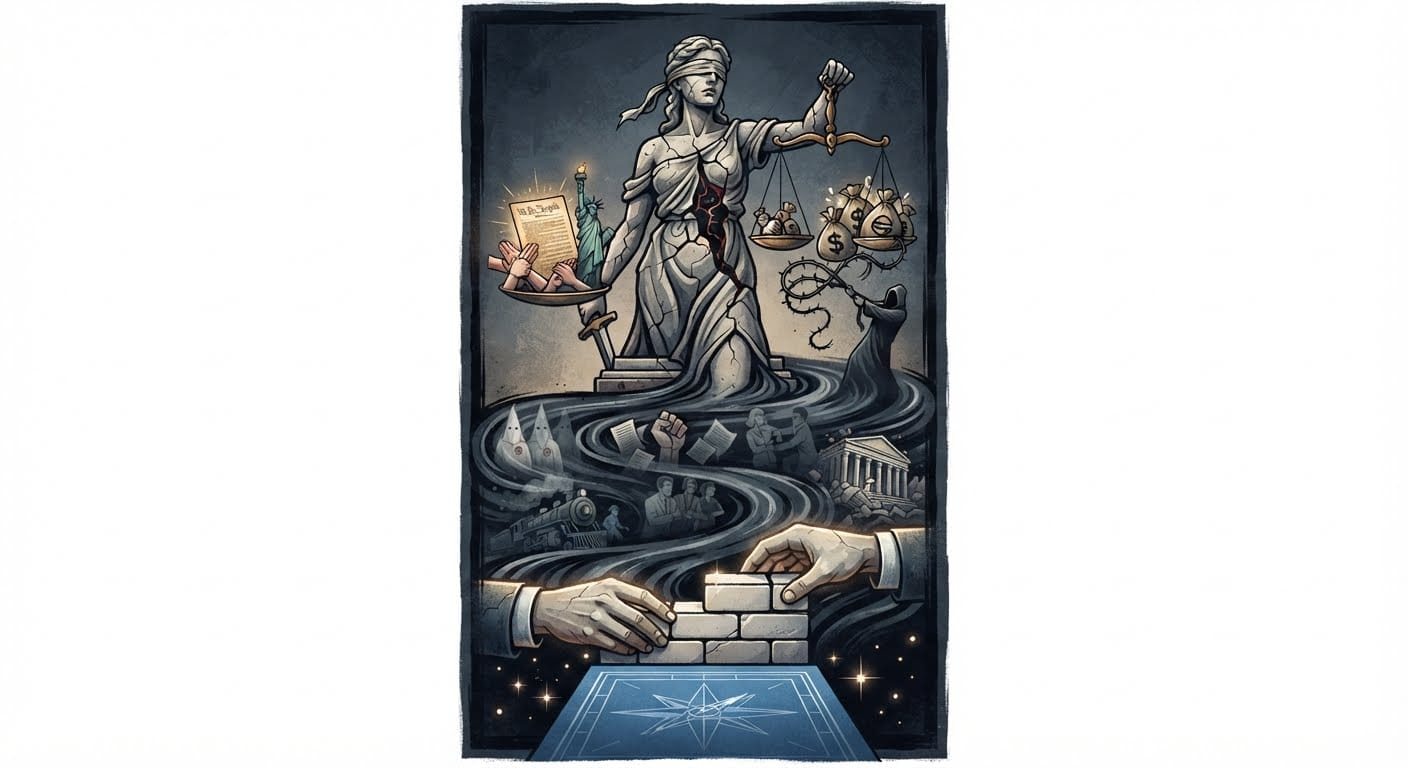
Maddow’s writing cuts sharply through some of the darkest chapters in American history. She connects the dots from the violent rise of the Ku Klux Klan and the panic of the Red Scare to the brutal murders of civil rights workers in the 1950s and 1960s. She reminds us that political corruption is not a brand-new problem. Long before today’s cable news headlines, there were scandals at the highest levels of government that make modern politics look tame. Whether looking at the corporate greed of the past or the broken rules of recent administrations, the book forces us to face a hard truth: our government systems are only as good as the character of the people running them.
When an agency meant to protect the law gives in to what Maddow calls "thug rule," the damage lasts a long time. It breaks the trust that people in a diverse country need in order to live together peacefully. When everyday citizens start to believe that the law is just a tool used by the rich and powerful to bully the weak, the country begins to fall apart. We end up divided into hostile groups, deeply polarized, and unable to agree on basic facts.
Even though Maddow is fiercely critical, Department of Fate is not a hopeless book. Instead, it offers a tough, realistic kind of hope. The book is built on a simple idea: a country cannot fix a problem if it refuses to look at it honestly. By showing the Justice Department’s worst failures right alongside its greatest victories, Maddow asks Americans to see this history not as a list of defeats, but as a guide on how to do better in the future.
The way to build a stronger, more fair America is not to tear down our core government agencies, but to do the hard work of fixing them. This will take more than just passing a few new rules or tweaking policies. It requires us to recommit to the best ideals of our country. It means demanding better character from our leaders, and insisting that anyone with the power of federal law enforcement must use it with self-control and total loyalty to the Constitution. At a time when many people feel confused about where the country is headed, this book is a strong reminder that America is a work in progress—and making it stronger is a job we all share today.
-30-