
Land of a Thousand Sessions

The Complete Muscle Shoals Story 1951-1985
In the red clay hills of northwest Alabama, where the Tennessee River snakes through the scrub like a dark, heavy vein, a sound was born that defied all reason. It didn’t come from the neon canyons of Nashville, the polished towers of L.A., or the concrete jungles of New York. It rose up from a tiny, nowhere hamlet called Muscle Shoals—a place where a handful of white boys and the heavy, holy voices of black singers stitched together the soul of a nation.
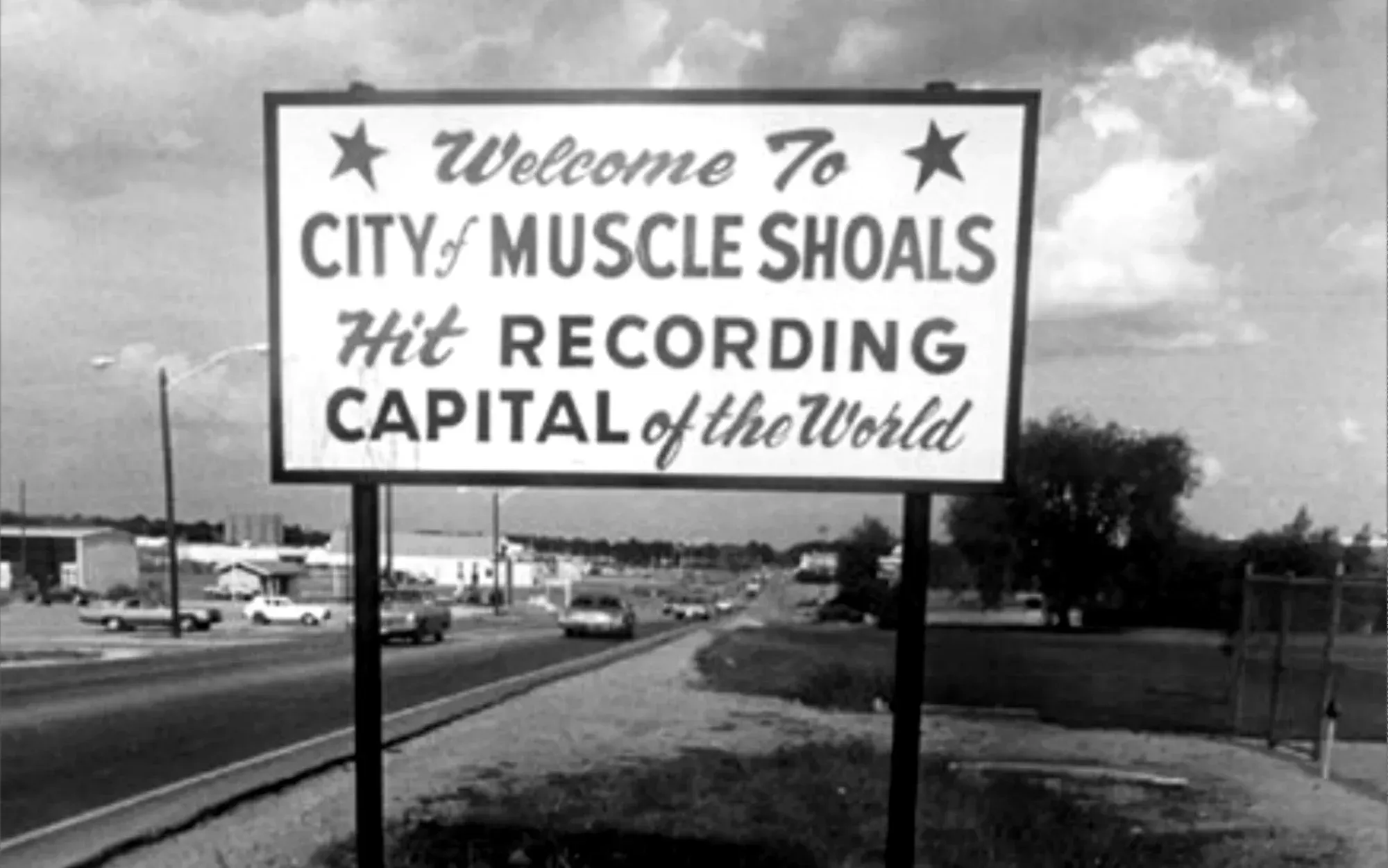
They call it the Hit Recording Capital of the World, but that’s just a title on a sign. The truth is found in the grit of men like Rick Hall, a producer whose sheer, hard-headed will forced a music empire out of ground that shouldn't have yielded a crop of hit records. It was a place where a white rhythm section could find the pocket, a black vocalist could pour out the gospel, and the integrated horns would seal the deal. It was a collision of races and cultures in a part of the country that didn’t always want to get along, but in the studio, the music was the only law that mattered.
Now, Malaco Records has joined hands with Rob Bowman, a scholar who knows these ghosts as well as any man living. Bowman has spent years listening to the silence those legends left behind, traveling the backroads and sitting down with nearly a hundred of the architects—the players, the engineers, the singers—who walked those studio floors. From the steel-spined grace of Mavis Staples to the swagger of Mick Jagger, he’s gathered the stories that were never meant to leave the control room. Many of those voices have since gone to the great beyond, leaving these pages as their final, unfiltered testimony.
Land of a Thousand Sessions: The Complete Muscle Shoals Story 1951-1985 arrives November 11.
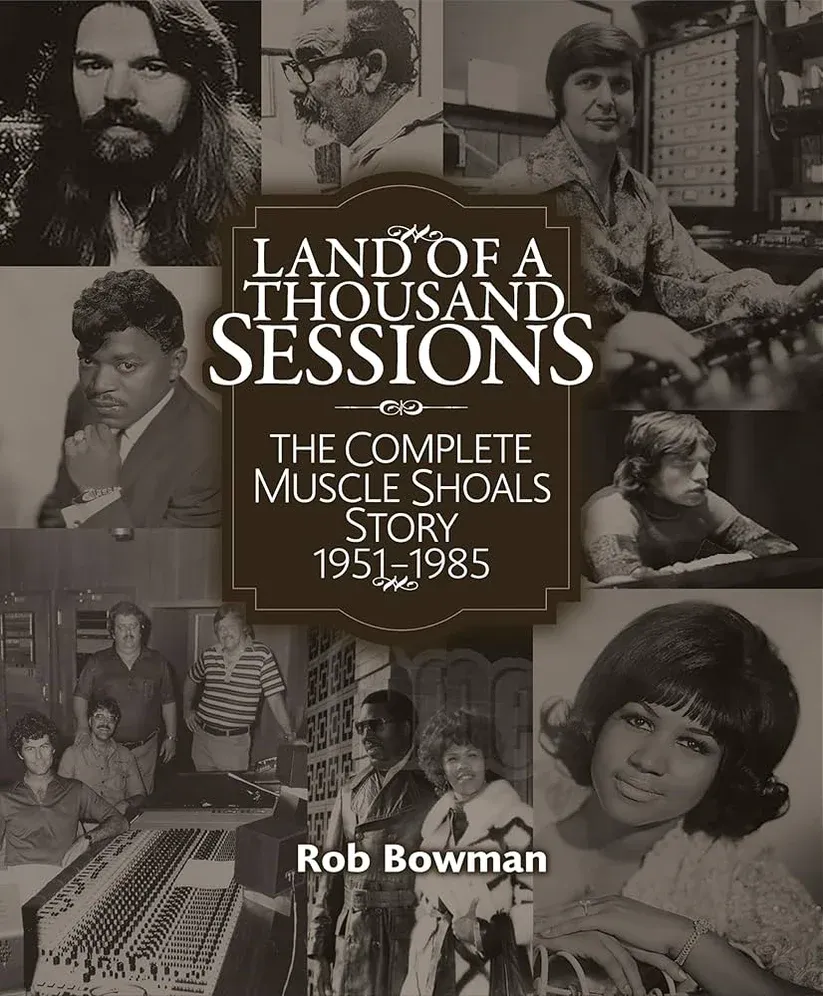
This isn't just a book; it’s an excavation. Across nearly 750 pages and 30 chapters, Bowman maps the unlikely path of nine recording studios that became the gravity center of American music. It tracks the transformation from the sweat and soul of Aretha Franklin, Etta James, and Wilson Pickett to the rock-and-roll thunder of The Rolling Stones, Paul Simon, Bob Seger, and Leon Russell. It ventures into the unexpected corners, too—the prog-rock experiments and the jazz excursions of Cannonball Adderley—before settling into the late 1970s, when the Shoals became a magnet for country royalty. It was there that Willie Nelson found his Phases and Stages, Hank Williams Jr. found the "Family Tradition," and artists like Shenandoah and Mac Davis came looking for the magic that only that Alabama water could provide.
The story of Muscle Shoals is the story of American ambition. It was the Quad Cities—Sheffield, Florence, Tuscumbia, and the Shoals itself—effectively sitting in the middle of nowhere, skewed by a demographic reality that made the output even more of a miracle. In the 1960s, Fame, Quinvy, and Muscle Shoals Sound were the workshops where Percy Sledge’s “When a Man Loves a Woman” and Aretha’s “I Never Loved a Man” weren't just hits; they were seismic events. By the 1970s, the list of Top Ten smashes grew into a staggering tally: “Brown Sugar,” “Kodachrome,” “Old Time Rock and Roll.” These records are woven into the very fabric of our lives, the soundtrack to our joy and our heartache, yet the men and women behind the boards—the Swampers—often lived in the shadows of the stars they helped create.
Bowman, who reunited with the team at Malaco after the success of their definitive history, The Last Soul Company, masterfully utilizes his gifts for meticulous research and evocative storytelling. He understands that a fact is just a cold piece of data until it’s dressed in the truth of human experience. His work has earned praise from the likes of NPR and PBS, and his recent adaptation of his Stax biography into an HBO documentary series earned him a Peabody Award. But this project? This is the magnum opus. He has taken the scraps of long-lost historical documents and the fragile, fading memories of survivors and forged them into a narrative that carries the weight of a Southern novel.
We live in a time where the real stories are getting harder to find, buried under a mountain of digital noise and corporate gloss. Muscle Shoals is a tale that, by any reasonable logic, should have never happened. It was a feat of maniacal intensity and indomitable willpower. To read this book is to witness a moment in time that can never be replicated. The studios have changed, the players have moved on, and the world has spun forward, but for a few decades, those Alabama hills were the place where the world came to hear its own heartbeat.
Bowman doesn't just chronicle the sessions; he captures the atmosphere—the humidity, the tension, the camaraderie, and the occasional, desperate hunger that pushed these musicians to greatness. He gives us the stories behind the songs, the arguments in the booths, the triumphs in the charts, and the quiet moments after the tape stopped rolling. It is a story of an industry built by hand, record by record, hit by hit, in a place where people were often told they were too small to matter.
This is the definitive account of a sound that hit the airwaves like a fever, told by the only man with the patience and the heart to dig it up from the red dirt. Land of a Thousand Sessions is a reminder that beauty can rise from the most unexpected places, provided there is someone with the grit to reach down and pull it into the light. When you open this book, you aren't just reading history; you’re stepping into the room. You’re hearing the echo of the piano, the snap of the snare, and the voices of those who gave everything they had to capture a sliver of lightning in a bottle. It is a legacy etched in vinyl, and finally, it is being told the way it deserves to be told.