
Ocean of Bones

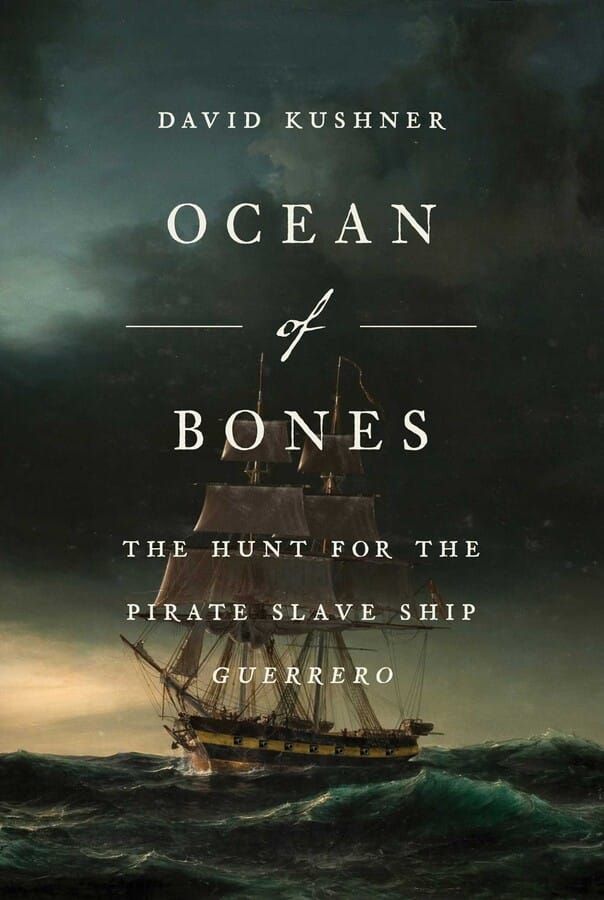
The ocean has a terrifying way of swallowing human history, hiding the evidence of our worst atrocities under cold gray water and shifting sand. For nearly two centuries, the final awful moments of the illegal pirate slave ship Guerrero lay buried in the dangerous, shallow reefs of the Florida Keys. The ship’s story—a brutal mix of reckless sailing, human trafficking, and a sudden, violent shipwreck—was mostly just a forgotten footnote in the dark history of the slave trade. That changed when a dedicated group of modern divers decided to pull its secrets from the ocean floor.
The disaster started in the late summer of 1827. The Guerrero, a heavily armed pirate ship commanded by a notorious outlaw captain named José Gomez, was sailing blind through the Florida Straits. Packed into its dark, suffocating cargo hold were 561 kidnapped Africans, forced to endure a living nightmare. Even though Great Britain and the United States had banned the Atlantic slave trade decades earlier, enforcing the law was a deadly game of cat-and-mouse. Gomez was a particularly vicious criminal; he didn’t just buy captives in Africa, he actively attacked other slave ships, stealing their human cargo to maximize his profits in the booming black markets of Cuba.
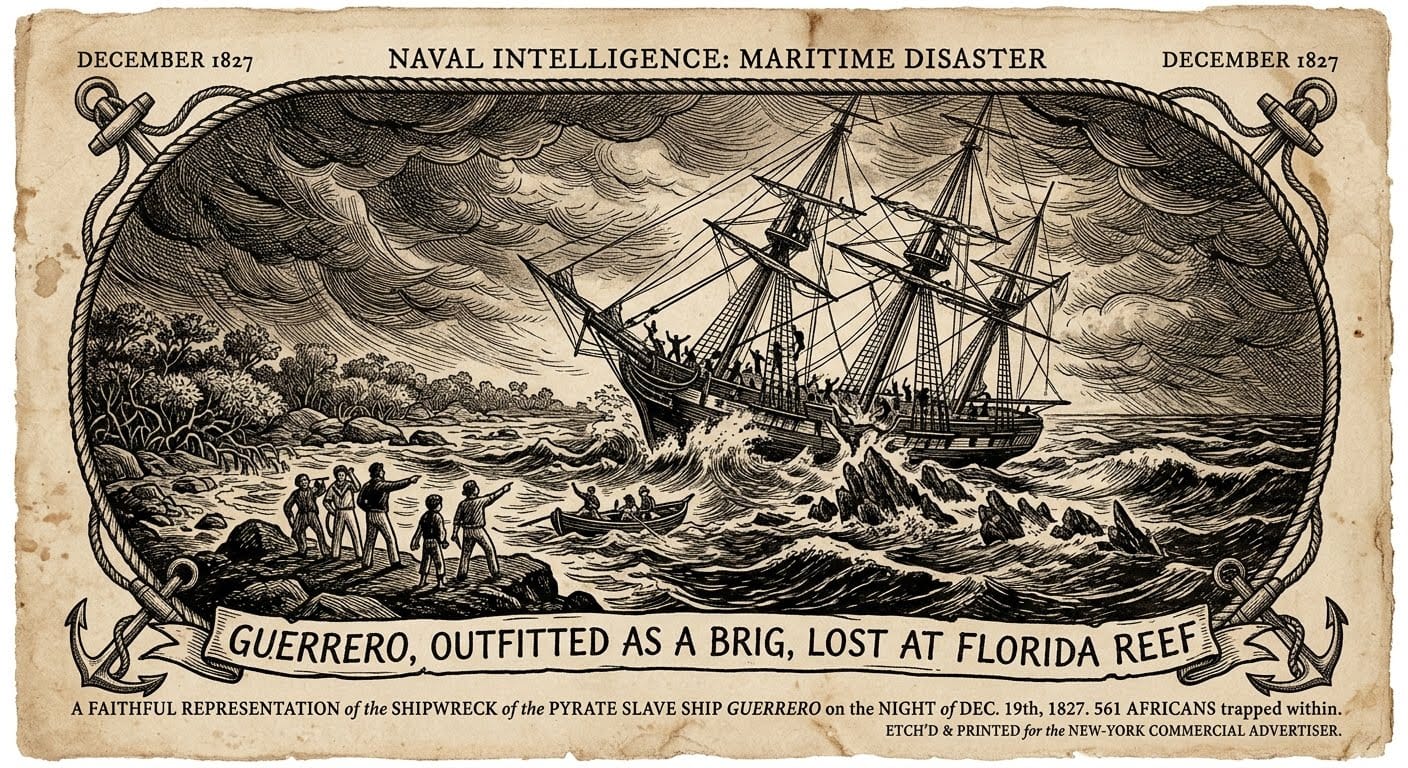
On the night of December 19, 1827, a British Royal Navy ship spotted the Guerrero and chased it down. What followed was a desperate, high-stakes pursuit through a maze of coral reefs. Panicked and refusing to give up his incredibly valuable cargo, Gomez pushed his ship too hard into the shallow waters. The Guerrero smashed into the jagged reef with devastating force. The hull ripped open, the masts snapped, and the ship began to break apart in the heavy surf. In the chaos, dozens of the chained captives drowned, trapped in the rising water inside the hold. The survivors washed up on a hostile shoreline, caught between British sailors trying to free them and American authorities who viewed them not as victims, but as valuable legal property.
The fallout from the shipwreck reached all the way to the highest levels of government. President John Quincy Adams found his administration forced to deal with a massive political and moral mess, trying to balance international law, angry southern slaveholders, and pressure from anti-slavery groups. The survivors of the Guerrero were trapped in a nightmare of endless government paperwork. Some were forced back into slavery in the American South, while others were sent to Africa as part of the complicated colonization movement that helped found the country of Liberia. Among the people caught up in this tragedy was an African princess who, in a tragic twist of fate, eventually became an American slaveholder herself.
For 177 years, the wreckage of the Guerrero stayed lost, rusting away in the ocean currents. Bringing the story back to life didn't start with university professors, but with the stubborn determination of Ken Stewart, a Black scuba diver and Vietnam veteran. In 2004, haunted by the fact that a ship representing the painful history of millions of African Americans lay forgotten just off the coast, Stewart brought together a group of volunteer divers. He started an organization called Diving with a Purpose, driven by a deep mission to map out the forgotten underwater graves of the slave trade.
Stewart’s mission required grueling, patient work in an underwater world where you can barely see and the sea fights you every step of the way. To prove they had found the right ship, Stewart teamed up with Corey Malcom, a brilliant marine archaeologist. At first, some people in the community didn't trust Malcom because he had worked for years with Mel Fisher, a famous and controversial Florida treasure hunter. People worried Malcom might be looking for buried treasure rather than trying to preserve history.
However, the partnership between the tough veteran and the careful scientist turned out to be a perfect match. For years, the divers dealt with the brutal physical demands of underwater archaeology. They fought heavy equipment in rough waves, braved dangerous currents that tried to sweep them away, and spent hundreds of hours swimming in tedious grids across the ocean floor. They were looking for tiny clues like ballast stones, copper nails, metal sheathing, and iron bolts—the basic hardware of a 19th-century ship that could prove they had finally found the Guerrero.
The book Ocean of Bones tells the story of these two grueling journeys across time. It contrasts the pure terror of the 1827 shipwreck with the quiet, exhausting hard work of the 21st-century divers. Through careful historical research and a real understanding of how hard deep-sea diving is on the body, the story strips away the romantic myths about pirates to show the pure cruelty of the slave trade. By tracking what happened to the Guerrero’s survivors and the modern divers who refused to let them be forgotten, the book shows that history is never truly dead. It is just waiting for the right people to dive into the darkness and bring it to the surface.
-30-