
Once Upon a Trainwreck

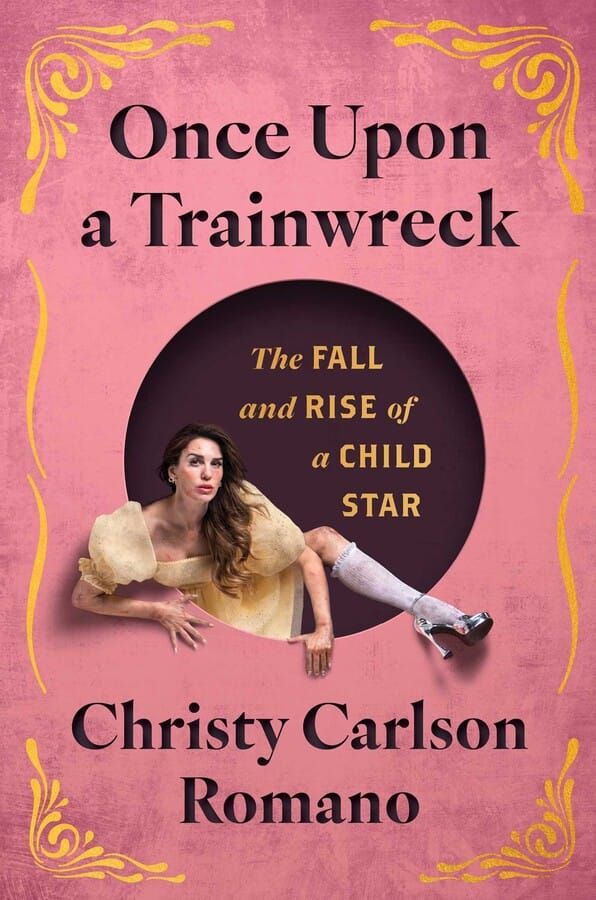
For a specific generation of kids who grew up in the neon glow of early-2000s basic cable, Christy Carlson Romano was the ultimate TV big sister. At just sixteen years old, she pulled off an unprecedented hat trick across the Disney Channel universe. She was Ren Stevens, the hyper-organized, overachieving foil to her chaotic onscreen brother on Even Stevens. She was the voice of Kim Possible, a generation’s premier animated feminist icon. And she co-starred in Cadet Kelly, a movie that helped cement the modern Disney Channel Original Movie monoculture. Onscreen, Romano represented the quintessential girl next door: polished, dependable, brilliantly capable, and entirely in control.
Off camera, a very different story was unfolding.
In her raw memoir, Once Upon a Trainwreck, Romano dismantles the pristine fantasy of her youth to reveal the crushing cost of childhood fame. Pushed into show business at a young age, she learned a toxic foundational lesson that countless child performers before her had learned: achievement was the price of love. Her childhood became a relentless grind of bicoastal labor, moving from gritty indie film sets and intense Broadway stages in New York to high-pressure television shoots in Hollywood.
But the glamorous veneer masked a deeply isolating reality. While entertaining millions of children her own age, Romano was privately battling vicious schoolyard bullying, systemic exploitation, and a volatile sense of financial instability. The immense pressure to maintain an image of absolute perfection became an exhausting, full-time job. Desperate to please the adults around her and maintain the fragile ecosystem built on her success, she carried a deep hunger for approval straight into her adulthood.

Without the rigid structure of a television set, that underlying desperation manifested in dangerous ways. The memoir charts a dark, downward spiral through a series of toxic relationships with controlling men, heavy partying used to numb her alienation, and a mounting battle with addiction. Romano exposes just how vulnerable the casualties of child stardom remain long after the cameras stop rolling, detailing how she handed thousands of dollars over to a predatory psychic who promised the answers and stability she desperately craved.
The absolute rock bottom of this spiral arrived not in a Hollywood nightclub, but inside the stark, sterile confines of an FBI office. It is a moment that strips away any remaining illusion of showbiz glamour, leaving a young woman confronted by the wreckage of an engineered childhood.
Yet, what makes Once Upon a Trainwreck stand out from the standard celebrity retrospective is its refusal to rely on a cheap, fairy-tale rescue. There is no sudden third-act savior or effortless redemption arc. Instead, the book chronicles a grueling, unglamorous reckoning. It details the slow, agonizing work of emotional reconstruction as Romano began questioning the entire script she had been handed by the industry. She forced herself to confront the unlearned fantasies of her youth, stepping into the painful process of reparenting herself.
Ultimately, this is a narrative about a woman refusing to play the princess she was cast to be, choosing instead to learn how to save her own life. Today, the story is defined by resilience, fierce accountability, and a determination to break cycles of trauma. Punctuated by deeply personal, intimate letters written from Romano to her two young daughters, the memoir moves from a Hollywood survival story into a powerful testament to maternal protection. By rewriting her own ending, Romano claims absolute ownership of her narrative, ensuring the heavy cost of the spotlight stops with her.