
Resident Punk

How I Smoked, Drank, and Stumbled My Way Through the '70s Punk Scene (and Beyond)
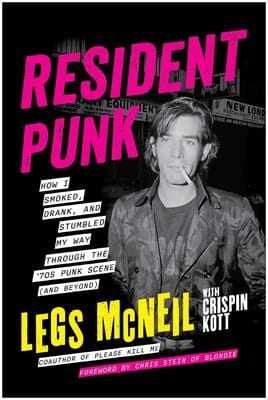
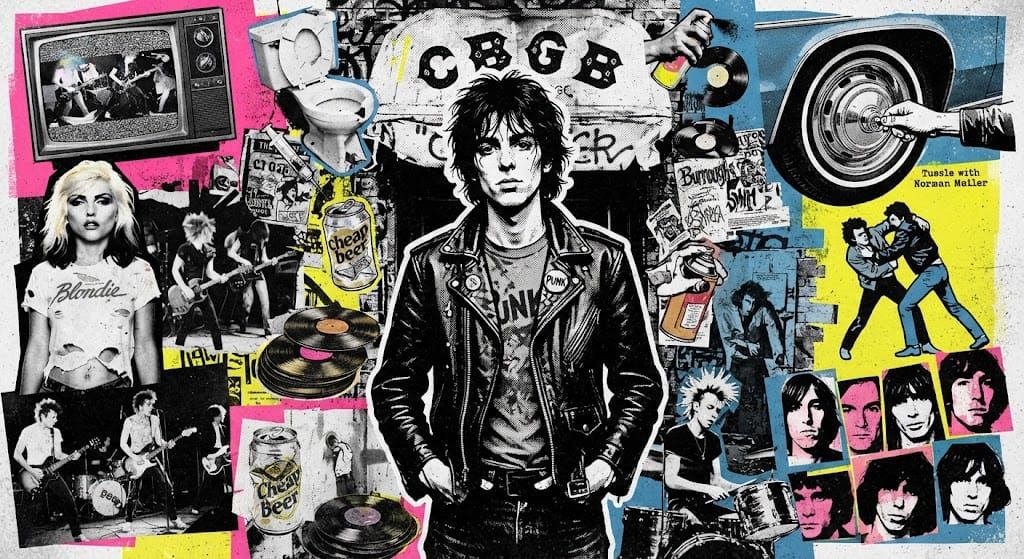
Legs McNeil has always preferred his history covered in cheap beer, stale cigarette smoke, and the kind of floor-staining sweat that only a packed room at CBGB could ever truly ferment. Fifty years after he, John Holmstrom, and Ged Dunn first dragged PUNK magazine kicking and screaming into a Manhattan world that desperately needed its collective nose broken, McNeil is back with Resident Punk, a new book that strips away the academic varnish other cultural historians love to slather over the movement. This isn't some sanitized museum-archive retrospective curated by guys in tweed jackets who think Patti Smith started with a grant; it's a raw, unhinged crawl through the gutters of the Lower East Side, told by the man who was designated the ultimate guinea pig of the scene.
If you remember anything about the mythology of 1970s New York, it’s that the music was only half the grift. The bands—Ramones, Blondie, Television, the Heartbreakers, Talking Heads—were hammering out a three-chord assault against the bloated stadium rock of the era, but McNeil was the one living the mandate. Back in 1975, a nineteen-year-old McNeil didn't just help start a zine; he became the living, stumbling embodiment of what they were trying to catch on cheap newsprint. His job description was essentially to absorb every narcotic, every cheap bottle of booze, and every chaotic encounter the scene had to throw at him, while somehow managing to wake up next to a different person every day of the week.
Resident Punk functions as both a chaotic memoir and a cultural detonation, arriving just as PUNK hits its fiftieth-anniversary marker. Co-authored alongside Crispin Kott, the book pulls back the curtain on the stories behind the legends. McNeil doesn't pretend to be an objective observer. He was too busy getting thrown out of places, tussling with artists, musicians, groupies, and somehow crossing paths with Golden Age Hollywood royalty and literary heavyweights alike. This is the guy who co-wrote Please Kill Me, the definitive oral history of the genre, but here the lens turns directly back onto his own battered ego and turbulent existence.
The pages are stuffed with encounters that read like fever dreams from a city that was on the brink of collapse. You get untold anecdotes about Joey Ramone stumbling through the neighborhood, the stark, experimental dissonance of Alan Vega and Martin Rev, the fierce intelligence of Patti Smith, and brushes with everyone from William S. Burroughs to Elvis Costello, Nick Lowe, and Poly Styrene. It’s an immersive, unfiltered look at a creative explosion where nobody knew what they were doing, but everyone knew they were tearing down the walls to do it.
Before any of that happened, though, there was the raw, unglamorous fuel that pushed McNeil toward the edge in the first place. Resident Punk strips away the mythos to look at the bleak suburban backdrop of his youth and the wasted teenage years that set him on a collision course with counterculture. It’s a journey that features everything from stealing hubcaps off David Bowie’s car to physical dust-ups with Norman Mailer. Beneath the bravado and the wreckage, the book tracks a man constantly wrestling his own demons, eventually finding a strange sort of peace tucked away in a small Pennsylvania town—proving that even after the scene scattered to the winds, he is still very much the resident punk.