
Roll the Calls

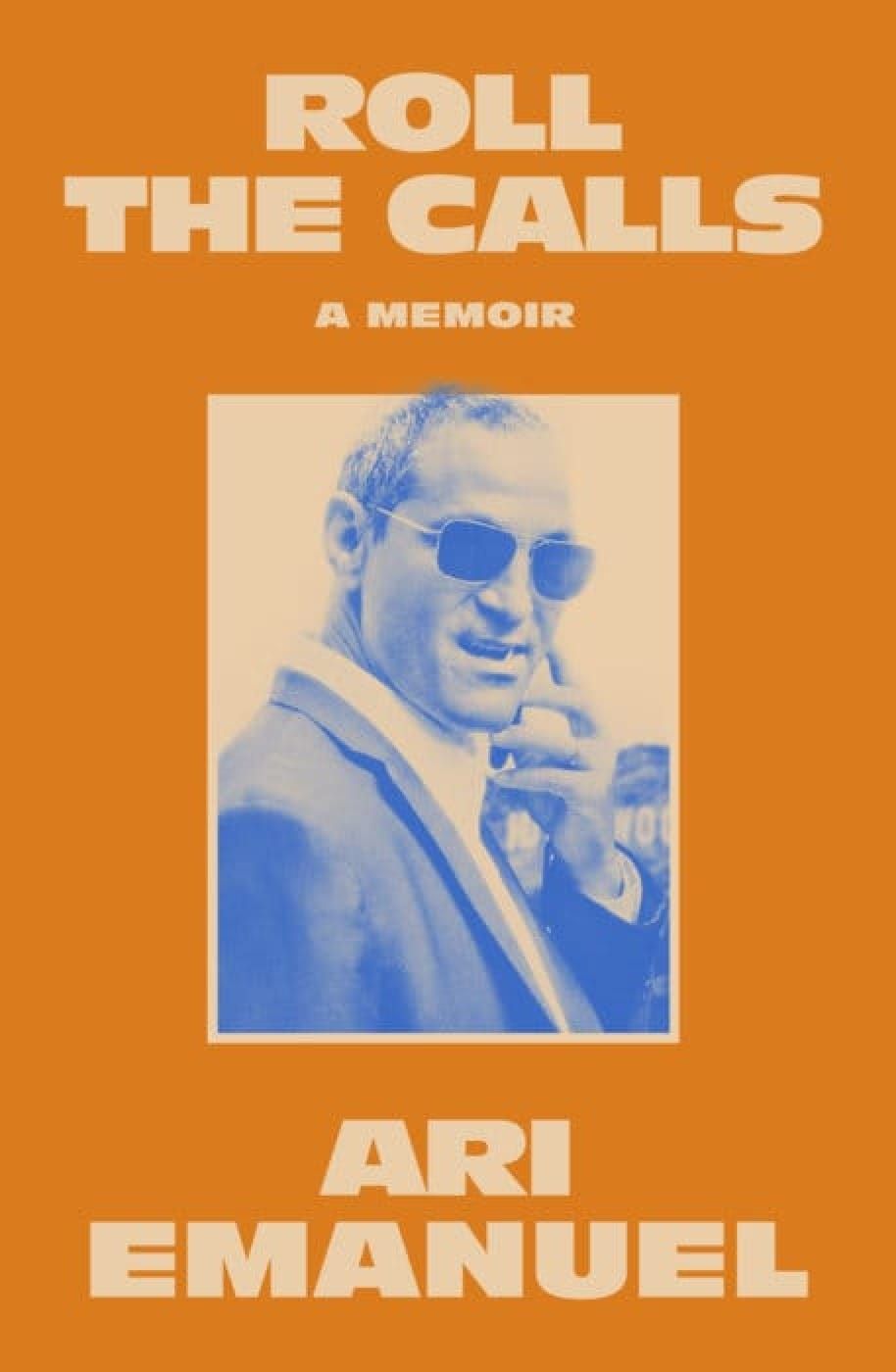
It is impossible to discuss Ari Emanuel without immediately confronting the awkward shadow of Jeremy Piven, which is a bizarre sentence to type about a real human being who oversees billions of dollars in corporate media assets. But that is the unique cross Emanuel has to bear. For twenty years, he hasn’t just been a guy who sells access to movie stars; he has been a conceptual artifact. He was the template for Ari Gold on Entourage, a character who shouted cell phone numbers into the void while pacing around an office decorated with aggressively expensive contemporary art.
This creates a weird cultural loop. Usually, a real person inspires a fictional character, and the real person recedes into the background to live a quiet, private life. With Emanuel, the opposite happened. The fiction became the baseline reality, and the actual man had to spend two decades playing catch-up to his own caricature. When you are the archetype for high-decibel media aggression, you don't really get to write a standard memoir. If you write a standard memoir, people assume you hired a ghostwriter from an airport bookstore to sand off the rough edges.
Which brings us to Roll the Calls, a book that arrives with the exact kind of obnoxious, high-velocity momentum you would expect from its author, yet manages to subvert the genre simply by leaning entirely into its own ridiculousness.
To understand Roll the Calls, you have to understand the specific genre of the modern mogul autobiography. Normally, these books are exercises in retroactive moral sanitization. A CEO of a tech company or a venture capitalist sits down with a journalist and spends three hundred pages explaining how their childhood paper route taught them the foundational principles of cloud computing. They write in passive voice. They talk about "synergy" and "market friction" as if they were observing weather patterns rather than aggressively destroying competitors in a windowless conference room in Century City.
Emanuel does not do this, primarily because he seems constitutionally incapable of introspection that doesn't sound like a locker-room speech from a 1990s sports drama.

The book is structured not as a linear chronology of corporate wins, but as a series of kinetic anecdotes that feel less like chapters and more like voicemails left at 3:00 AM by someone standing on the tarmac of a private airport. He talks about severe dyslexia in the opening chapters—not as a noble obstacle overcome by grit and a supportive teacher, but as a mechanical annoyance that made reading feel like trying to decode a foreign language written in grease. It’s unromantic. It’s abrasive.
And that’s precisely why it works.
If you look at the trajectory—from the CAA mailroom, where everyone is young and desperate and secretly plotting to backstab their cube-mate, to the launch of Endeavor, to the eventual wrestling match of merging with William Morris and building Endeavor Group Holdings—it reads like a kinetic history of late-stage American capitalism disguised as a talent show.
Here is the underlying tension of the entire enterprise: Entourage was a pop-culture phenomenon that fundamentally misunderstood the actual mechanics of power while perfectly capturing its aesthetic.
In the show, Ari Gold is a magical problem-solver who wins every argument through sheer volume and a vaguely offensive pop-culture reference. In real life, being Ari Emanuel means managing a terrifyingly complex portfolio of sports leagues, streaming rights, and hyper-sensitive egos who throw tantrums over dressing room temperatures.
When Emanuel writes about signing Larry David, Quentin Tarantino, Denzel Washington, or Oprah Winfrey, he doesn't frame it as a series of artistic triumphs. He frames it as a war of attrition. The underlying thesis of Roll the Calls is that everyone in Hollywood—from the guy who wrote Pulp Fiction to the woman who practically invented daytime television—is operating at a baseline level of existential panic. The agent's job isn't to guide them; it’s to absorb their panic and reflect it back outward as absolute, unyielding certainty.
It’s an exhausting way to live. And to his credit, Emanuel doesn’t pretend otherwise.
One of the most genuinely surprising elements of the book is its casual, almost jarring vulnerability regarding his personal life. You have a guy who is orchestrating multi-billion-dollar corporate buyouts while simultaneously dealing with the slow-motion trainwreck of a failing marriage, raising four kids who presumably view their father’s corporate intensity with the eye-rolling detachment common to teenagers everywhere, and trying to figure out how to love someone again after your life has already been entirely constructed around work.
Most CEOs gloss over the divorce chapters. They give you two paragraphs about "unfortunate scheduling conflicts" before pivoting immediately back to quarterly revenue growth. Emanuel spends time in the wreckage. He writes about the specific, hollow silence of a big house when you realize that being the most feared negotiator in the Western Hemisphere doesn't stop your kids from thinking you're an absentee lunatic.
There is a booming, multi-million-dollar industry dedicated to telling young professionals how to "crush it," "hustle," and "build a personal brand." Almost all of it is garbage written by people who have never had to convince a major studio head to finance a movie starring an actor who insulted the studio head's mother at a fundraiser.
Roll the Calls is essentially an accidental antidote to that entire genre.
It is a master class in how to ignore the haters, not because the haters are wrong, but because the haters simply do not matter when you have three phone lines blinking simultaneously and a client threatening to walk to a rival agency over a parking space. Emanuel’s advice—if you can even call it advice, given that it’s mostly hurled at the reader like a roll of quarters—is that self-doubt is a luxury. It’s an indulgence for people who have the time to sit around wondering if they are liked.
Nobody hires Ari Emanuel because they want to be liked. They hire him because they want to win, even if winning requires burning down every bridge between here and Malibu.
Whether that makes him a hero or a cautionary tale depends entirely on whether you think the point of life is to accumulate leverage or to sleep peacefully at night. But as a piece of literature—or at least as a document written by a man who has spent forty years screaming into receivers—it is undeniably riveting. It’s loud, it’s messy, and it refuses to apologize for being exactly what it is: the sound of a man rolling the calls until the line finally goes dead.