
Salty, Not Sweet

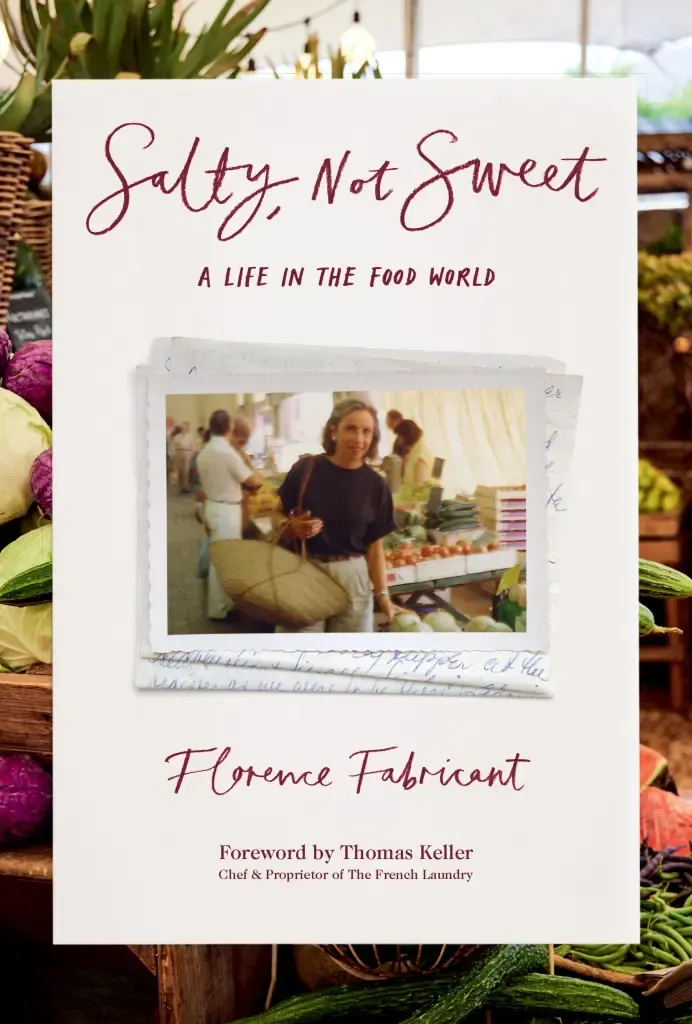
A Life in the Food World
For five decades, the global culinary landscape has undergone a radical transformation. We have moved from an era of formal, stuffy French dining and predictable home cooking into a golden age of hyper-local ingredients, boundary-pushing celebrity chefs, and global food fusion. To watch this evolution happen is one thing; to help chronicle, shape, and critique it from a front-row seat at the world’s most influential newspaper is quite another.
Few people alive can claim that vantage point, but Florence Fabricant can. As a legendary and fiercely beloved food writer for The New York Times, Fabricant has spent half a century serving as the culinary conscience of a nation. Now, in her highly anticipated memoir, Salty, Not Sweet she opens the vault on her extraordinary life, offering readers an insider’s view of the food world and the remarkable journey that led her to the very center of it.
Salty, Not Sweet is far more than a standard professional retrospective. It is a vivid, sensory-rich tapestry that begins with Fabricant’s earliest, palate-defining moments in New York City. Long before she was a household name in journalism, she was a young girl absorbing the sights and smells of a changing city. She vividly recalls the briny, pungent aroma of pickle barrels in the Bronx and the electric excitement of pre-theater dinners with her parents. These early encounters with food were not just moments of sustenance; they were the foundational building blocks of a sophisticated sensory radar.
Her culinary education expanded exponentially during a formative year spent studying abroad in France. It was here, among the bustling open-air markets, historic vineyards, and uncompromising neighborhood bistros, that her understanding of food shifted from a personal passion to a cultural calling. She learned to appreciate the deep, alchemical relationship between geography, tradition, and technique—a lesson that would guide her pen for the next fifty years.
When Fabricant returned to the United States, her entry into professional food writing was unexpected but perhaps inevitable. She began honing her craft at The East Hampton Star, covering the burgeoning food and wine scene of Long Island’s East End. Her sharp wit, boundless curiosity, and refusal to rely on easy praise quickly caught the attention of editors at The New York Times, where she would ultimately build her historic career.
As a reporter, Fabricant possessed an almost uncanny ability to spot brilliance before it became mainstream. Salty, Not Sweet serves as a fascinating historical record of her early encounters with future titans of the culinary industry. Long before they were global icons with television empires and Michelin stars, Fabricant was sitting at their tables, recognizing their genius, and introducing them to the world. Readers are treated to behind-the-scenes stories of a young Thomas Keller redefining American fine dining, Martha Stewart elevating domestic artistry, and Eric Ripert mastering the delicate nuances of seafood. She chronicles the arrivals of European legends like Alain Ducasse on American shores and the early kitchen fire of innovators like Tom Colicchio. Through her eyes, we see these larger-than-life figures not as the brands they are today, but as passionate, flawed, and deeply driven artisans.
With her characteristic prose—sharp, insightful, and beautifully paced—Fabricant guides readers through the seismic shifts that redefined how we eat today. She provides an analytical yet deeply engaging look at the rise of the farm-to-table movement, tracing how a niche counter-culture philosophy grew into the dominant ethos of modern dining. She deconstructs the cult of the celebrity chef, exploring how the kitchen transformed from a hidden, blue-collar workspace into a stage for global stardom. Furthermore, she pulls back the curtain on the business side of food, charting the meteoric growth of massive restaurant groups and evaluating the heavily debated, shifting role of the restaurant critic in an age dominated by social media and crowdsourced reviews.
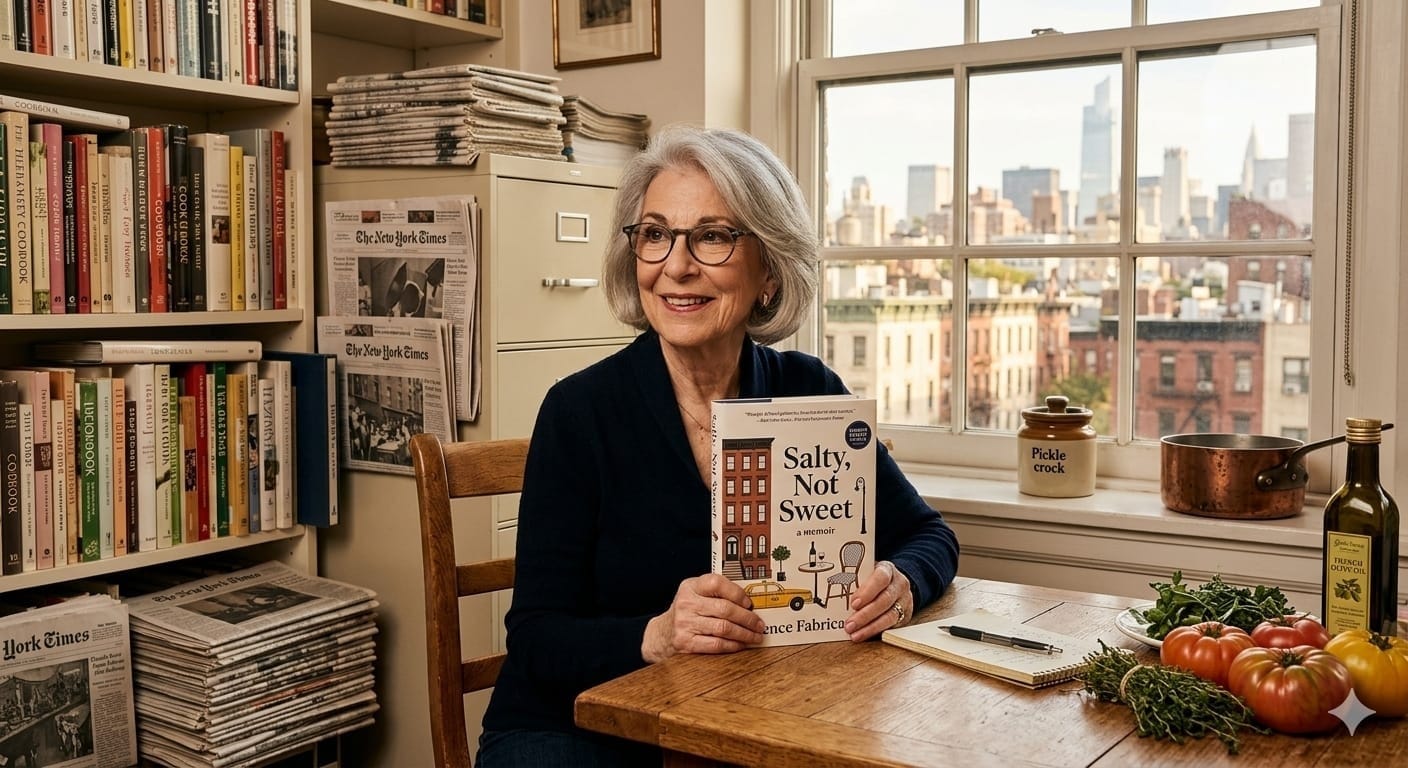
Yet, for all its scope, the true heartbeat of Salty, Not Sweet lies in its intimacy. Fabricant does not hide behind a shield of journalistic detachment. Instead, she invites readers into her own singular tastes, revealing her fierce preferences, her culinary pet peeves, and the absolute joys of her extensive global travels. Whether she is exploring a remote vineyard in Europe or navigating the chaotic, ever-shifting grid of the New York restaurant scene, her writing remains deeply human and accessible.
Woven beautifully through this professional chronicle is a tender, deeply moving love story. Fabricant shares the stage with her husband of more than sixty years, Richard Fabricant. Their enduring partnership serves as the emotional anchor of the book, a steady constant through decades of late-night deadlines, changing restaurant trends, and international adventures. Richard was her constant dining companion, her sounding board, and her co-pilot in a life defined by shared discovery.
Because Fabricant is an accomplished home cook as well as a journalist, Salty, Not Sweet satisfies both the intellect and the appetite. She punctuates the conclusion of each chapter with a carefully curated, deeply relevant recipe. These dishes are not mere aesthetic additions; they are edible extensions of the narrative, allowing readers to taste the very memories, eras, and flavors she describes on the page.
Salty, Not Sweet is a masterful recounting of a singular life well-lived and enthusiastically eaten. It is an essential read for anyone in love with the magic of food, the grit and glamour of New York City, and the sheer joy of a great story told by a master craftsman. Fabricant has spent fifty years translating the fleeting magic of a great meal into permanent prose; with this memoir, she gives us her most memorable feast yet.