
Saying No to New

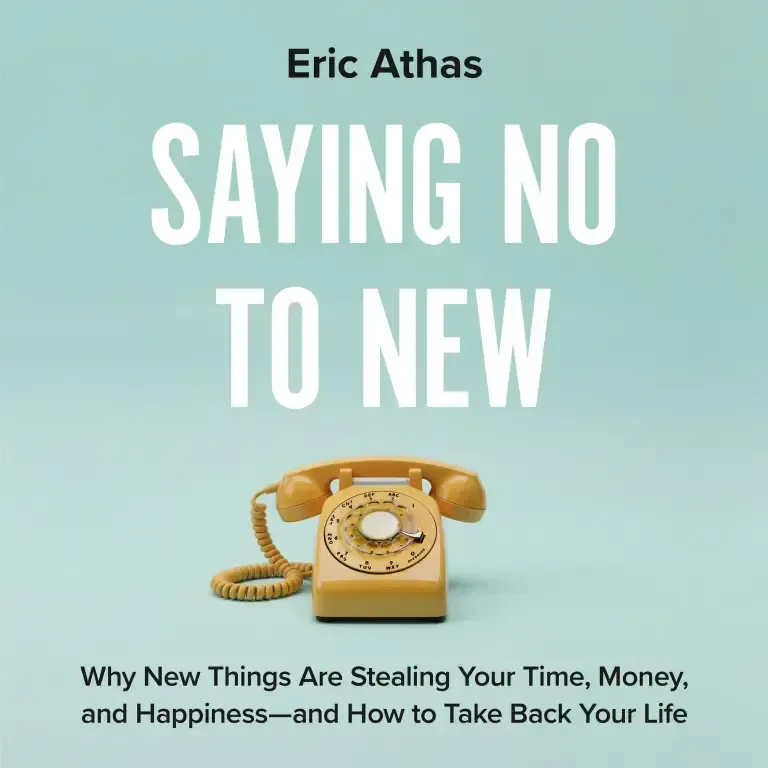
It is genuinely difficult to remember what life was like before we treated obsolescence as a moral imperative, mostly because we haven’t lived through a Tuesday in the last twenty years where someone wasn’t trying to convince us that our current iteration of existence is deeply, almost embarrassingly out of date. We are conditioned to believe that newness is a self-executing virtue. A new phone is always better than the one that currently holds three photos of your dog and a battery life that dies whenever you walk past an artisanal coffee shop. A new pair of sunglasses is implicitly superior to the ones you wore last summer, even if those older sunglasses spent ninety percent of their lifespan tucked safely into a leather case in your glove compartment. We live inside an engineered slipstream where frictionless checkouts and algorithmic dopamine loops make resisting the future feel like you’re actively choosing to live in a cave with an abacus. Eric Athas understands this exhaustion, and his new book, Saying No to New, arrives as a slightly overdue intervention for a culture that has accidentally turned consumption into its primary hobby.
The core deception of the modern marketplace is the insidious equation of chronological advancement with actual human improvement. We buy into the narrative that the latest fitness app is going to fundamentally rewire our relationship with exercise, despite the digital graveyard of downloaded apps currently sitting on page four of our home screens like digital headstones for abandoned ambitions. Athas points out that our brains are practically wired to conspire against us in this regard, treating novelty as a low-level narcotic that delivers quick, fleeting hits of neurochemical validation. The tech insiders and happiness gurus interviewed in the book are essentially mapping out a modern Panopticon where the guards are push notifications and the prisoners are voluntarily checking their screen time while waiting in line to buy yet another thing they saw an influencer endorse between thirty-second segments of existential dread.
What makes the cultural critique in Saying No to New work is that Athas doesn't frame this through the exhausted, puritanical lens of anti-technology luddism. He recognizes that we don’t buy things simply because we are weak-willed; we buy things because the apparatus designed to sell them has become terrifyingly sophisticated at exploiting the friction points of our daily lives. Retailers have optimized the friction right out of the transaction process, transforming the act of spending money from a deliberate choice into an involuntary reflex. When everything is one click away, saying yes becomes the default human condition. Saying no, conversely, requires an unnatural act of cognitive friction. It requires looking at the shiny, aggressively marketed object and asking whether it is actually serving your goals or simply serving as an expensive distraction from the fact that you haven't read a physical book all the way through since the Obama administration.
Athas builds his framework not on austere minimalism or the kind of monastic self-denial that makes dinner parties insufferable, but on a pragmatic recognition of persuasion. Once you learn how to spot the invisible architecture of influence—whether it is coming from a silicon valley product manager or a lifestyle influencer who looks like they exclusively eat sunlight and organic kale—the spell starts to lose its grip. You begin to realize that the frantic pursuit of the new is actually just an elaborate mechanism for stealing your time, your money, and, most destructively, your capacity for sustained joy. We trade our attention for upgrades that offer diminishing returns of actual happiness, mistaking the adrenaline spike of acquisition for actual personal growth.
The real utility of Saying No to New lies in its insistence on intentionality as a revolutionary act. Athas uses interviews with scientists, philosophers, and decision-making experts to construct a sort of mental armor against the relentless tide of modern commerce. The book does not pretend that you can completely opt out of the contemporary world, nor does it suggest that every new thing is inherently demonic. Instead, it offers a diagnostic lens for figuring out what to embrace and, more importantly, what to deflect. By learning to break the uninterrupted flow of novelty into your daily routine, you aren't just decluttering your apartment or saving money for a rainy day; you are actively reclaiming the right to decide what matters to you, independent of what an algorithm or a corporate marketing department thinks you should desire next Tuesday.