
The American Way of Killing

Look at the clock. Look at the bloody calendar. We are living inside a slaughterhouse of our own design, and we refuse to look up from our glowing rectangles long enough to notice the blood dripping from the ceiling.
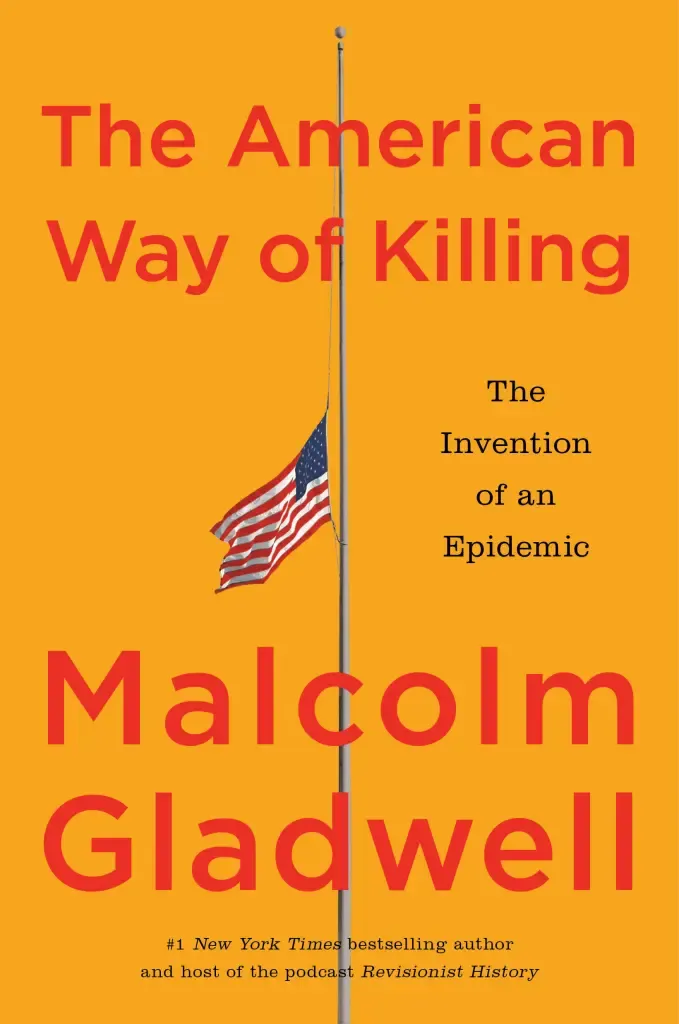
Malcolm Gladwell has written a book—The American Way of Killing—and it is a terrifying mirror held up to a nation of sleepwalkers. Because the United States of America, glittering, obscenely wealthy, god-fearing, flag-waving America, has a body count that belongs down in the dirt, down among the most destitute, fractured, war-torn slums on this spinning rock. Why? Why?
We shrug. We point our greasy fingers. The right screams about evil hearts; the left whimpers about socioeconomic trauma. And around and around the centrifuge goes, while the corpses pile up like cordwood.
Gladwell doesn’t give a damn about your comfortable talking points. He doesn't care whether you clutch your NRA card or your progressive manifesto. He walks straight into the madness with a pocketful of strange, jagged stories, and he demands you look at them.
Think about it. A kid in Washington, D.C., takes a bullet—shattered bone, torn tissue, a biological catastrophe—and walks out of a hospital because modern trauma medicine is practically a dark art. Medical miracles stitch the bleeding edges together, masking a horror show. If a surgeon in 1950 had seen what our emergency rooms patch up daily, the graveyards would be overflowing three times over. We measure our "progress" by how many gunshot victims we can pull back from the threshold of hell, while ignoring the fact that we keep pushing them into the fire in the first place.
Then Gladwell drags us backward through time, all the way to seventeenth-century England. Picture some powdered, aristocratic knight tangled up in ancient legal knots, creating precedents that ripple across centuries straight into the bedrock of American jurisprudence. We treat the right to bear arms like a sacred stone dropped from Mount Sinai, completely blind to the messy, accidental, terribly human history of how laws were bent, forged, and misunderstood. We are haunted by the ghosts of dead Englishmen who never even laid eyes on an AR-15, letting them dictate who lives and dies on the asphalt of Chicago today.
And the police! Oh, sweet lord, the police. Imagine a European police chief—someone from a quiet continental city where officers walk beats and understand the intricate, breathing texture of human communities—standing at the back of an American police academy graduation. He would be baffled. Horrified. He’d watch these young cadets pumped full of tactical paranoia, trained for war in their own neighborhoods, and he’d realize that the entire apparatus of American order is built on a fundamental, tragic misunderstanding of what peace actually looks like.
We travel from a sun-baked shooting range in North Carolina to the blood-slicked corners of the South Side of Chicago, and finally down to an old, rotting plantation house in Alabama—because you cannot understand the gunfire of the twenty-first century unless you smell the loam of the nineteenth. It's an American peculiarity. We are a nation constructed on a foundational violence, wrapping our identity in the mythology of the gun, and then acting entirely bewildered when the chickens come home to roost in a cascade of lead and sirens.
We don't understand our most pressing social problem. Therefore, we don't know how to fix it. We want a quick fix. A neat little legislative pill or a blanket ban or a magical increase in prison cells that will make the bad men go away. But the disease is in the marrow. It’s in our historical DNA. It’s the terrible, pulsing heartbeat of an exceptionalism that values the individual’s right to deal death over the collective right to draw a quiet breath.
We are sleepwalking through a massacre, arguing about the wallpaper while the house is an inferno. Read the book. Or don't. Keep scrolling. Keep pretending. The bullets don't care about your comfort.