
True North

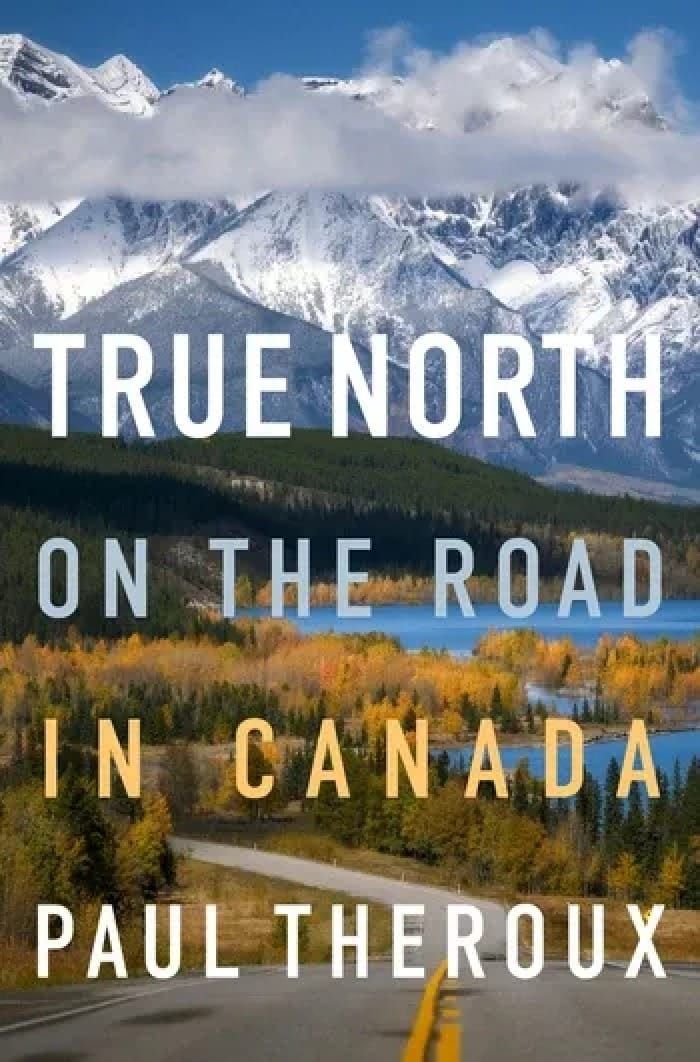
On the Road in Canada
For more than half a century, Paul Theroux has hauled his luggage, his skepticism, and his extraordinarily sharp eye into the far corners of the globe. He has ridden rattling trains through the dust of Africa, peered out at the steppes of Patagonia, and generally made a career out of being the sort of traveler who looks at a two-day coach ride over unpaved roads as a personal invitation. But with True North, his twelfth travel book, he does something rather unexpected. He turns his gaze toward a place that sits right next door, hiding in plain sight behind a polite smile and an endless expanse of pine trees.
It is an amusing quirk of geography that Americans tend to view Canada with a mixture of affectionate condescension and total ignorance. We think of it as a nice place to buy cheap prescription drugs, apologize excessively, and watch hockey. We treat it like the finished attic of the North American continent—tidy, well-lit, and utterly devoid of mystery. Theroux, naturally, sets out to dismantle this nonsense.
What begins as the completion of a North American road trip trilogy quickly curdles—in the most delightful way possible—into something far more personal. Theroux traces his own ancestral connection to Quebec, digging up the roots of a forebear named Antoine Theroux who wandered up that way in the seventeenth century. This gives the journey a curious double-vision: he is simultaneously the detached, critical observer from away and a prodigal son poking around the attic of his own family tree. He meets his Québécois friends and relations, navigates the delicate linguistic and cultural tightropes of the province, and then packs his bags to travel more widely through remote villages, multicultural cities, and sweeping landscapes that have defined modern Canada.
And what a landscape it is. Canada is the second-largest country on Earth by total area, a staggering slab of geography that mostly manages to convince roughly forty million people to live within spitting distance of the American border, leaving the rest of the north to the blackflies, caribou, and the occasional bemused polar bear. Theroux takes us right into the thick of it. We find ourselves in a snowbound Ottawa at the height of noisy, clamorous political protests, standing shoulder-to-shoulder with people whose grievances are as sharp as the winter wind. We leap backward across the centuries to the ancient Viking settlement at L'Anse aux Meadows in Newfoundland, where Norsemen stubbed their toes on North American soil a thousand years before Columbus even thought about owning a compass. We wander through Toronto's bustling "ethno-burbs," where the global village has set up shop in strip malls and neighborhood markets, and out to Vancouver's Pacific gateway, where the horizon opens up toward Asia.
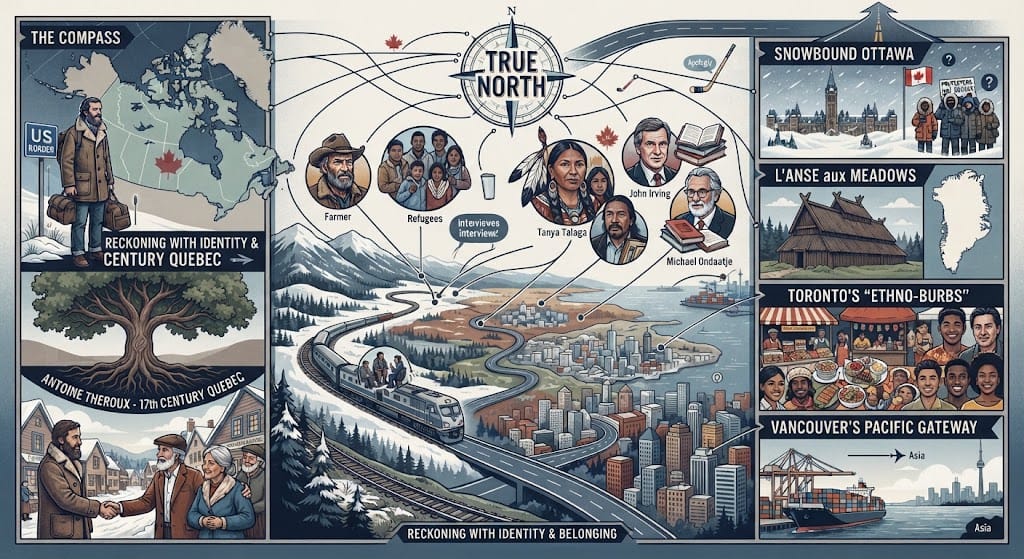
Along the way, Theroux does what he has always done best: he talks to people. He sits down with farmers coaxing crops out of stubborn soil, refugees who have crossed oceans to find a quieter life, and heavy-hitting literary minds like John Irving and Michael Ondaatje. He listens intently to Indigenous leaders such as Tanya Talaga, recording the complex, unvarnished ways Canadians reckon with identity, belonging, and a distinct brand of patriotism that is frequently forged in direct response to the jabs, cultural imperialism, and well-meaning ignorance of their boisterous southern neighbor.
It is this dynamic—the constant, low-humming comparison to the United States—that provides much of the book’s tension. Canadians, Theroux discovers, are perpetually defining themselves not just by who they are, but by who they are not. Specifically, they are not American. They look across the border at our chaotic political theater, our blaring cable news, and our relentless self-absorption, and they respond with a mixture of quiet pride in their own civil stability and a lingering anxiety that they might accidentally catch our cultural flu.
True North is, by turns, panoramic and intimate. It is a travel narrative shaped by history, geography, and undeniably challenging weather—because you cannot write about Canada without writing about the cold, that great national sculptor that turns nostrils to ice and men into philosophers. With the empathy of a seasoned companion and the unsparing sharpness of a cultural critic, Theroux delivers a portrait of a country that is far more diverse, unsettled, and alive with complicated stories than the postcard version would ever have you believe. It turns out that our quiet neighbor is remarkably loud once you get inside.