
Turkey and TV: How Detroit and Dallas Hijacked Thanksgiving

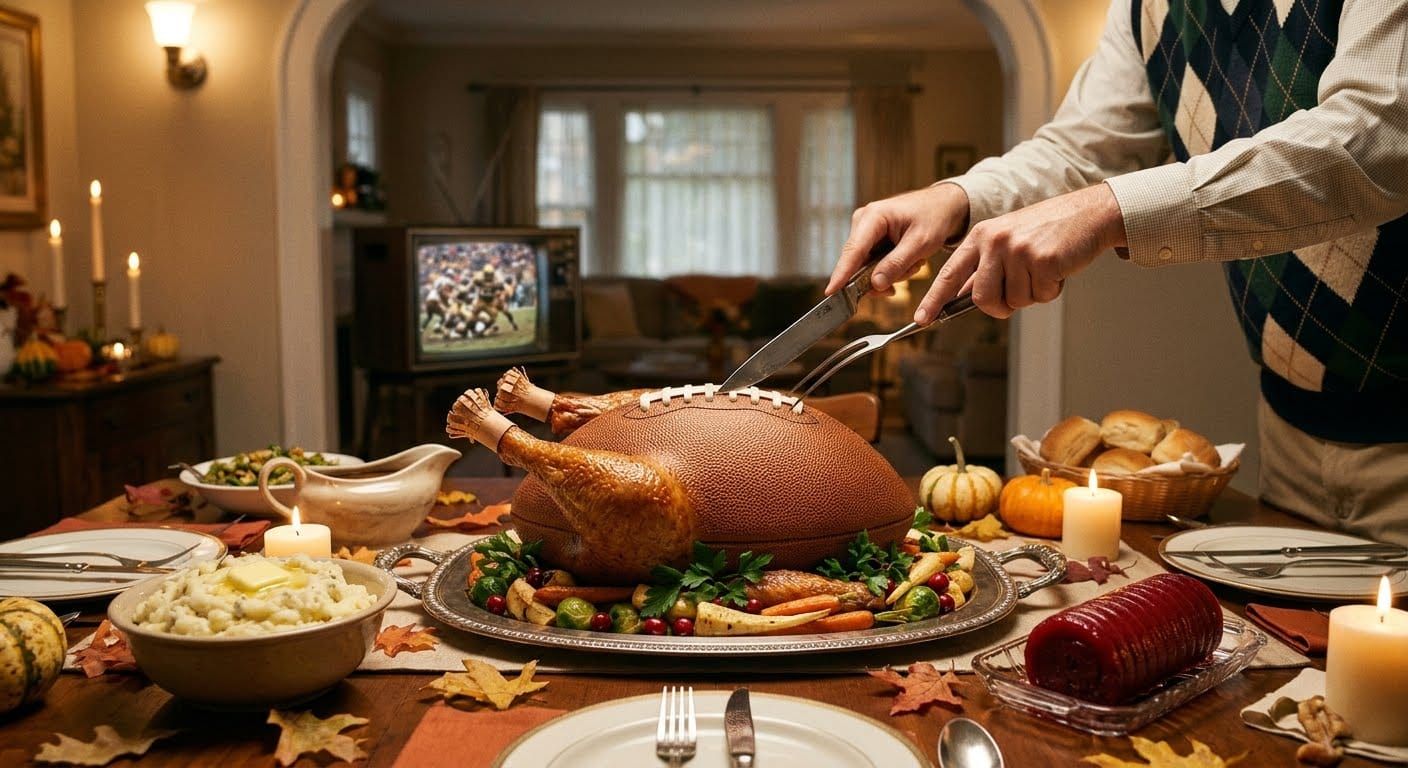
Every November, right around the moment your uncle starts sweating through his sweater vest over the carving knife and the cranberry sauce is still holding the exact cylindrical shape of an Ocean Spray tin, half of America plops onto the sofa to watch the Detroit Lions and then the Dallas Cowboys play football. It does not matter if Detroit is chasing the one-seed or rotting in the basement at 2–9. It does not matter if Dallas looks like a Super Bowl juggernaut or a Jerry Jones fever dream. Nobody asks for your opinion, and the league office isn't flexing anybody out for a prettier matchup. Detroit gets the early afternoon slot, Dallas gets late afternoon, and tens of millions of households quietly adjust their mashed-potato schedule around Fox and CBS.
From a safe distance, the whole thing looks like one of those sacred, untouchable pillars of the American sports cathedral, carved into marble right next to the forward pass and the Lambeau Leap. Please. The NFL's Thanksgiving monopoly has zero to do with heritage, competitive balance, or civic nobility. It exists because two desperate, hard-charging executives, thirty-two years apart, couldn't move enough tickets in cities that barely knew pro football existed.
Detroit came first, way back in 1934, when the National Football League was a glorified traveling carnival begging for three paragraphs next to the bowling scores. That spring, a fast-talking radio mogul named George A. Richards bought the Portsmouth Spartans—a cash-strapped outfit out of southern Ohio—and hauled them north to Michigan. He slapped the name "Lions" on the helmets, hoping a tiny bit of civic magic would rub off from the city's real obsession, the Detroit Tigers.
Richards hit a brick wall before the leaves even turned. Detroit in 1934 was a baseball town down to its toenails. That October, the Tigers had gone all the way to Game 7 of the World Series behind Mickey Cochrane, Charlie Gehringer, and Hank Greenberg before losing to Dizzy Dean and the St. Louis Cardinals. When the Lions kicked off their inaugural season at the University of Detroit Stadium, they actually played terrific football—winning their first ten games before stumbling against Green Bay to sit at 10–1—and still couldn't draw flies. To the average factory worker or auto executive in town, pro football carried the cheap perfume of a minor-league sideshow, something college fans tolerated on Sunday afternoons once the real games were finished on Saturday.
Richards wasn't a gridiron purist; he owned WJR in Detroit and understood ballyhoo in his marrow. If locals wouldn't bother showing up for a regular Sunday game, he figured he needed to manufacture a circus. He flipped through the calendar, jabbed a finger at Thanksgiving Day, and booked the undefeated Chicago Bears—Bronko Nagurski, George Halas, the whole monster roadshow—to come to town on November 29.
To make sure the rest of the country noticed, Richards leaned on his broadcast pals and talked the NBC Blue Network into carrying the game live across ninety-four radio stations from coast to coast. For a brand-new franchise operating smack in the teeth of the Great Depression, it was a massive, sweaty-palmed gamble. It paid off before the opening kickoff. Every single one of the twenty-six thousand seats sold out two weeks early, and thousands more fans got turned away at the gates. Chicago won a tight, freezing-cold slugfest, 19–16, and Richards had struck oil in his own backyard. Every November after that—aside from a six-year pause from 1939 through 1944, triggered first by President Franklin D. Roosevelt's "Franksgiving" calendar shuffle and prolonged by World War II—the Lions stayed home on the fourth Thursday of the month. Nobody in the league office fought them for the date because nobody else wanted the migraine of playing on four days' rest in front of half-empty bleachers. Detroit simply staked out an empty lot and built a mansion on it.
Three decades later, the exact same hustle played out fourteen hundred miles southwest in Dallas, except this time the prize was network television loot rather than radio wires.
In 1966, the Dallas Cowboys were six years old and still fighting for full respect in their own city. After going 0–11–1 in their brutal expansion season of 1960 and slogging through losing records until going 7–7 in 1965, Dallas had finally turned the corner on the field—sitting at 7–2–1 and leading the Eastern Conference by Thanksgiving—yet still had to battle for local attention. Worse, they had spent their infancy brawling with Lamar Hunt's AFL Dallas Texans for local eyeballs, and high school and college football still ruled Texas weekends like the Old Testament. Patchy crowds at the Cotton Bowl remained a sore spot for general manager Tex Schramm, a former CBS Sports executive who understood the dark arts of television and hype better than just about any suit in pro sports.
When the NFL decided to tack on a second Thanksgiving game in 1966 to grab a bigger slice of the national TV pie, the league offered the date to several established franchises first. Nobody bit. Owners panicked at the thought of playing on Thursday four days after a Sunday bloodbath, convinced it would shred their rosters, kill gate receipts because families would stay home gorging on stuffing, and torpedo their season.
Schramm didn't even blink. He grabbed the receiver, dialed commissioner Pete Rozelle, and volunteered the Cowboys on the spot. Schramm knew that beaming Dallas into every living room in America on a holiday afternoon would turn his rising club into a national brand before dessert. He packed the stadium with local celebrities, booked splashy halftime entertainment, and treated the telecast like a prime-time variety extravaganza rather than a routine midseason slugfest.
On November 24, 1966, more than eighty thousand fans jammed the Cotton Bowl to watch Don Meredith and the Cowboys beat the Cleveland Browns, 26–14, while millions more watched on CBS. Just like Richards in 1934, Schramm turned an unwanted scrap on the calendar into an annual coronation. Aside from two brief, awkward detours in 1975 and 1977—when Rozelle handed the game to the St. Louis Cardinals in a misguided attempt to spread the national love, an experiment that cratered in the ratings—Dallas never handed the keys back.
Over the next half-century, those two desperate marketing stunts hardened into sacred league scripture. Even when the NFL added a third prime-time Thanksgiving game in 2006 and started sprinkling Black Friday matchups onto the holiday weekend, nobody seriously tried to pry Detroit or Dallas out of their daytime windows. Other owners grumbled behind closed doors about the built-in edge of playing at home every single holiday, or the sheer unfairness of two teams getting guaranteed national showcases no matter how putrid their rosters looked.
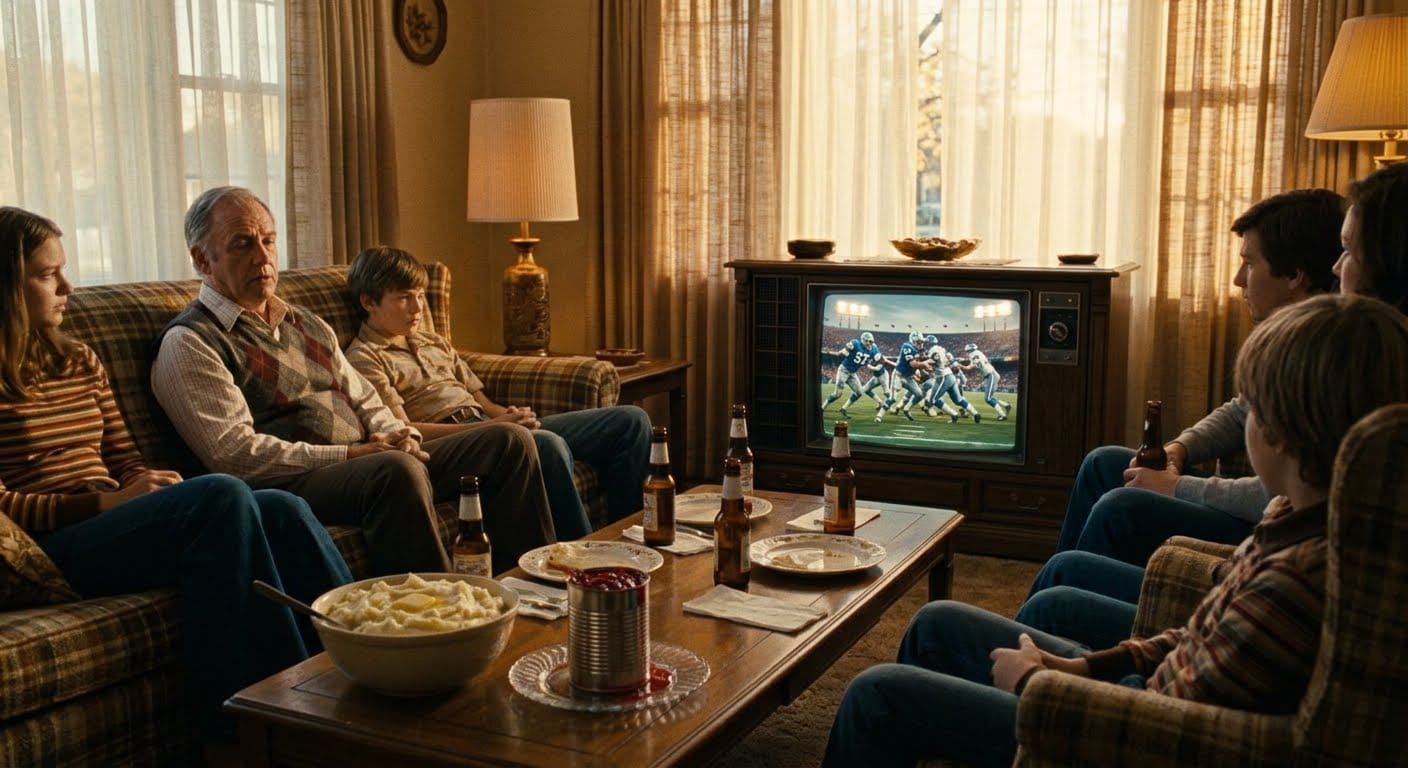
Yet the league always circled back to the same cold, undeniable truth: television executives worship predictability, and families worship routine. By the 1980s and 1990s, watching Barry Sanders leave grown men grasping at thin air on a grainy afternoon broadcast or watching Leon Lett belly-flop into a loose football in the sleet in Irving had become part of the memories of the American holiday. You didn't flip the channel on because the playoff picture demanded it; you turned the TV on because it was always on while the house smelled like sage, roasting butter, and cheap beer.
Both franchises eventually outgrew the insecurity that sparked the whole arrangement. Dallas ballooned into the richest sports empire on the planet, and Detroit finally clawed out of decades of paper-bag misery to pack Ford Field to the rafters. Neither club needs a holiday gimmick to move tickets anymore. Still, every November, the NFL clears the afternoon deck for the Lions and the Cowboys—two permanent monuments to what happens when you raise your hand for the shift nobody else wants.
-30-
Tim
Tim Lowe is a writer, book expert, retired sailor, retail worker, and renaissance man.
He is currently traveling the country and working on his forthcoming book.