
Unsayable

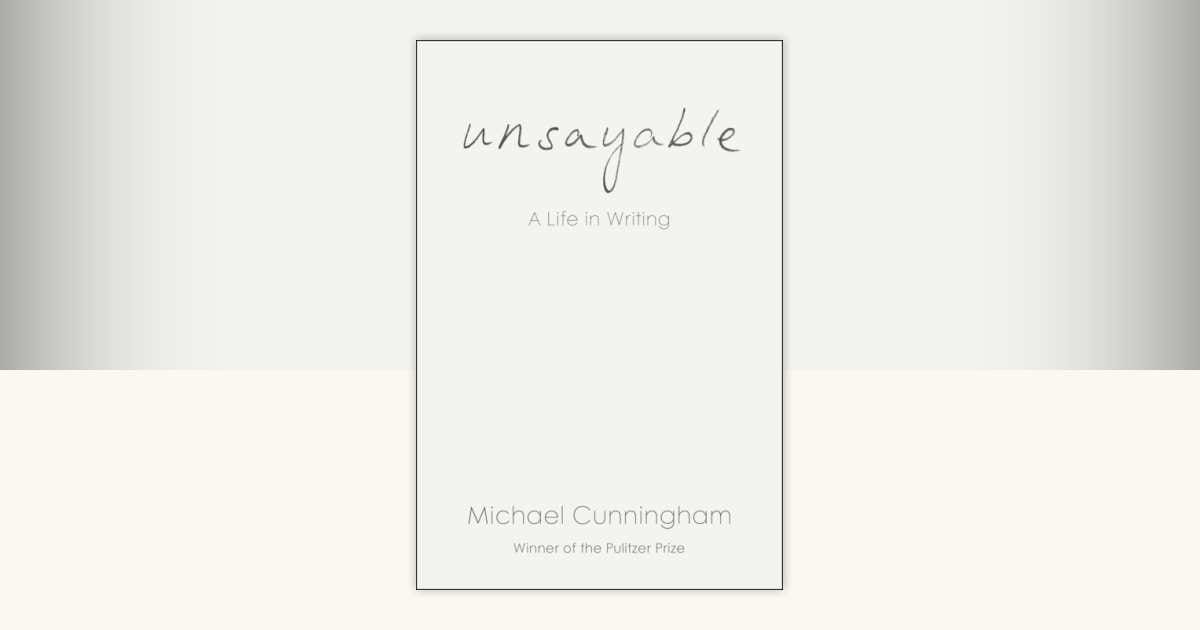
To use language as a scalpel, aiming to slice through the thick, resistant hide of mortality to see what churns beneath, is a fool’s errand. It is a violent, clumsy, and necessary trade. The endeavor to map human existence onto a flat, white page remains the singular, impossible ambition of the writer, a pursuit that demands everything and promises nothing in return.
At the age of three, Michael Cunningham began the quiet, obsessive work of gathering the names of things: oak, Chevrolet, finch, tulip, Tupperware. Each noun functioned as a small anchor, a way to impose order upon a world that felt too vast and too fluid to hold. These were the first tools of an architect, the foundational vocabulary for a life that would inevitably be spent building structures out of memory and air. This was the inception of an obsession that would eventually harden into a vocation—a lifelong, lopsided affair with the insufficiency of words.
In Unsayable, those early, foundational memories spill out, stripped of sentimentality and arranged alongside the hard-earned reflections of a working novelist. Cunningham refuses the comfort of a linear, pristine biography. Instead, he presents a series of snapshots, each one caught in the amber of recollection and scrutinized for its truth, its artifice, and its shadow.
He sets the scene at fifteen, suspended in the cool, chlorinated dark of a swimming pool at night. He is watching the first boy he ever loved, a figure caught in a contemplative, heavy silence that words cannot penetrate. It is a moment of profound recognition—the realization that the most significant human experiences often occur in the gaps where language fails. This is the writer’s primary hurdle: the stubborn refusal of the interior life to be fully articulated.
The narrative shifts, following the young man out of the pool and into the interior of a Dodge Dart. A fresh college graduate, he sets off toward no particular destination, driving until the horizon becomes the only landmark. He is looking for a novel in the sprawl of the American landscape, testing his own capacity to extract meaning from the sheer, overwhelming geography of the country. It is the classic search for the Great American Narrative, which usually ends in the discovery that the story isn’t in the geography, but in the exhaustion of the traveler.
Then there is the summer on Cape Cod, where the young writer regales an elderly couple with invented tales of sexual escapades. These are not lies, exactly; they are embellishments, the necessary fiction a writer uses to breathe life into the dullness of reality. It is a recognition that the truth is often too thin, and that the duty of the storyteller is to dress it in something more durable.
Years later, in an art gallery, a quiet, unsuspecting exchange begins—the first in a lifetime of conversations with the man he would eventually marry. The thread that binds these disparate moments—the pool, the road, the dinner party, the gallery—is the unspoken. It is the weight of what refuses to yield to syntax, what is polished beyond recognition by memory, and what remains stubbornly, painfully left to say.
Unsayable is not merely a memoir; it is a clear-eyed, sharp-edged meditation on the craft. It functions as an anatomy of the creative life, acknowledging the inherent deception required to tell the truth. Cunningham treats the act of writing not as a triumph of expression, but as a grueling endurance test. He dissects the way a writer cannibalizes their own history, turning lived experiences into narrative fuel. There is a profound honesty here about the friction of the process—the way the writer must constantly negotiate between the raw, messy reality of a life and the tidy, artificial demands of the page.
The book posits that the writer’s life is defined by a specific, persistent failure. It is the impossibility of ever truly capturing the totality of human experience. Every sentence is a compromise, a narrowing of the lens that leaves more out than it includes. Yet, this is the very thing that keeps the writer at the desk. The desire is not to succeed once and be done with it; the desire is the relentless, stubborn, and necessary need to keep trying.
Unsayable serves as an ode to that specific brand of madness. It is a testament to the fact that while we can never fully slit the skin of mortality to see what lies beneath, the attempt itself is what keeps the blood moving. Cunningham has produced a work that is luminous, perceptive, and deeply powerful—a study of the silence that exists in the heart of every story, and the desperate, beautiful scramble to fill it.
The writer does not write because they have answers. They write because they have been haunted by the questions, and because the silence is, in the end, louder than anything they could possibly put down. Unsayable is the sound of that struggle, a recognition that the work is never finished, the gaps never fully closed, and the truth always just beyond the reach of the pen. It is a rare, rigorous look at a life spent grappling with that which resists description, written by someone who understands that the struggle is the work.