
A Cruise to Nowhere

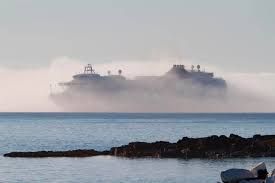
The modern cruise ship is a masterpiece of psychological engineering. It is an architectural illusion designed to insulate the upper-middle class from the terrifying reality of the open ocean. Step across the gangway of a luxury liner and you are no longer subject to the geography of the earth; you are an apex consumer in a floating, neon-soaked panopticon where every desire is anticipated, every cocktail is pre-programmed, and every square inch of space is engineered to manufacture a sense of absolute corporate safety. But when you strip away the pristine white paint, the duty-free jewelry shops, and the synchronized smiles of the hospitality staff, a cruise ship is something far more sinister: it is a sovereign entity operating in a legal vacuum. It is a multi-million-dollar corporation that exists in international waters, deliberately registered under foreign flags of convenience to evade national regulations, labor laws, and criminal jurisdiction. It is a world where the sea doesn't just swallow bodies—the corporate machinery actively sanitizes the crime scenes.
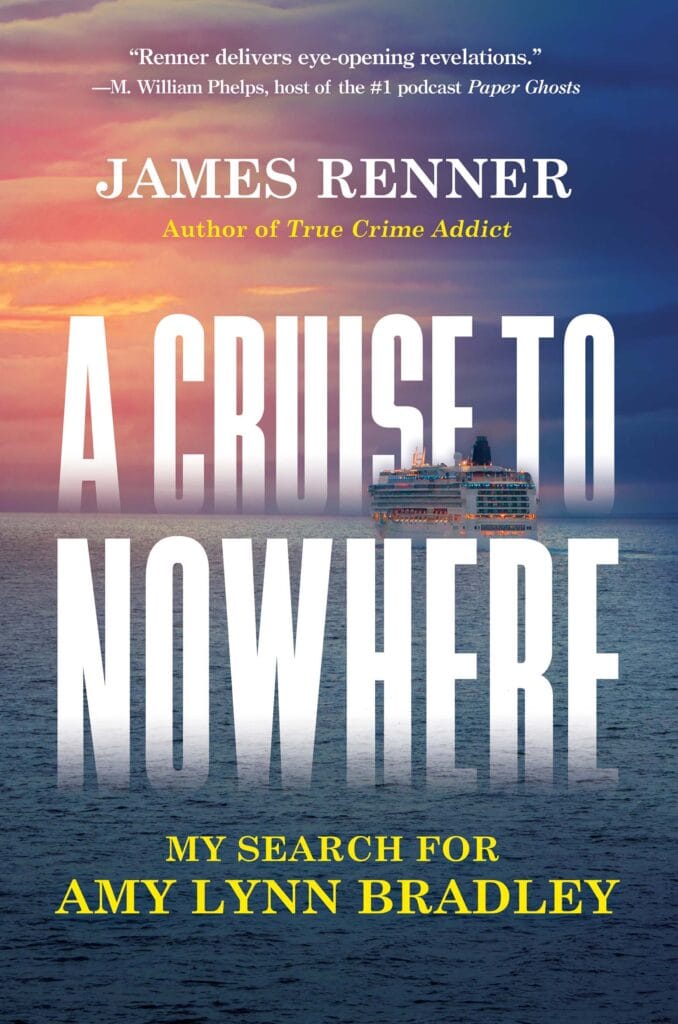
It is within this terrifying liminal space that acclaimed investigative journalist James Renner locates his harrowing new book, A Cruise to Nowhere: My Search for Amy Lynn Bradley. Gripping, suspenseful, and layered with lacerating insight, Renner’s text delivers the first definitive, full-length account of one of the most infamous, haunting disappearances in maritime history. But true to Renner's legacy as the author of True Crime Addict, this is not a tabloid procedural or a standard true-crime commodity. It is an uncompromising interrogation into the "grammar of corporate power" and the agonizing anatomy of a family frozen in time.
The nightmare began in March 1998. The Bradley family—Ron, Iva, and their adult children, Amy and Brad—boarded the Rhapsody of the Seas for a week-long Caribbean excursion. This wasn't merely a vacation; it was a celebratory marker of American success. It was a chance to honor Ron’s recent corporate achievements and Amy’s hard-won college graduation. She was 23 years old, athletic, striking, and standing on the precipice of a predictable, comfortable future. In the early morning hours of March 24, the illusion of safety fractured. After an evening spent drinking and dancing at the ship’s high-energy nightclub, Amy returned to the family’s stateroom alongside her brother, Brad. Seeking the cool Caribbean night air, Amy grabbed a blanket and stepped out onto the cabin’s private balcony to sleep. A few hours later, as the dawn light began to bleed over the horizon, her father awoke. The balcony was empty. The blanket was gone. Amy Bradley had vanished into the humid morning air.
What follows is nearly three decades of systematic obfuscation, institutional failure, and agonizing silence. Did Amy accidentally fall over the railing into the black ocean water? Did she willfully jump to escape some unseen, internal torment? Did she somehow slip off the vessel voluntarily when it docked at the sun-bleached island of Curaçao later that morning? Or was she targeted by predators operating within the ship's transient ecosystem, smuggled off the boat against her will, and trafficked into the brutal underground brothels of the Caribbean? In a baffling case choked by decades of false leads, shifting rumors, and highly conflicting witness reports, Renner meticulously reconstructs the timeline of that fateful morning. But A Cruise to Nowhere separates itself from the true-crime pack by turning its lens onto the immediate aftermath of the tragedy. Renner exposes how the cruise line’s immediate response was not to mobilize a massive, forensic rescue operation, but rather to launch a highly calculated public relations defense strategy designed to protect their stock value and isolate a grieving family.
Renner brings a fierce, independent eye to the material, interviewing witnesses who are speaking on the record for the very first time. He steps into a little-known, complicated side of Amy’s life that may explain everything about her eventual fate, refusing to reduce her to a two-dimensional victim on a missing persons poster. Instead, Renner weaves his own personal narrative into the investigation, creating a meta-textual exploration of identity, loss, and the deeply human, borderline-obsessive need to find narrative meaning in the face of random tragedy.
For readers of Radical Grammar, Renner's book hits the exact sweet spot of institutional critique. It exposes how maritime law loops act as a literal shield against national law enforcement agencies like the FBI. When a crime occurs on the high seas, the cruise line effectively controls the physical evidence, the security logs, and the movement of passengers. Renner demonstrates how the corporate machine gaslights grieving families, manipulating the public narrative to suggest that victims are simply unstable, careless, or complicit in their own disappearances.
Nearly thirty years later, the Bradley family is still looking for Amy, trapped in a permanent state of unresolved grief. A Cruise to Nowhere is a brilliant, atmospheric, and deeply empathetic book that refuses to let her memory be swallowed by corporate amnesia. It is a vital text for anyone who wants to understand how easily justice dissolves when human lives collide with the unbridled sovereignty of corporate wealth.