
A Rainy Night in Georgia

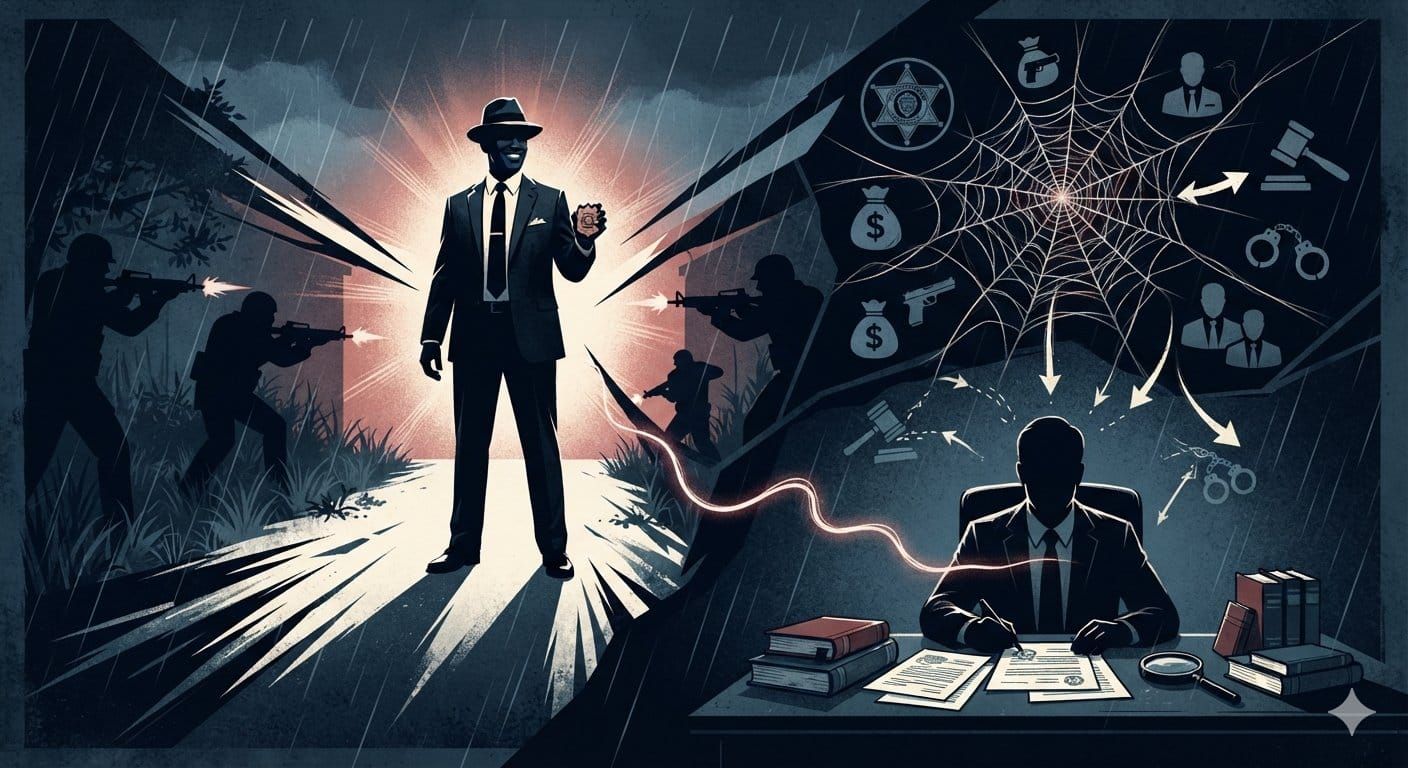
The December 2000 murder of Derwin Brown in DeKalb County, Georgia, represents one of the most chilling intersections of municipal corruption and political violence in modern American history. Brown, a veteran law enforcement officer who had just been elected sheriff, was gunned down in his own driveway, struck by a hail of bullets just days before he was scheduled to take the oath of office. He had run a campaign explicitly centered on reform, promising to dismantle a culture of institutional graft, nepotism, and systemic abuse that had long plagued the sheriff’s department. His victory over the powerful, heavily favored incumbent was viewed by many voters as a turning point for local governance. Instead, his assassination sent a terrifying message about the length to which entrenched interests would go to protect their power.
The investigation and subsequent prosecution fell to J. Tom Morgan, the county’s elected District Attorney. Morgan found himself thrust into a high-stakes crisis that transcended standard homicide investigations. In a political ecosystem where lines between law enforcement, county bureaucracy, and organized criminal activity had become dangerously blurred, Morgan had to assemble a multi-jurisdictional task force capable of operating without being compromised by the very systems they were investigating. Local, state, and federal agencies were brought in to peel back the layers of a conspiracy that grew more complex with every dead end. For months, investigators faced a wall of silence, bureaucratic obstruction, and intense public scrutiny from a community that felt increasingly betrayed by its own government institutions.
As the probe deepened, it became glaringly apparent that Brown’s murder was not a random act of street violence, but a calculated political assassination. The trail led directly back to the very department Brown had been elected to clean up. It exposed an environment where public office was treated as a personal fiefdom, complete with kickback schemes, the weaponization of the jail system for personal enrichment, and a complete disregard for constitutional boundaries. The case quickly evolved into a national media sensation, captivating the public with revelations of murder-for-hire plots orchestrated by individuals wearing badges, secret societies within law enforcement, and the staggering depth of institutional rot.
For Morgan, the case ceased to be an objective exercise in public service when intelligence emerged indicating that the conspiracy did not stop with the death of the sheriff-elect. Investigators uncovered evidence that the architects of the assassination had compiled a hit list of high-ranking officials who posed a threat to their survival, and Morgan’s name was next on it. The reality of prosecution under fire meant adapting to the constant threat of violence, navigating daily life under heavy security detail, and facing the psychological toll of pursuing justice against an enemy that operated from within the halls of authority.
To secure convictions in an ecosystem so profoundly compromised, Morgan and his legal team had to deploy an unprecedented, highly aggressive legal strategy. Georgia’s criminal justice system had never before seen a prosecution of this nature or scale targeted at a domestic political apparatus. The state had to construct a case that could link top-tier conspirators to the actual gunmen using circumstantial evidence, financial trails, and the testimonies of co-conspirators who were ultimately flipped by the prosecution. This required utilizing state-level anti-racketeering statutes and conspiracy laws in ways that stretched existing legal precedents to their absolute limits, establishing a new framework for how prosecutor offices could combat systemic government corruption.
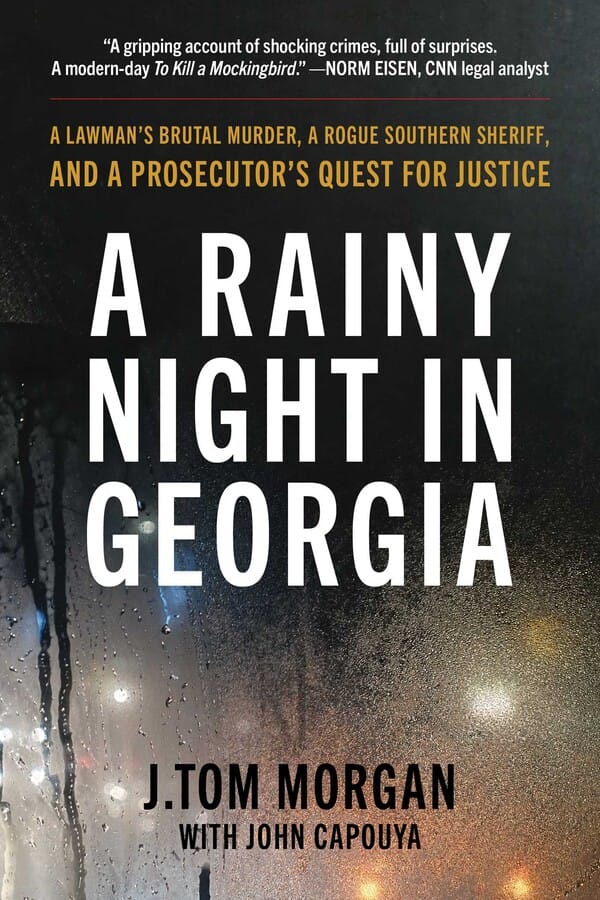
In A Rainy Night in Georgia, Morgan offers a perspective that is virtually missing from the standard true-crime narrative: an unvarnished, first-person account from the chief prosecutor who lived through the terror and the triumph of the trial. The book functions simultaneously as a legal procedural, a political thriller, and a sober memoir on the mechanics of state power. It details the granular realities of managing a massive investigation, the ethical dilemmas inherent in dealing with compromised informants, and the immense pressure of holding powerful figures accountable when the system itself is designed to shield them from scrutiny.
What began as a baffling, horrific execution in a quiet suburban driveway ultimately exposed a sprawling conspiracy that challenged the fundamental integrity of the American justice system. The case remains a stark reminder of the vulnerability of local democratic institutions to total capture by criminal elements. Morgan’s narrative strips away the typical Hollywood glamour of criminal prosecution, replacing it with a grim, realistic look at what happens when the people entrusted with enforcing the law turn their power against the public. It serves as a cautionary tale about the staggering personal and institutional costs required to confront systemic misconduct and re-establish the rule of law.