
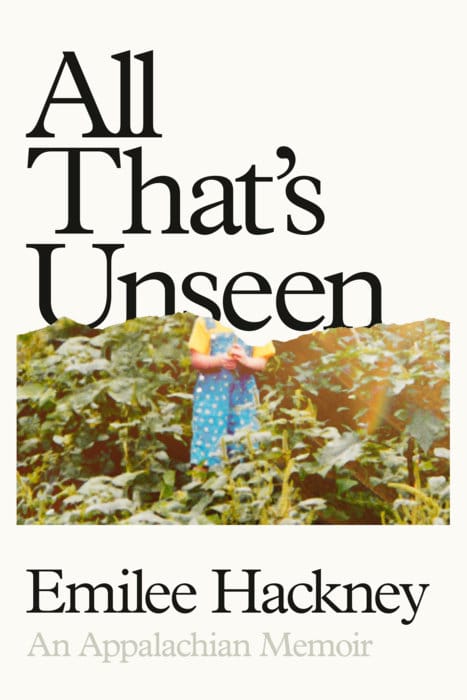
All That's Unseen


The literature of the Appalachian experience often falls into two extremes. These categories include the romanticized pastoral and the stark, derogatory depictions of poverty and dysfunction. All That’s Unseen, the memoir by Emilee Hackney, avoids these reductive archetypes. The book provides a grounded, granular examination of life in southwest Virginia. It centers on the intersection of generational geography and the rigid structures of extremist Pentecostalism. The work functions as a surgical dissection of how ideology dismantles individual agency.
The setting is Tazewell, Virginia. The history of the coal mines functions as a physical weight in this region. This cultural legacy dictates the expectations placed upon the youth. Hackney writes from a position of deep familiarity. She avoids exoticizing the "hollers" or the ridgelines. She presents them as the primary architecture of her early existence. This is a closed system. The isolation is geographical. The cultural mandates of her environment reinforce this isolation. In this context, marriage acts as an economic and social inevitability. The narrative details the transition from childhood to the forced adulthood of a nineteen-year-old bride with clinical precision. It illustrates how the pressure to conform permeates the community.
The Deliverance Christian Church provides the catalyst for the narrative's tension. The book demystifies the mechanics of radicalization within a domestic, religious setting. The process constitutes a slow, systematic erosion of the self. The requirement for total submission to God, to church leadership, and to the male figurehead creates a psychological environment. Dissonance constitutes a sin in this environment. The relationship with Sam serves as the primary vessel for this trauma. Sam is not the man he claims to be. The writing maintains a high degree of authenticity by keeping the details of Sam’s deception focused on the internal impact. The reader witnesses the narrowing of the world. Friends disappear. Family ties strain. The internal voice silences, replaced by the dictates of repentance and piety.
The breaking point arrives as a quiet, desperate accumulation of reality. The decision to apply to Harvard represents a profound act of defiance. It serves as a logistical necessity for survival. This distinction remains crucial. It underscores the desperation of someone realizing that remaining in the status quo threatens their existence. The transition from the isolated landscape of Tazewell to the rigorous environment of Cambridge, Massachusetts, creates a clash of civilizations.
This memoir finds its most compelling sociological hook here. The move occurs against the backdrop of the 2016 election cycle. This period involved volatile political divides between the rural, religious working class and the urban elite. Hackney utilizes the election as an externalization of her internal conflict. The rhetoric coming from her home community during this time provides a stark contrast to the discourse she encounters in academia. She occupies the space between two worlds. Navigating these spaces requires a constant, exhausting translation of identity.
The prose refuses to offer easy catharsis. Liberation remains a grueling, unfinished process. Even after physical removal from the source of the trauma, the habits of thought persist. The shame remains. The self-doubt remains. The instinct to apologize remains. The act of writing the memoir functions as the final phase of this reclamation. It acts as an exercise in documentation. It establishes the truth of a personal history rewritten by others.
All That’s Unseen contributes significantly to contemporary memoir. It specifically addresses the study of internal migration and religious deconstruction. It avoids the polemic. It opts for a narrative of hard-won clarity. The author succeeds in making the specific anxieties of a young woman in rural Virginia resonate as universal questions. These questions concern the nature of truth, the cost of indoctrination, and the enduring difficulty of forging an autonomous identity in a world demanding conformity. This account examines the nature of reclaiming a voice intentionally muted by institutions meant to provide salvation. It examines the invisible lines dividing us. It examines the painful work required to cross them. The writing forces the reader to confront the reality of religious extremism. It demands an acknowledgement of the psychological toll such environments inflict. Hackney delivers this with a steady, unflinching hand. She provides a map of the territory she escaped. The result is a text that serves as both a warning and a guide for others navigating similar structures of control.