
How Russia Won

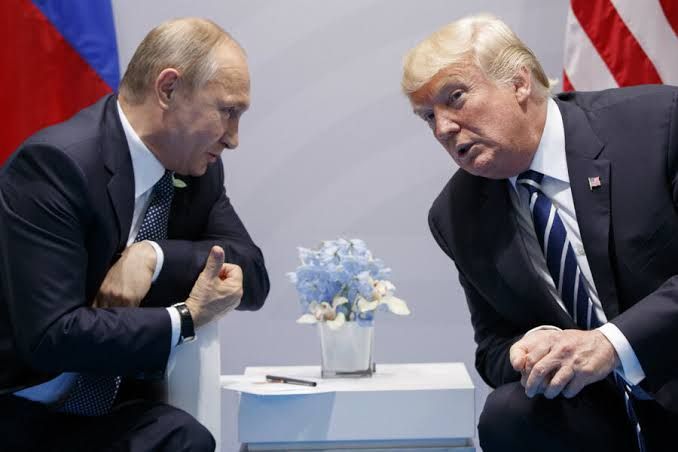
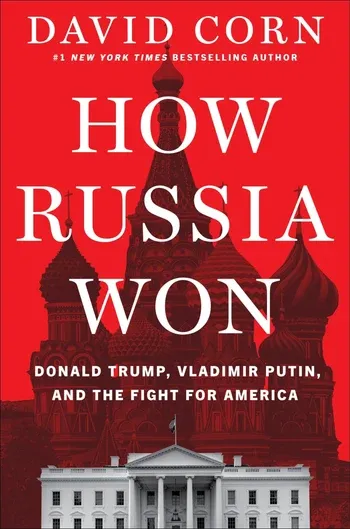
David Corn's How Russia Won reads like a clinical, high-stakes post-mortem of a brilliantly executed foreign intelligence operation. From an analytical perspective, what transpired between Moscow and Washington over the last decade wasn't just a series of chaotic news cycles; it was a textbook covert action campaign designed to degrade, divide, and ultimately neutralize a global superpower from within. Vladimir Putin did not stumble into his current position of strength, nor did he rely on blind luck. Instead, the Kremlin engineered a highly sophisticated, multi-layered subversion strategy aimed directly at the fault lines of American society. The grand tragedy of this narrative, as Corn meticulously documents, is that the Russian state didn’t have to work in isolation. Donald Trump, the MAGA movement, the Republican establishment, and the echo chambers of right-wing media functioned as classic domestic assets. Whether driven by blind ambition, ideological alignment, or sheer incompetence, these factions served as the ultimate useful idiots, providing the local infrastructure necessary for a hostile foreign dictator to launch a devastating assault on Western democracy.
To understand the scope of this intelligence failure look at the sheer longevity and discipline of the Kremlin's tradecraft. This was a long game, an active measures campaign that was running hot well before the 2016 election and has continued to mutate and evolve through the 2020 and 2024 presidential cycles. Russian intelligence specialized in weaponizing existing societal friction, injecting toxic disinformation into the bloodstream of American politics to ensure that the populace would turn on itself. Yet, the operational success of this campaign hinged entirely on the behavior of American political leaders. Instead of forming a united, bipartisan front against a clear national security threat, Trump and his loyalists initiated a massive, domestic denial-and-deception campaign. They took the raw product of foreign propaganda, validated it, and used it to gaslight the American public. This went far beyond standard political spin or routine partisan tribalism; it was a profound, operational complicity. Trump’s inner circle actively facilitated the enemy's information warfare, working in tandem with the very adversaries trying to dismantle the constitutional order.
The mechanics of this secret war reveal a level of political rot that defies traditional espionage fiction. Corn strips away the sanitized theater of Washington politics to expose the gritty, transactional reality of modern tradecraft, detailing a series of bizarre and deeply unsettling operations. The book tracks a former FBI director—a man entrusted with the highest levels of American law enforcement—receiving substantial payments from a pro-Putin propagandist. It follows the surreal trajectory of a fugitive ex-Florida police officer who fled the country to set up shop in Moscow, running active disinformation nodes that successfully manipulated the perceptions of millions of American citizens. It charts the reckless behavior of Rudy Giuliani, who openly collaborated with active Russian intelligence agents under the guise of opposition research. All the while, the broader Republican apparatus eagerly absorbed these manufactured narratives. Capitalizing on the public’s growing distrust of institutions, domestic politicians paraded deep-state conspiracy theories that were cooked up, refined, and distributed by anonymous Russian cyber-trolls and undercover operatives.
When the dust settles on this intelligence assessment, the conclusion is as grim as it is undeniable: Putin achieved his primary operational objectives. By assisting the rise of a political leader defined by chaos, disruption, and authoritarian impulses, the Russian state successfully placed an agent of institutional demolition into the Oval Office. The fallout from this penetration has been catastrophic and wide-ranging. American democracy has been severely fractured, its internal trust eroded to historic lows. The Western alliance, once a bedrock of global stability, has been plagued by manufactured friction, alienating traditional allies while emboldening autocrats across the globe. Washington's standing on the international stage has been deeply diminished, leaving the nation structurally weaker and far more vulnerable to future manipulation. How Russia Won stands as an indispensable, chilling post-mortem on a historic national security failure. It provides a meticulous blueprint of how a determined foreign adversary, paired with corrupted homegrown political forces, managed to pull off the ultimate political heist against the United States.