
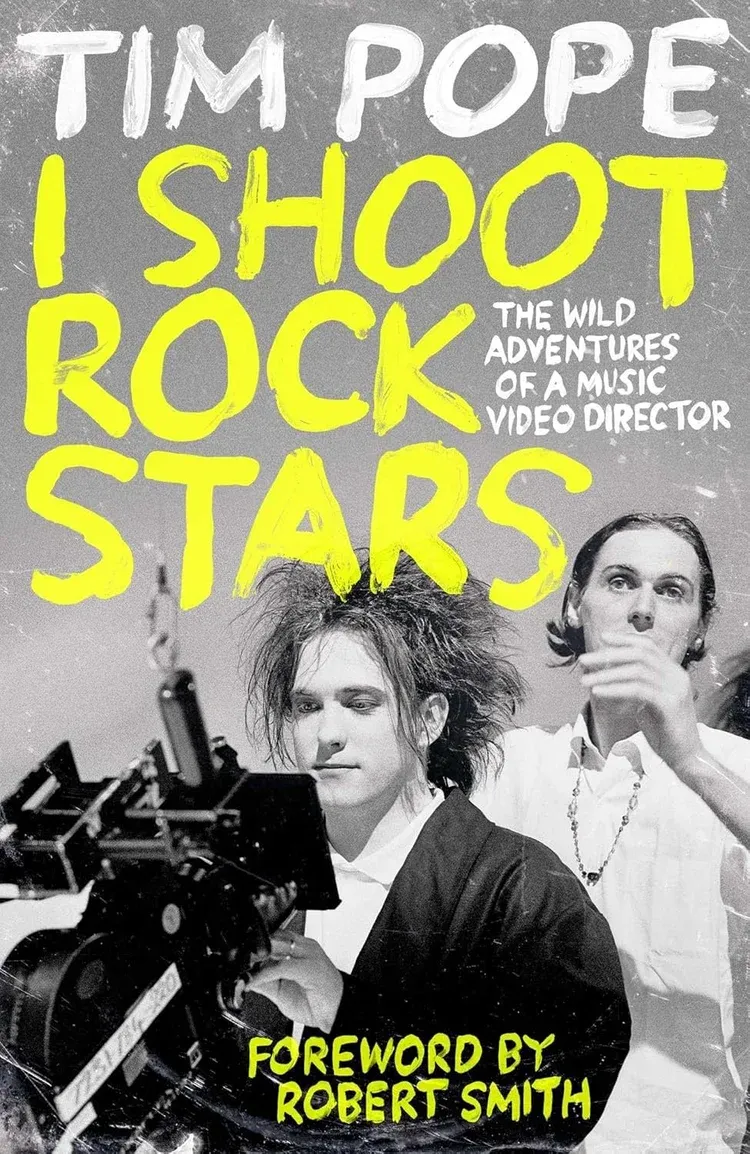
I Shoot Rock Stars

The Wild Adventures of a Music Video Director
It is difficult to overstate how thoroughly the visual language of the 1980s music video hijacked our collective imagination, mostly because we were too busy staring at the screen to realize we were watching the birth of modern identity. Before MTV started beaming 24 hours of compressed audio-visual static into suburban living rooms, a pop star was essentially an abstract concept existing in the liner notes of a gatefold sleeve or on a grainy poster taped to a bedroom wall. You supplied the mental scenery. But once directors like Tim Pope figured out that corporate record labels were essentially handing out blank checks to fund bizarre artistic hallucinations, the entire dynamic shifted. Suddenly, music was no longer just something you heard; it was a brightly lit, deeply strange cinematic event that dictated how you dressed, how you stood, and how you understood cultural cool.
Tim Pope was not merely present for this cultural pivot; he was one of the primary architects detonating the old rules from the inside. In I Shoot Rock Stars, his memoir about the frantic, lawless early days of the music video boom, he documents a creative window that feels almost mythical in hindsight. This was an era before focus groups and corporate algorithms sanitized every frame, back when the entire medium was being invented on the fly by erratic British film school refugees who smuggled equipment into venues and treated massive budgets like Monopoly money. The book works precisely because Pope approaches his own past with a kind of bemused detachment, recognizing that the intersection of high-tier pop stardom and low-brow guerrilla film making was inherently ridiculous.
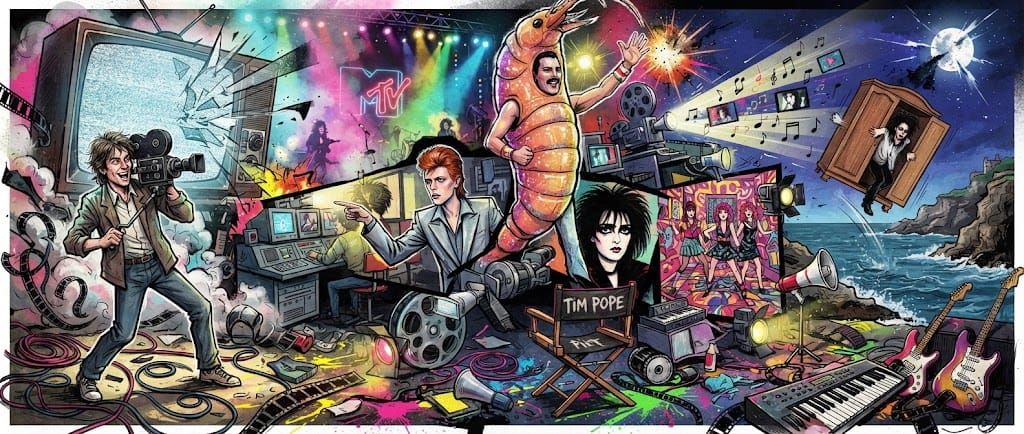
What makes the book compelling—and what separates it from standard rock-and-roll ghostwritten autobiographies—is the sheer absurdity of the logistics required to manufacture the soundtrack of a decade. You read about Pope dressing Freddie Mercury as a giant aquatic crustacean, or locking members of The Cure inside a wooden wardrobe and casually launching it off the edge of a British cliff, and you realize that the aesthetic foundation of modern pop culture was poured by people who were largely just winging it day-to-day. When David Bowie calls a director a funny little arsehole, or when you are hanging out on Neil Young’s ranch trying to figure out how to frame a shot, the romanticized mythology of the rock god dissolves into something much more interesting: a bunch of exhausted, brilliant weirdos trying to make something memorable before the tape runs out.
Ultimately, Pope is documenting the exact second when image became completely inseparable from sound, creating a synthetic reality we are still inhabiting decades later. It is a cultural history of a once-in-a-lifetime creative accident, written by someone who had the best seat in the house while the asylum doors were temporarily blown off their hinges. If you want to understand how a generation of kids managed to internalize avant-garde surrealism simply by watching cable television after school, this is the text that maps out the crime scene.