
Israel's Lobby

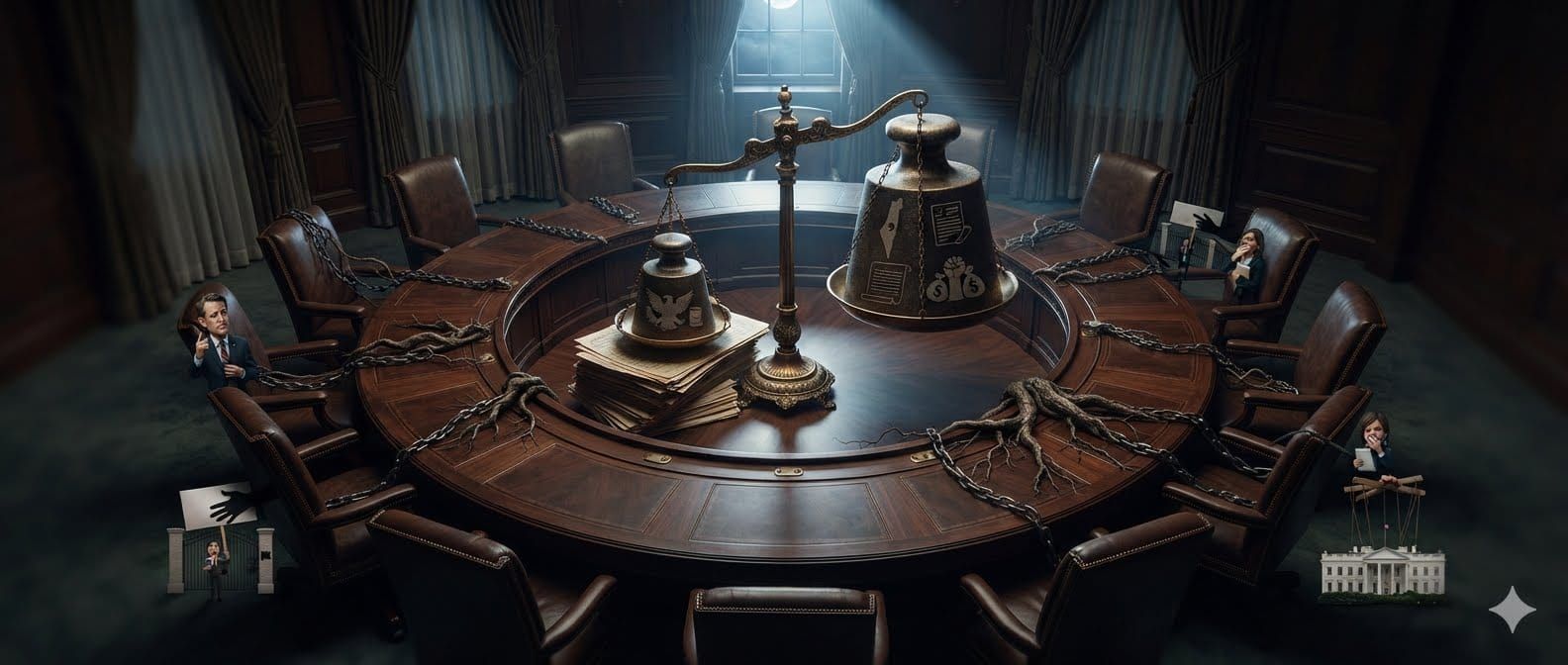
The scene inside the Situation Room, the Oval Office, and the secure, high-walled compounds of Washington’s intelligence apparatus always comes down to a fundamental question: Who is actually driving the car? For decades, the standard playbook of American statecraft dictated that Washington, as the world's preeminent superpower, dictated terms to its clients. But a meticulous look at the raw mechanics of power reveals a starkly different reality. The defining narrative of contemporary geopolitics and American domestic governance is the story of how the ultra-nationalist government of Israel—a country of fewer than ten million people—acquired what amounts to a controlling interest in the foreign policy of the United States.
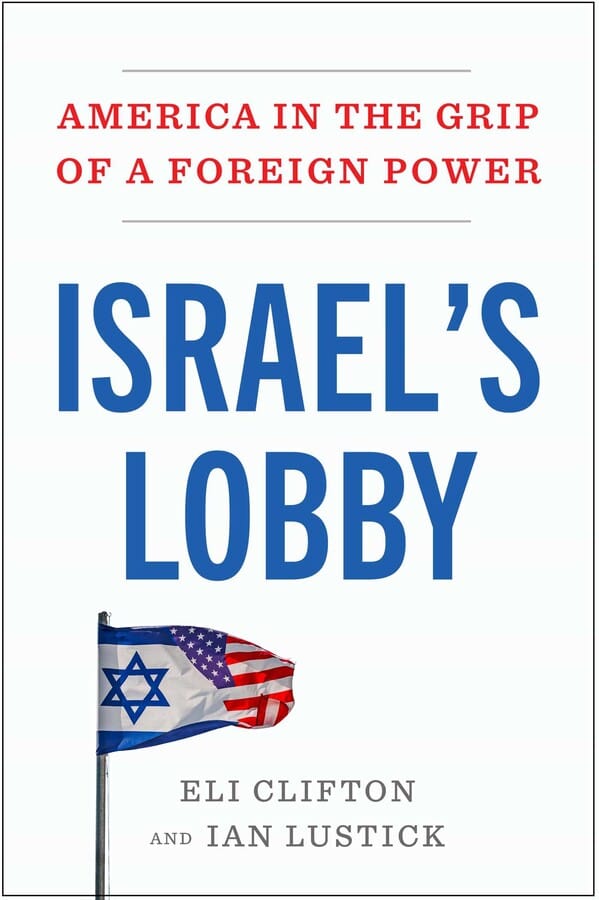
To understand how this happened, you have to look at the granular details. You have to look at the memos, the late-night phone calls, and, above all, the money. In their rigorous assessment, authors Eli Clifton and Ian Lustick dismantle the carefully constructed illusions of the Washington consensus. They expose a sophisticated, multi-layered apparatus designed to police American political discourse, coerce the executive branch, and enforce a rigid orthodoxy that frequently compromises American national security. This isn't a conspiracy; it is a highly organized, legal, and deeply entrenched influence operation. It is the modern mechanics of Washington power at work.
The reach of this influence network now extends far beyond the traditional corridors of Capitol Hill. It operates as a domestic regulatory mechanism, policing speech where policy is debated and shaped. Members of Congress look over their shoulders before drafting legislation. University presidents find their endowments threatened and their campuses engulfed in controversy if student dissent crosses an invisible line. Journalists operate under the constant scrutiny of monitoring groups ready to deploy career-ending allegations of bias. By shifting the battlefield from diplomatic debates to American domestic institutions, the lobby has successfully insulated Israeli state actions from meaningful scrutiny.
The consequences of this dynamic are vivid, concrete, and deeply vexing to the seasoned professionals inside the Pentagon and the intelligence community. It is the classic bureaucratic nightmare: the tail wagging the dog.
Consider the internal deliberations of the Biden administration. Top-secret cables and internal dissent memos revealed a profound frustration among national security aides. They watched as American leverage—the billions in military hardware, the diplomatic cover at the United Nations, the intelligence sharing—was systematically withheld. Despite immense domestic pressure and the visible, devastating toll of regional violence that severely damaged America’s standing moral authority abroad, the White House remained paralyzed. The institutional fear of confronting the lobby neutralized the basic calculus of American self-interest. The leverage was there, sitting on the table. The decision-makers simply refused to touch it.
Now look at the counter-slate. Under the Trump administration, the operational boundaries of this influence were laid bare in a different, equally telling theater. Senior intelligence officials watched with quiet dismay as intense lobbying successfully pressured the White House into lifting parole restrictions on Jonathan Pollard, the former U.S. Navy intelligence analyst who had executed one of the most damaging espionage operations against the United States in modern history. For years, the American intelligence community had held a unified, unyielding line: Pollard’s secrets were too vital, his betrayal too severe, to ever grant him leniency. Yet, a concentrated push by ideological oligarchs bypassed the standard intelligence channels, turning a profound national security breach into a political favor. It was a stark demonstration that even the most sacred tenets of American counterintelligence could be overridden when the right levers were pulled.
Clifton and Lustick’s work functions like a classic investigative forensic audit. It maps the precise intersections where American and Israeli billionaires intersect with the policymaking process. This is the financial architecture of modern political capture. By taking advantage of the historic evisceration of American campaign finance laws—most notably the deregulation of independent political expenditures—a small cadre of highly motivated donors has effectively bought access to successive presidential administrations. Foreign policy, historically insulated by the doctrine that "politics stops at the water's edge," has effectively been open to the highest bidder.
The strategic landscape has grown significantly more perilous due to a profound structural shift within Israel itself. The country’s political center of gravity has lurched decisively to the extreme right, creating an administration in Jerusalem that frequently operates outside the norms of traditional Western diplomacy. As the Israeli government moved further toward radical, unyielding positions, the gap between American national interest and Israeli state policy widened into a chasm.
Faced with the impossibility of defending these increasingly radical policies on their objective merits, the lobby shifted its tactical playbook. Instead of engaging in substantive policy debates regarding human rights, international law, or regional stability, the apparatus launched an aggressive, highly coordinated domestic campaign. They weaponized accusations of antisemitism, turning a profoundly serious form of bigotry into a blunt political instrument designed to smear, isolate, and silence critics.
The tragic irony, as Clifton and Lustick demonstrate, is that this uncritical, aggressive insulation does not actually benefit Israel in the long run. By shielding Jerusalem from the natural feedback loops of international diplomacy and accountability, the lobby has enabled the rise of what political scientists categorize as a "crazy" state—an actor operating with a dangerous sense of impunity, detached from the stabilizing constraints of geopolitical reality.
Lifting the veil on this unassailable fixture of American politics requires following the money and documenting the closed-door transactions that govern our world. The solution to this systemic distortion does not lie in radicalism, but in a return to traditional American civic values. It requires the restoration of robust, uncoerced debate and a collective refusal to allow domestic policy to be dictated by outside vigilantism. Only by bringing these hidden mechanics into the light can the American foreign policy apparatus begin to serve the nation's true security interests once again.